

Key Takeaways
- Depreciation, registration fees, and parking costs are frequently left out of car ownership budgets.
- Routine maintenance like tires and brake pads adds up quickly and should be planned for annually.
- Auto insurance premiums, loan interest, and roadside coverage can significantly increase total ownership cost.
- Building a dedicated car expense fund helps absorb surprise costs without derailing your monthly budget.
Why car budgets fall short
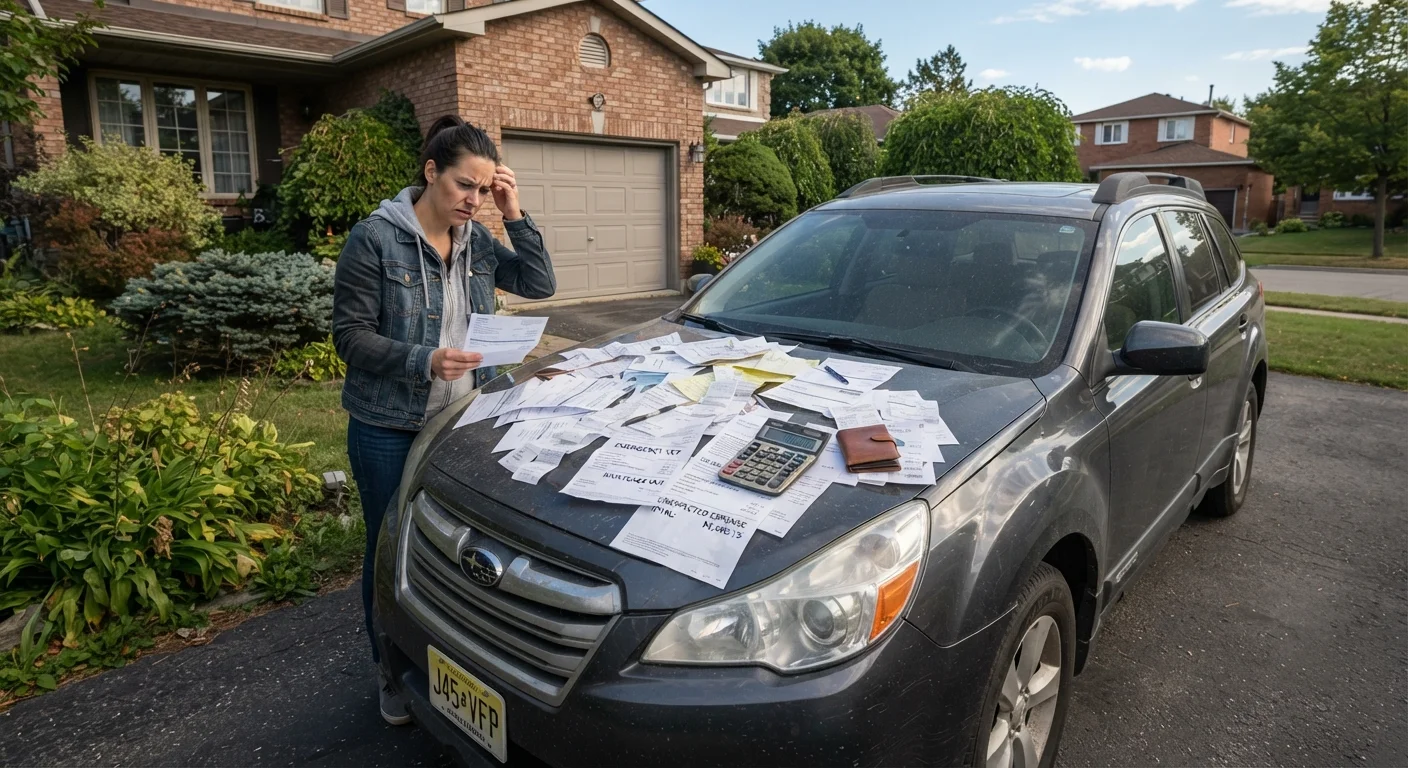
Buying a car is one of the largest financial commitments most Americans make - but the purchase price is genuinely just the beginning. Drivers who budget only for a monthly loan payment often find themselves caught off guard by a stack of costs that quietly accumulate in the background. Recurring and surprise expenses like depreciation, insurance, and repairs shape what a vehicle truly costs far more than the sticker price alone.
Whether you're buying your first car or your fifth, a complete ownership budget covers more ground than most people expect. The expenses below are the ones most frequently left out - and the ones most likely to cause financial stress down the road.
Total cost of ownership varies widely
The real annual cost of owning a vehicle depends on factors like vehicle type, age, local tax rates, insurance market, and driving patterns. General estimates from industry sources suggest total annual costs for many American drivers run into the thousands beyond the car payment alone. Use these categories as a framework to build your own realistic estimate rather than relying on national averages that may not reflect your situation.
Depreciation: The invisible expense
Most drivers think about fuel and insurance - but depreciation is often the single largest cost of owning a vehicle, and it never shows up on a bill. A new car typically loses a significant portion of its value in the first few years of ownership. That loss is real money, even if you don't see it leave your wallet until you sell or trade in.
Used vehicles depreciate more slowly, which is one reason financial planners often point to them as a more cost-efficient choice. Either way, factoring expected resale value into your ownership plan gives you a more honest picture of what the car is truly costing you over time.
Depreciation is often the single largest cost of owning a vehicle - and it never shows up on a bill.
Registration, taxes, and title fees
When you buy a vehicle, the transaction doesn't end at the purchase price. State registration fees, sales tax, and title transfer costs can add hundreds - sometimes over a thousand - dollars to your upfront total. Then registration renewal comes around every year, and depending on your state, that fee can be based on the vehicle's value, meaning newer or more expensive cars cost more to keep registered.
These fees vary widely by state, so it's worth checking your state's DMV website before finalizing any vehicle purchase to avoid sticker shock at the counter.
Registration renewals tied to a vehicle's value can quietly cost hundreds of dollars every single year.
Tires, brakes, and scheduled maintenance
Oil changes get the most attention, but they're far from the only regular maintenance expense. A full set of tires typically runs several hundred dollars, and most vehicles need replacement every four to six years depending on mileage and driving habits. Brake pads, rotors, filters, belts, and fluid flushes all follow their own replacement schedules.
Skipping or delaying these services usually leads to larger repair bills down the road - and potential safety risks. Building a rough annual maintenance budget based on your vehicle's service schedule is a practical way to stay ahead of these costs. Your owner's manual lists the manufacturer's recommended intervals as a starting point.
A full set of replacement tires alone can cost several hundred dollars - plan for it before you need it.
Loan interest and financing charges
If you're financing a vehicle, the amount you pay over the life of the loan can be substantially more than the sale price. Interest charges, origination fees, and the length of the loan all affect your true total cost. Stretching a loan to 72 or 84 months to lower monthly payments may feel manageable, but it typically means paying significantly more in total and sometimes owing more than the car is worth mid-loan.
Understanding the full cost of financing - not just the monthly payment - is essential before signing. Compare leasing and financing side by side to see how the long-term numbers differ.
Monthly payment focus can cause drivers to overlook thousands of dollars in total loan interest.
Parking, tolls, and daily driving costs
For drivers in urban or suburban areas, parking fees and toll charges can add up to a surprisingly large annual sum. Monthly parking garage rates in many cities run well over a hundred dollars. Daily toll commuters can spend thousands per year without ever thinking of it as a car ownership cost. These expenses are easy to overlook because they feel like routine daily spending rather than vehicle costs - but they belong in any honest total-cost calculation.
Toll and parking costs are routine enough to feel invisible - but they can total thousands annually.
Comprehensive insurance coverage gaps
Drivers often purchase the minimum legally required insurance coverage to keep premiums down. But minimum liability coverage doesn't protect your own vehicle in an at-fault accident, and it won't cover theft, weather damage, or hitting an animal. Gap insurance - which covers the difference between what you owe on a loan and what the car is worth after a total loss - is another cost many financed-vehicle owners don't consider until it's too late.
Insurance needs vary based on your vehicle's age, value, your driving environment, and your financial situation. Consulting a licensed insurance agent can help clarify what coverage actually makes sense for your circumstances. General insurance information is not a substitute for reviewing your actual policy terms.
Minimum coverage keeps premiums low but can leave drivers exposed to significant out-of-pocket losses.
Unexpected repairs and emergency costs
Even well-maintained vehicles break down. A failed alternator, transmission issue, or cracked windshield can arrive without warning and carry a repair bill in the hundreds or thousands. Knowing when repair costs outweigh a car's value is a critical skill for any long-term owner.
Many financial advisors suggest maintaining a dedicated vehicle emergency fund - a separate savings buffer specifically for car repairs - so an unexpected breakdown doesn't force difficult choices between car repair and other essential expenses. The right amount depends on your vehicle's age, reliability history, and your overall financial picture.
A dedicated vehicle emergency fund helps absorb repair surprises without disrupting your broader budget.
Planning ahead makes the difference
None of these costs are unavoidable surprises once you know to look for them. Building a workable budget that accounts for vehicle ownership in full - not just the loan payment - is a straightforward way to keep car costs from outpacing what you planned to spend.
Build a dedicated car expense fund
Rather than treating car costs as a surprise each time they arrive, estimate your annual expenses across each category - registration, maintenance, tires, insurance - and divide by 12. Setting aside that amount monthly creates a buffer that absorbs the inevitable without derailing your budget. Even a rough estimate is far better than no plan at all.
If you're still in the decision-making stage, it's worth exploring how your ownership structure affects total cost. Leasing and buying look different when the full numbers are on the table. And for first-time owners, a comprehensive starting point covers financing, insurance, and routine upkeep in one place.
This article is for general informational purposes only and does not constitute financial, insurance, or legal advice. Costs and regulations vary by state and individual circumstances. Consult a licensed financial adviser or insurance professional for guidance specific to your situation.