

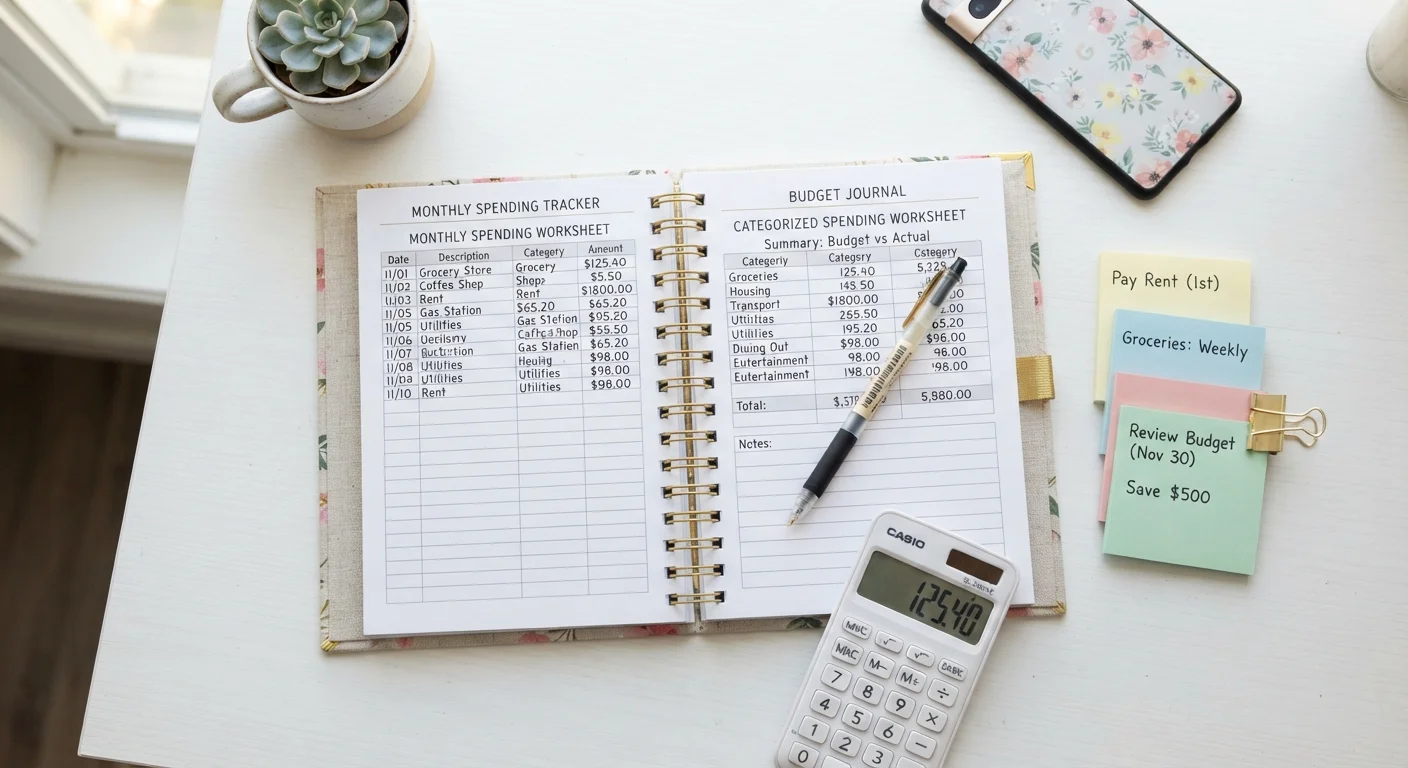
Why Budget Categories Matter
A budget only works when you know where your money is going. Categories are the organizing system that makes that possible - they group your spending into logical buckets so you can see patterns, spot problems, and make decisions with confidence.
This guide is a reference, not a prescription. There's no single correct way to slice up a budget. But there are some widely used groupings that work well for most households. Use this as a starting point, then adjust to match your actual life.
If you're setting up a budget for the first time, our beginner's guide to building a budget from scratch walks through the full process step by step.
The Core Budget Categories
Most personal budgets are built around four to six major categories. Here's what typically falls in each.
Housing
Rent or mortgage payment, renters or homeowners insurance, property taxes (if paid separately), HOA fees, and routine maintenance. This is usually the largest single line item for most households.
Food
Groceries and household staples belong here. Some people also include dining out in this category; others split it into a separate "restaurants" or "eating out" line. Either approach works - consistency matters more than the exact label. For ideas on how food choices intersect with your overall lifestyle, see this everyday reference on common eating patterns.
Transportation
Car payment, auto insurance, fuel, public transit passes, parking, tolls, and routine vehicle maintenance. If you own a car, registration fees and occasional repair costs also belong here.
Utilities and Bills
Electricity, gas, water, internet, phone, and any streaming or subscription services you consider essential. Some budgeters separate subscriptions into a "personal" or "entertainment" category - both approaches are fine.
Health and Medical
Health insurance premiums (if paid out of pocket), copays, prescriptions, dental, and vision costs. Out-of-pocket medical expenses can be unpredictable, so many people keep a small buffer within this category.
Savings and Debt Repayment
Emergency fund contributions, retirement savings, and any debt payments beyond the minimum. Treating savings like a fixed expense - rather than what's left over - is one of the most practical shifts a household budget can make. Explore more strategies in the Saving & Debt hub.
Fixed expense
A cost that stays the same amount each billing cycle, such as rent, a car payment, or a set loan installment. These are easy to plan for because they don't change month to month.
Variable expense
A cost that changes in amount from month to month, such as groceries, fuel, or utilities. Budgeting for these requires using an average or an estimate.
Discretionary spending
Money spent on non-essential wants - dining out, entertainment, hobbies, and similar items. This is typically the most flexible part of a budget.
Emergency fund
A dedicated pool of savings set aside to cover unexpected expenses or income loss without derailing the rest of your budget. Commonly recommended at three to six months of essential expenses, though the right amount varies by situation.
Budget category
A named grouping in your budget that collects related expenses together, making it easier to track, compare, and adjust spending in that area.
Discretionary and Variable Categories
Beyond the essentials, most budgets include a set of flexible categories that vary month to month.
Personal and Household
Clothing, haircuts, personal care products, and household supplies (cleaning products, paper goods). These expenses are real and regular - leaving them out of a budget is a common reason budgets fall apart.
Entertainment and Leisure
Movies, concerts, hobbies, sports, books, and games. This is a natural place to trim when money is tight, but cutting it entirely often leads to budget fatigue.
Dining Out and Coffee
If you separated this from groceries, track it here. It's one of the categories where small amounts add up quickly over a month.
Gifts and Celebrations
Birthdays, holidays, weddings, and donations. These are genuinely irregular but predictable in aggregate - spreading the cost across twelve months rather than absorbing it all in December makes a real difference.
Miscellaneous
A small catch-all for expenses that don't fit neatly elsewhere. If your miscellaneous category is consistently large, that's a signal to add a new named category rather than let it balloon.
For household budgets with shared finances, the way you divide and label categories can look different depending on how you've structured things. Budgeting as a household covers the main approaches and their trade-offs.
33%
Average share of spending on housing
According to the U.S. Bureau of Labor Statistics Consumer Expenditure Survey, housing consistently accounts for roughly a third of average American household spending.
~12%
Average share of spending on food
The BLS Consumer Expenditure Survey shows food - groceries plus dining out - typically represents around 12 percent of household expenditures.
1 in 4
Americans with no emergency savings buffer
Federal Reserve surveys on household finances have consistently found a significant share of adults unable to cover an unexpected $400 expense without borrowing.
Putting It Into Practice
Once you have your categories, the next step is assigning real dollar amounts to each. Two common frameworks - the 50/30/20 rule and zero-based budgeting - offer different starting points for that process. The 50/30/20 rule explained and zero-based vs. percentage-based budgeting are good reads if you want a deeper look at how each works.
At the end of each month, compare what you actually spent against your category targets. That comparison - not the plan itself - is where most of the learning happens. The monthly budget reset checklist is a practical tool for making that review quick and consistent.
On the spending side, knowing your categories also helps you shop more deliberately. Seeing how much goes toward clothing or household goods each month, for instance, can sharpen how you approach purchases. Budget shopping strategies offer practical ways to stretch spending within those categories.
This article is for general informational and educational purposes only and does not constitute personalized financial advice. For guidance specific to your situation, consult a qualified financial professional.