

Key Takeaways
- Many fruits and vegetables are more than 90% water by weight and contribute meaningfully to daily hydration.
- Foods high in sodium, sugar, or certain proteins can increase the body's fluid demands.
- Caffeine-containing beverages contribute to fluid intake despite mild diuretic properties.
- Eating a variety of whole foods can support hydration alongside regular water consumption.
- Dehydration from diet is often gradual and easy to overlook until symptoms appear.
Food-Based Hydration
Food-based hydration refers to the fluids your body absorbs from the foods you eat, not just the beverages you drink. Many whole foods - especially fruits and vegetables - contain significant amounts of water that count toward your daily fluid needs. Some foods and drinks, however, can have the opposite effect, increasing fluid loss or reducing how efficiently your body retains water.
The Institute of Medicine estimates that roughly 20% of daily water intake for most adults comes from food sources, though this varies considerably based on dietary patterns.
Your Food Is Part of Your Fluid Intake
Most hydration advice focuses on how many glasses of water you drink each day. But a meaningful share of the fluid your body uses actually comes from food. This isn't a workaround - it's basic physiology. Understanding how food contributes to (or works against) your hydration helps you make more informed everyday choices.
General estimates suggest that food accounts for roughly 20% of daily fluid intake for many adults, though the actual amount depends heavily on what you eat. Someone who regularly eats fruit, soups, and salads absorbs substantially more fluid from food than someone whose diet centers on dry, processed, or heavily salted foods.
~20%
Daily fluid intake from food sources
The Institute of Medicine estimates roughly 20% of adult daily water intake comes from food, with the remainder from beverages.
96%
Water content in cucumber by weight
Cucumbers rank among the most water-dense whole foods, according to USDA nutritional data.
92%
Water content in watermelon by weight
Watermelon is one of the most popular high-water fruits, per USDA food composition data.
Foods That Help You Stay Hydrated
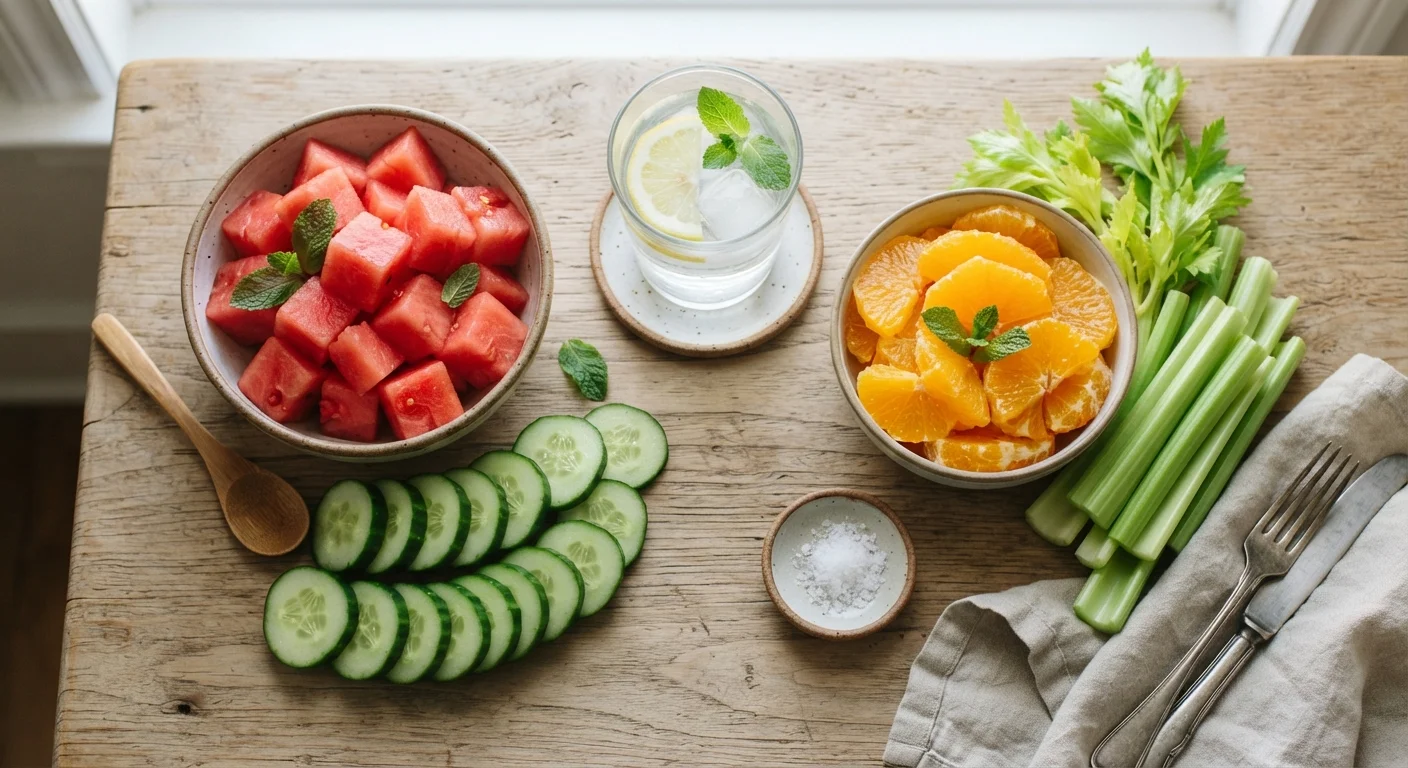
Whole fruits and vegetables top the list of hydrating foods. Cucumbers, celery, tomatoes, zucchini, and leafy greens are largely made of water - often more than 90% by weight. Watermelon, strawberries, oranges, and grapefruit offer similar benefits alongside vitamins and fiber.
Soups and broths deserve special mention. A bowl of vegetable or chicken soup can deliver a substantial amount of fluid in a single meal, along with electrolytes like sodium and potassium that support fluid retention. Dairy foods such as plain yogurt and milk also carry high water content along with protein and minerals.
This is one reason patterns that cut out entire food groups can have unintended consequences - eliminating fruits and vegetables, for example, removes a natural source of dietary fluid that many people don't consciously replace.
Build Hydration Into Your Meals
Rather than tracking water content precisely, aim to include at least one high-water food - a piece of fruit, a side salad, or a bowl of soup - at each meal. These small choices compound over the course of a day and can meaningfully reduce the burden on beverage intake alone.
Foods and Habits That Work Against Hydration
Just as some foods help hydrate you, others increase your body's fluid demands. Sodium is the primary culprit. When you eat a high-sodium meal, your kidneys need more water to dilute and excrete the excess salt. That's the direct cause of post-meal thirst.
High-protein diets, particularly when very high in animal protein, can also raise fluid needs. The kidneys require additional water to process the byproducts of protein metabolism. This doesn't mean protein is harmful - it just means fluid intake should keep pace.
Alcohol is a genuine diuretic that suppresses a hormone that controls how much water the kidneys retain, leading to increased urination and fluid loss. Caffeinated beverages - coffee, tea, some sodas - have a mild diuretic effect, though research generally shows moderate caffeine intake still contributes net fluid to the body rather than depleting it. The issue arises with excessive amounts.
Caffeine and Hydration: The Nuance
Caffeine is often labeled a diuretic, but research suggests moderate intake - such as a cup or two of coffee - still results in a net fluid gain for most people. The diuretic effect is mild and largely offset by the water in the beverage. Very high caffeine consumption is a different matter and may contribute to fluid imbalance, particularly in people unaccustomed to it.
Putting It Into Practice
You don't need to track the water content of every meal. A more practical approach is to notice the overall character of what you eat. Meals built around whole produce, legumes, and broths tend to be naturally supportive of hydration. Meals dominated by processed, salty, or dry foods typically require more fluid from other sources to compensate.
Paying attention to thirst - particularly around specific meals or food choices - is one of the simplest feedback tools available. Persistent thirst after eating may be a signal worth noting.
For those looking to build more consistent habits around fluid intake, it helps to think of food and drink as a combined system rather than separate categories. Our guide to building a lasting hydration habit covers practical strategies for making consistent intake easier over time.
This article is for general informational and educational purposes only and is not a substitute for professional medical advice. If you have concerns about your hydration, diet, or health, please consult a qualified healthcare provider.