

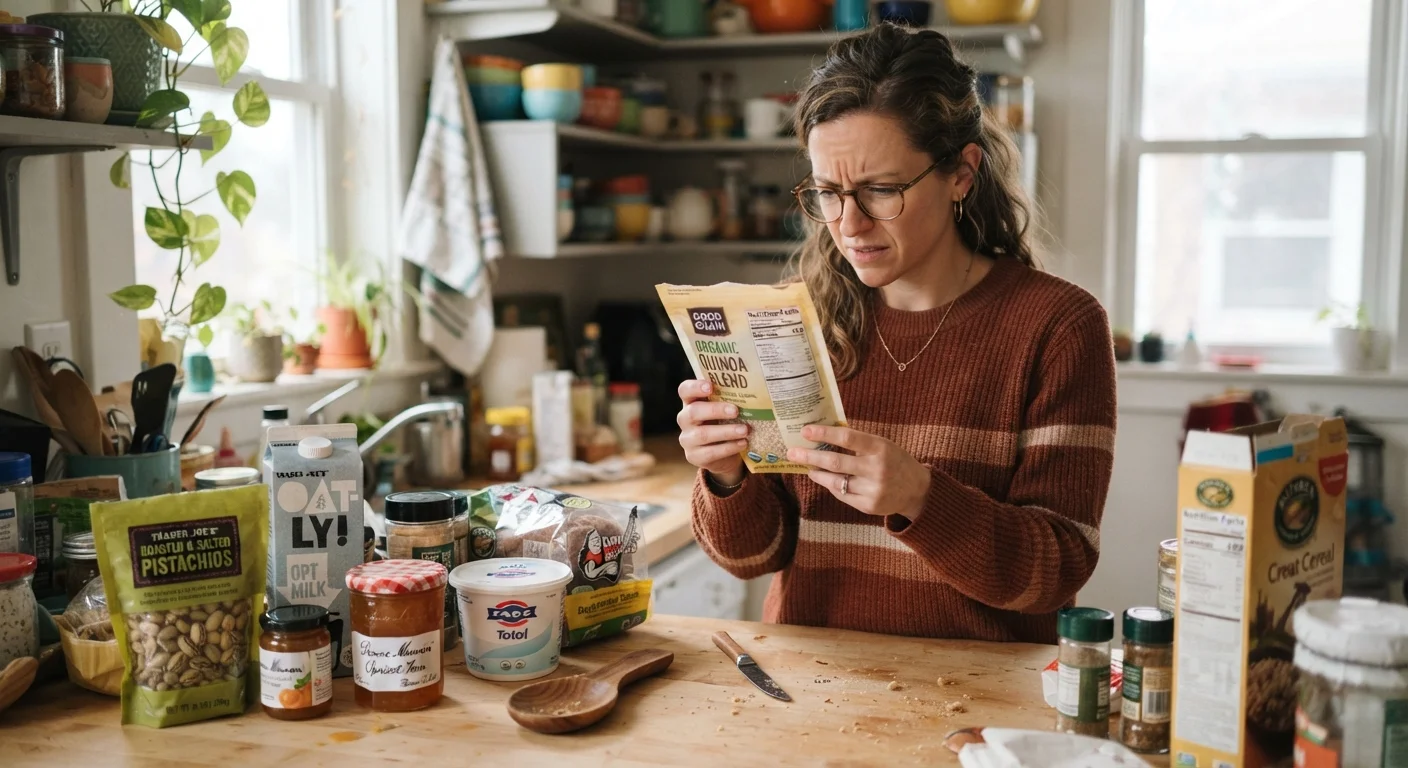
Key Takeaways
- "Fat-free" and "low-calorie" labels don't automatically make a food a healthier choice.
- Eating nutritiously on a budget is achievable with the right strategies and food knowledge.
- All-or-nothing thinking is one of the biggest barriers to lasting dietary improvement.
- Organic labeling refers to farming methods, not a guarantee of superior nutrition.
- Portion size matters even when food is genuinely nutritious - context always counts.
Why Good Intentions Aren't Enough
Most people who want to eat better aren't held back by laziness or indifference - they're tripped up by assumptions that feel completely reasonable. A label says "low-fat," so it seems like the smarter pick. Healthy food seems expensive, so why try? One indulgent dinner feels like it's undone a week of effort.
These mental shortcuts are understandable. Nutrition information is genuinely confusing, and nutrition advice often seems to contradict itself across different sources and years. When guidance shifts - fat is bad, then it isn't; carbs are the enemy, then they're not - people fill the gaps with assumptions that feel stable, even when those assumptions are flawed.
Identifying which assumptions are quietly working against you is one of the most practical steps you can take toward more consistent, realistic healthy eating.
Common Assumptions That Work Against You
The mistakes below aren't signs of carelessness. They're the predictable result of mixed messages, clever marketing, and deeply ingrained habits of thought. Understanding why each assumption forms makes it easier to replace it with something more accurate.
Treating "fat-free" or "low-fat" labels as automatic health signals.
Why it happens: Decades of public health messaging positioned dietary fat as the primary enemy, training consumers to read "low-fat" as "better for you." Food marketing has reinforced this shortcut ever since.
Assuming healthy eating is too expensive to be practical.
Why it happens: Pre-made "health foods" and specialty grocery stores genuinely do cost more, which reinforces the belief that eating well requires a significant budget. The premium products get the most attention.
Believing that one "bad" meal ruins overall progress.
Why it happens: All-or-nothing thinking is a well-documented cognitive tendency. When people frame eating as either perfectly on-track or completely off the rails, a single deviation feels catastrophic enough to abandon the plan entirely.
Conflating "organic" with "nutritionally superior."
Why it happens: The organic certification is often associated with health-consciousness in general, making it easy to assume that organic products are more nutritious. The premium price tag amplifies that perception.
Skipping meals to compensate for eating something indulgent.
Why it happens: Meal-skipping feels like an intuitive way to "balance the books" on calories. It's a common reaction when someone feels they've overeaten, especially after a large meal or a celebration.
Assuming a food is healthy because it carries a "natural" or "superfood" label.
Why it happens: These terms carry strong positive associations and appear on packaging without standardized regulatory definitions in most cases. Consumers reasonably take them as meaningful quality signals when they often aren't.
This Is General Information, Not Medical Advice
The guidance in this article is intended for general educational purposes only. Individual nutritional needs vary based on health conditions, medications, age, and other factors. Always consult a qualified healthcare professional or registered dietitian before making significant changes to your diet.
Building a More Realistic Foundation
Letting go of these assumptions doesn't require becoming a nutrition expert. It mostly requires slowing down when a label or idea feels too clean - "this food is bad," "that label means healthy" - and asking whether the claim actually holds up.
80%
Consumers influenced by front-of-pack health claims
Research published in nutritional behavior journals consistently finds that front-of-package health claims significantly influence purchase decisions, often independently of actual nutritional content.
2x
Likelihood of overeating after perceived "healthy" labeling
Studies on the "health halo" effect suggest people tend to eat larger portions of foods they perceive as healthy, often consuming more total calories as a result.
Lasting improvement tends to come from patterns, not individual choices. If the broader picture includes a variety of whole foods, adequate protein, and meals you can sustain without feeling deprived, occasional deviations rarely matter much. Understanding the patterns that tend to go wrong is a useful next step once you've identified your own assumptions.
This article is for general informational and educational purposes only and is not a substitute for personalized medical or nutritional advice. Consult a qualified healthcare professional or registered dietitian for guidance specific to your health needs.