
Home Electrical Safety: What Homeowners Need to Know Without Touching the Wiring

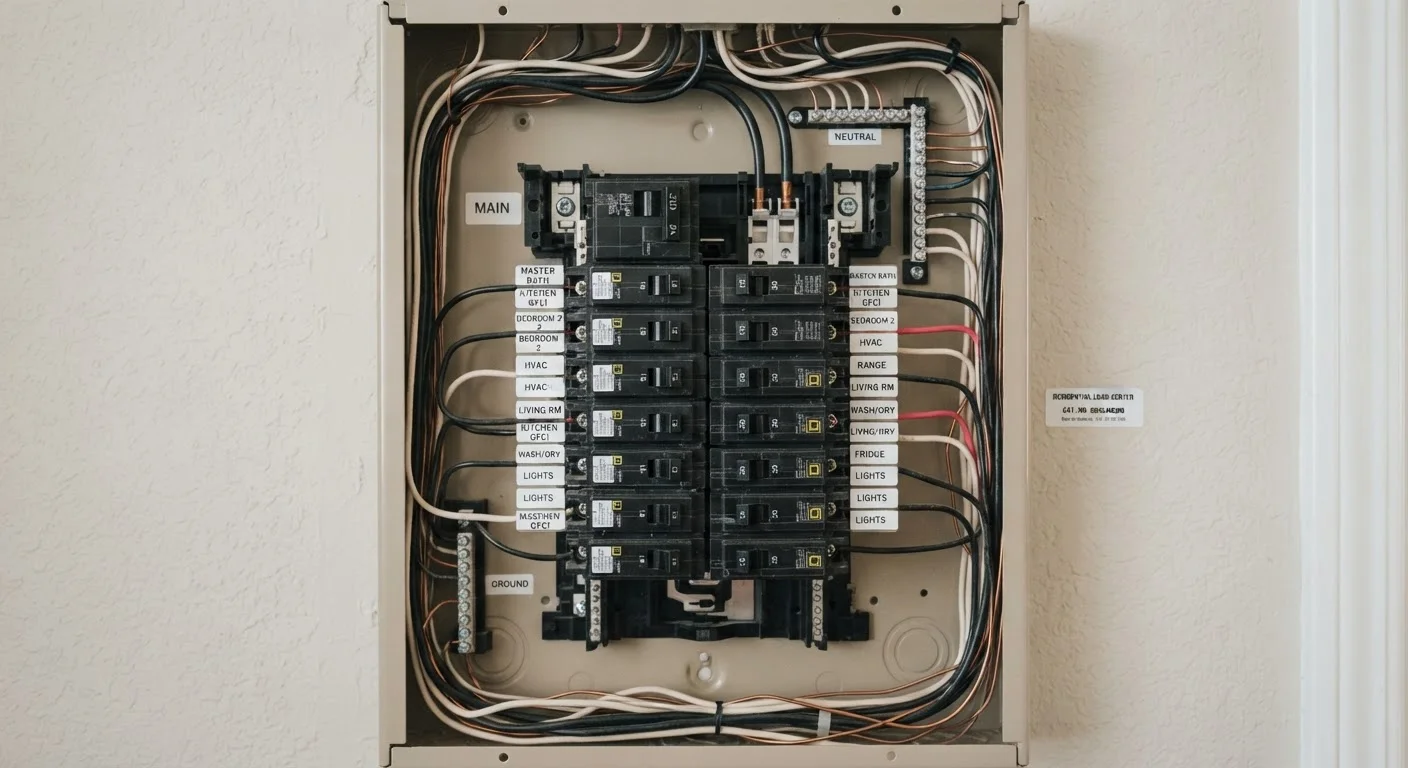
Key Takeaways
- Most homeowners can safely reset breakers and test GFCI outlets without touching wiring.
- Burning smells, flickering lights, and warm outlets are serious warning signs requiring professional attention.
- Any work inside your electrical panel or involving new wiring must be done by a licensed electrician.
- Local building codes typically require permits for electrical work beyond basic fixture swaps.
- Understanding electrical terminology helps you communicate clearly with professionals and spot problems early.
Start here
Why Electrical Literacy Matters for Homeowners
Build vocabulary
Key Electrical Terms Explained Simply
Stay alert
Warning Signs You Should Never Ignore
Know your limits
What You Can Safely Do Yourself
Call the right person
When You Must Call a Licensed Electrician
Why Electrical Literacy Matters for Homeowners
You don't need an electrician's license to be a safer, more informed homeowner. What you do need is a working knowledge of how your home's electrical system is organized, what its warning signals look like, and - critically - where your involvement should stop.
Electrical issues are among the leading causes of residential house fires in the United States. Most hazardous situations don't begin with dramatic sparks; they start quietly: a loose connection behind a wall plate, a circuit quietly running hotter than it should, an outlet that was wired incorrectly years ago. Recognizing the early signs gives you time to act before a small problem becomes a dangerous one.
This guide won't teach you to rewire a room. Instead, it gives you the vocabulary, the warning checklist, and the clear boundary between what's safe to handle and what belongs in the hands of a licensed professional. For a broader look at knowing when DIY is appropriate, see our homeowner's decision guide.
Key Electrical Terms Explained Simply
Electrical conversations between homeowners and electricians often stall because of unfamiliar terminology. These definitions will help you understand what you're looking at and what you're being told.
Circuit breaker
A resettable safety switch in your electrical panel that automatically shuts off power to a circuit when too much current flows through it, preventing overheating or fire.
GFCI outlet
A Ground Fault Circuit Interrupter outlet detects tiny current imbalances and cuts power in milliseconds to prevent electric shock. Required by code in wet areas like kitchens, bathrooms, and outdoors.
Arc fault
An unintended electrical discharge that jumps across a gap in damaged or loose wiring. Arc faults generate intense heat and are a leading cause of home electrical fires.
Circuit load
The total amount of electrical power being drawn by all devices on a single circuit at one time. Exceeding a circuit's rated load causes the breaker to trip.
Amperage (amps)
The measure of electrical current flowing through a wire. Household circuits are typically rated at 15 or 20 amps; exceeding that rating is what causes a breaker to trip.
Grounding
A safety pathway that directs excess electrical current safely into the earth, reducing the risk of shock if a fault occurs inside a device or outlet.
Knowing these terms also helps when adding smart home devices to your system. Our guide on smart home tech basics explains how modern devices interact with your home's existing electrical infrastructure.
Warning Signs You Should Never Ignore
Most electrical problems announce themselves before they become emergencies. Train yourself to notice the following:
- Burning or fishy smell near outlets or the panel: Overheating insulation or components produce a distinctive odor. Do not dismiss this.
- Discolored or warm outlet and switch plates: Heat escaping through a faceplate indicates a problem inside the wall.
- Breakers that trip repeatedly: A breaker is doing its job by tripping, but frequent trips on the same circuit suggest the circuit is consistently overloaded or has a fault.
- Flickering or dimming lights: Occasional flicker during appliance startup is usually minor. Persistent or widespread flickering suggests a loose connection or panel issue.
- Buzzing or crackling sounds from outlets: Audible electrical noise is never normal and often signals arcing - a fire risk.
- Outlets with scorch marks: Even minor discoloration around an outlet face is a sign of past arcing or heat damage.
Never Ignore Electrical Smells
A burning, acrid, or fishy odor near an outlet, switch, or panel is a serious warning sign that should never be attributed to dust or dismissed as minor. These smells can indicate insulation melting or active arcing inside your walls. Turn off the relevant circuit immediately and do not use it until a licensed electrician has inspected it.
If you notice any combination of these signs - especially smell plus heat plus flickering - treat it as urgent. Turn off the affected circuit at the breaker and contact a licensed electrician before using it again.
What You Can Safely Do Yourself
There is a meaningful set of electrical tasks that most homeowners can handle safely, without touching wiring or opening the panel:
- Reset a tripped breaker: Flip the breaker fully off, then back on. If it trips again, stop and call a professional.
- Test and reset GFCI outlets: Press 'Test,' confirm power cuts out, then press 'Reset.' Do this monthly in kitchens, bathrooms, garages, and outdoor areas.
- Replace a like-for-like outlet or switch cover plate: Swapping a damaged plastic faceplate - not the outlet itself - requires no electrical contact.
- Change a lightbulb or swap a plug-in lamp: Standard tasks that carry no wiring risk when the fixture is off.
- Use a non-contact voltage tester: This inexpensive tool lets you confirm a circuit is de-energized before touching anything. It does not require wiring knowledge to use safely.
Keep a Simple Electrical Log
Write down every time a breaker trips, an outlet stops working, or you notice flickering - including the date and which room or circuit is affected. This record helps an electrician diagnose patterns quickly and reduces diagnostic time (and cost) during a service call.
Understanding these boundaries is equally useful when expanding your home's technology. The Home Tech Basics hub covers how smart plugs, switches, and hubs fit into ordinary household circuits without requiring complex wiring changes.
When You Must Call a Licensed Electrician
The following tasks are outside safe DIY territory for virtually all homeowners, regardless of general handiness:
- Any work inside the main electrical panel or subpanel
- Adding a new circuit or outlet
- Replacing or upgrading the panel itself
- Installing a hard-wired appliance (range, dryer, EV charger, whole-house generator)
- Troubleshooting aluminum wiring, knob-and-tube wiring, or any pre-1970s system
- Rewiring or splicing wires inside walls
Most of these tasks also require permits and inspections under local building codes. Work done without permits can complicate home sales, void insurance claims, and leave hazards hidden inside your walls. Always verify requirements with your local building or permitting department before any project begins.
Calling a professional is not an admission of incompetence - it's the practical and safe choice. A licensed electrician carries the training, tools, and liability insurance to do the work correctly and legally. Your role is to recognize the problem early and describe it clearly, which is exactly what this guide has prepared you to do.
This article is for general informational and educational purposes only. It does not constitute professional electrical, safety, or legal advice. Always consult a licensed electrician and verify local code requirements before undertaking any electrical work in your home.