

Key Takeaways
- Liability coverage pays for injuries or property damage you cause to others, not your own losses.
- State minimums are legal floors, not recommendations - they're frequently too low for real-world accidents.
- Once your liability limit is exhausted, you may owe the remainder out of pocket.
- Umbrella policies can extend liability protection beyond standard policy caps.
- Reading your actual policy limits - not just the declarations page summary - is essential.
Liability Coverage
Liability coverage is the portion of an insurance policy that pays for harm you accidentally cause to other people or their property. If you're found legally responsible for an injury or damage, this coverage steps in to help pay the other party's costs - up to your policy's limit. It appears in auto, homeowners, and renters policies, among others.
Liability coverage is typically split into two sub-limits: bodily injury per person and bodily injury per occurrence, plus a separate property damage limit - often written as a split limit (e.g., 25/50/25).
What Liability Coverage Actually Pays For
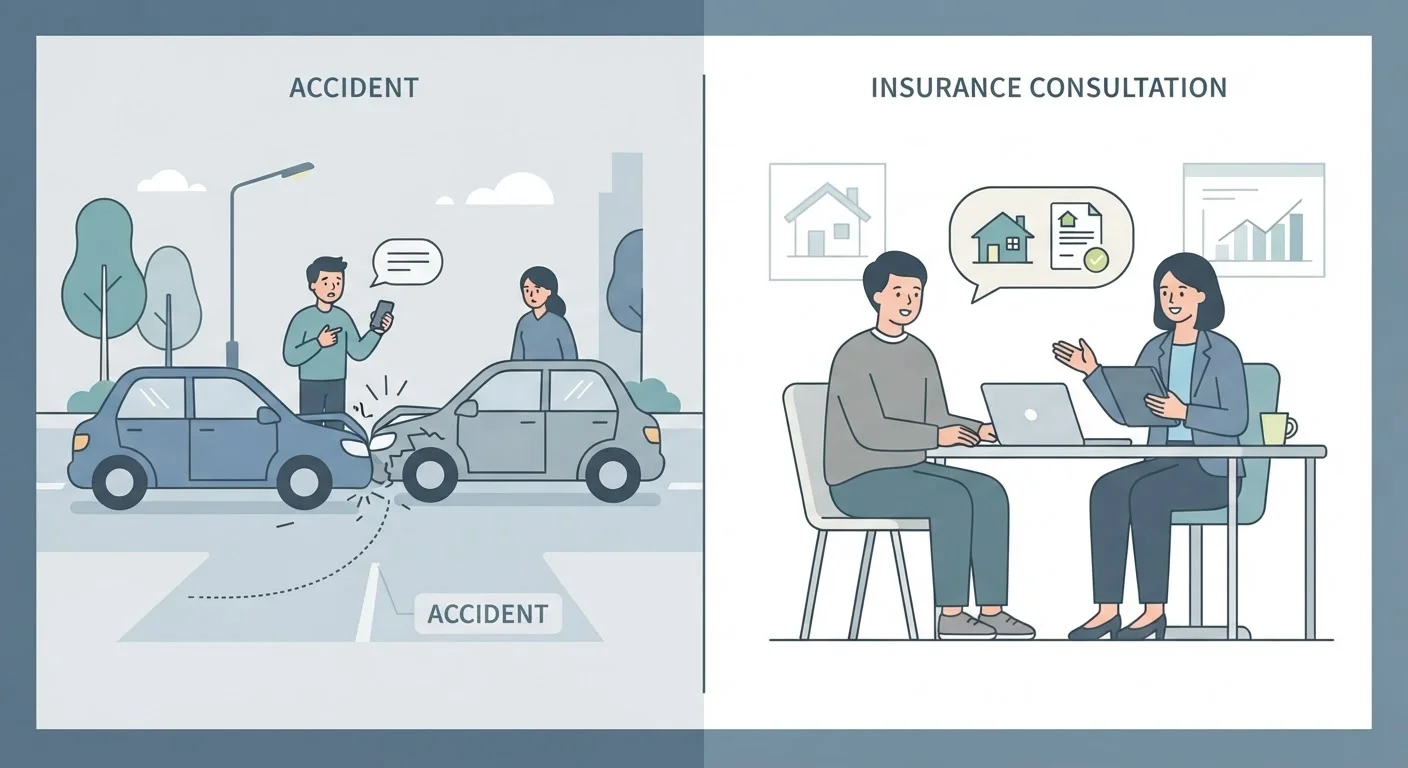
Liability coverage is one of the most fundamental pieces of any insurance policy - and one of the least understood. At its core, it covers the financial consequences of harm you accidentally cause to someone else. That means the other driver's medical bills after a collision you caused, or the medical costs if a guest slips and falls at your home.
It does not cover your own injuries, your own vehicle, or your own property. Those require separate coverages - something many policyholders discover too late. If you're carrying only liability on your auto policy, for instance, your car gets no protection if you're at fault in a crash.
Liability coverage typically covers two categories: bodily injury (medical expenses, lost wages, and sometimes pain and suffering for injured parties) and property damage (repairs or replacement of the other person's property). Both are capped at your policy limits - and that cap is where many people run into trouble.
Liability vs. Full Coverage: A Common Mix-Up
"Full coverage" is an informal term - not an official policy type. It typically refers to a combination of liability, collision, and comprehensive, but the exact definition varies. Always confirm what coverages are actually included in your policy rather than relying on that phrase. See a breakdown of auto coverage types for more detail.
Why State Minimums Often Fall Short
Every state that requires auto insurance sets a minimum liability limit. These minimums exist to ensure some basic protection for accident victims - but they were never designed to fully cover the cost of a serious accident.
Consider a split limit like 25/50/25: that's $25,000 per injured person, $50,000 per accident, and $25,000 for property damage. A single ambulance ride, emergency room visit, and brief hospital stay can easily exceed $25,000. If multiple people are injured, the per-accident cap spreads thin fast. And modern vehicles often cost well over $25,000 to repair or replace.
25/50/25
Common minimum auto liability limit in many U.S. states
These figures - $25K per person, $50K per accident, $25K property damage - represent a typical state floor, not a coverage recommendation for most drivers.
$30,000+
Average cost of a single hospitalization in the U.S.
According to the Agency for Healthcare Research and Quality, average inpatient hospital costs have exceeded $30,000 per stay - a figure that can quickly outpace minimum liability limits.
When a claim exceeds your liability limits, the insurer pays up to the cap - and stops. The injured party can then pursue you personally for the remainder. That means your wages, savings, and other assets could be at risk. This is the gap that underlies much of the underinsurance problem in the U.S. today.
Liability in Homeowners and Renters Policies
Liability coverage isn't only an auto insurance concept. Standard homeowners and renters policies include personal liability protection that can apply in a range of everyday situations: a visitor injured on your property, damage you accidentally cause to a neighbor's belongings, or even certain incidents that happen away from home.
Default limits on home policies often start around $100,000 - which sounds substantial until you factor in medical bills, legal defense costs, and potential judgments. Legal defense alone can be expensive, even when a claim is ultimately dismissed.
As with auto coverage, the right amount of liability protection depends on your circumstances - your assets, your household, and the risks in your environment. A licensed insurance agent can help you evaluate whether your current limits are appropriate. For a broader look at what your policy does and doesn't cover, common misconceptions are worth reviewing before assuming you're protected.
Review Your Limits Before You Need Them
Pull out your declarations page and look at your liability limits - both the per-person and per-occurrence numbers. If they match your state's minimum exactly, that's a signal to ask your agent whether higher limits make sense for your situation. Increasing limits is often less expensive than people expect.
Extending Protection With an Umbrella Policy
For people who want a broader safety net, an umbrella policy sits on top of your existing auto and home liability limits. Once those underlying limits are exhausted, an umbrella policy kicks in - often providing $1 million or more in additional coverage.
Umbrella policies are generally more affordable than people expect, given the amount of additional protection they offer. They're not a fit for everyone, but for households with significant assets or higher-than-average risk exposure, they can be worth discussing with a licensed agent.
Whatever coverage level you choose, the most important step is understanding what your current policy actually says. That starts with reading the policy documents carefully - not just the summary on the declarations page. Limits, exclusions, and conditions are in the fine print, and knowing them in advance is far better than discovering gaps after a claim.
This article is for general informational purposes only and does not constitute personalized insurance, financial, or legal advice. Coverage terms, limits, and availability vary by provider, policy, and state. Consult a licensed insurance professional for guidance specific to your situation.