

Key Takeaways
- A budget is a spending plan, not a spending limit imposed from outside.
- Most people misunderstand budgets as restrictive rules rather than empowering choices.
- You don't need a high income or a spreadsheet to maintain a useful budget.
- A budget works best when it reflects your actual priorities, not an idealized lifestyle.
- Budgets are flexible documents - they should be adjusted as life changes.
Budget
A budget is a plan that decides in advance where your money will go each month. It maps your income against your expected expenses so every dollar has a purpose before you spend it. Far from being a restriction, a budget is a tool that puts you in charge of your own financial decisions.
In personal finance, a budget is formally defined as a forward-looking financial statement that allocates projected income to specific spending categories over a set period - most commonly a month.
The Word 'Budget' Has a Baggage Problem
Ask most people what a budget is and you'll hear something like: "It's when you stop spending money on things you enjoy." That framing - budget as deprivation - is exactly why so many people avoid making one in the first place.
The word itself carries emotional weight. It gets associated with restriction, sacrifice, and the feeling of being told no. But that's a misreading of what budgeting actually does. A budget doesn't stop you from spending. It tells you, ahead of time, how you want to spend - and gives you permission to follow through on that plan without second-guessing yourself.
This distinction matters. When you think of a budget as a punishment, you resist it. When you understand it as a plan you build yourself, it becomes something entirely different: a tool that works for you, not against you. If the emotional side of this feels familiar, it may be worth reading about why budgets feel so restrictive and what's actually behind that reaction.
“A budget is telling your money where to go instead of wondering where it went.”
— John C. Maxwell, Author and speaker on leadership and personal development
What a Budget Actually Does
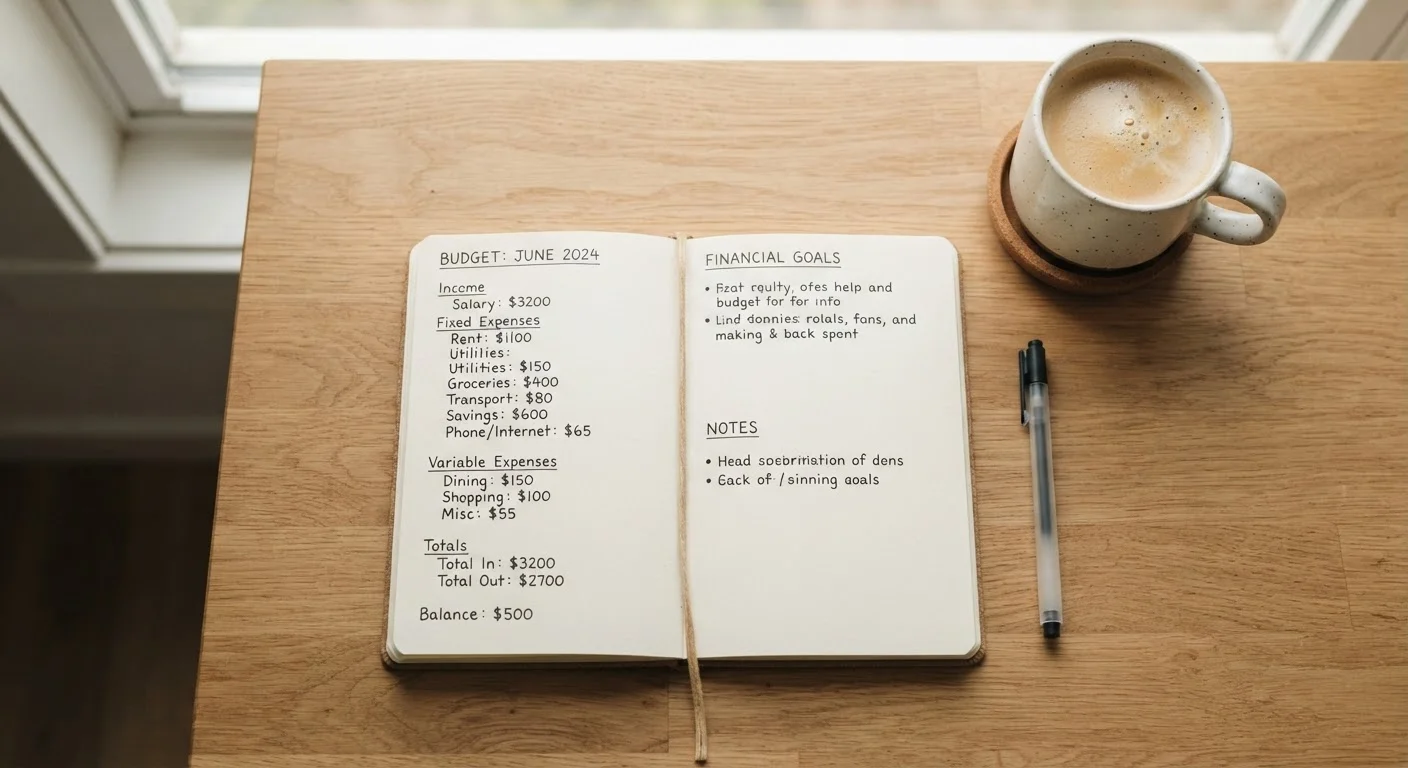
At its core, a budget matches your income to your spending categories before the month begins. You list what money is coming in. You list what money needs to go out - rent, groceries, transportation, savings, and yes, entertainment too. Then you make sure those two sides line up.
That's it. There's no required spreadsheet, no special software, and no minimum income threshold. A budget can live in a notebook, a phone app, or a simple text document. What makes it a budget isn't the format - it's the intention behind it.
~33%
Americans who follow a written budget
Surveys consistently find that only about one-third of U.S. adults maintain a detailed household budget, despite widespread recognition that budgeting is beneficial.
$1,000+
Average monthly gap in untracked spending
Research on consumer spending habits suggests many households underestimate their monthly discretionary spending by several hundred to over a thousand dollars when budgeting without a written plan.
The key function of a budget is making decisions proactively rather than reactively. Without a plan, spending decisions get made in the moment, often under the influence of habit, emotion, or convenience. A budget shifts those decisions to a calmer, more deliberate moment - when you're not standing at a checkout or browsing late at night.
Common Misconceptions That Lead People Astray
Beyond the restriction myth, a few other misunderstandings keep people from budgeting effectively.
- "I earn too little to budget." Budgeting is more important, not less, when money is tight. A plan ensures your limited dollars cover what matters most before they disappear.
- "I'm not a math person." A basic budget involves addition and subtraction - nothing more complex than checking your grocery total.
- "Once I make a budget, I can't change it." A budget is a living document. Life changes, and your plan should change with it. Missing one month's targets isn't failure - it's information.
- "Budgeting is only for people in financial trouble." Budgeting is a planning habit. It's just as useful when things are going well, and it's one of the reasons financially stable people often stay that way.
For a deeper look at these and other myths, common budgeting myths corrected covers the most persistent ones with clear explanations.
Start With What You Already Spend
Before building an ideal budget, look at one or two months of actual bank or credit card statements. This gives you a realistic starting point based on real behavior, not wishful thinking. A budget grounded in reality is far more likely to stick than one built from scratch with arbitrary numbers.
A Budget Reflects Your Priorities - Not Someone Else's
One underappreciated truth about budgeting: a good budget looks different for every person. A budget built around your actual life - your rent, your commute, your family, your goals - will always outperform a generic template that doesn't account for how you actually live.
If travel matters to you, your budget should include travel. If you have pets, pet care belongs in the plan. A budget that ignores things you genuinely spend money on isn't realistic, and unrealistic budgets get abandoned quickly.
The goal isn't to copy someone else's perfect financial life. It's to build a plan that fits yours - and then refine it over time. If you're ready to build one from the ground up, a step-by-step guide for first-time budgeters walks through every stage without assuming prior experience. And if you want to think longer-term, the principles behind budgets that stick explains what separates a one-month attempt from a lasting financial habit.
This article is for general informational and educational purposes only. It is not personalized financial advice. For guidance specific to your circumstances, consider consulting a qualified financial professional.