

Key Takeaways
- Zero-based budgeting assigns every dollar of income to a specific category until nothing is left unallocated.
- Percentage-based budgeting divides income into broad categories using fixed ratios, such as the 50/30/20 rule.
- Zero-based budgeting requires more monthly effort; percentage-based budgeting is faster to maintain.
- Neither method guarantees results - consistency and honest tracking matter more than the framework chosen.
- Your income stability and how much detail you want to manage are the biggest factors in choosing between them.
Option A
Zero-Based Budgeting
The meticulous, dollar-by-dollar method.
Best for: People who want tight control over exactly where every dollar goes each month.
Option B
Percentage-Based Budgeting
The flexible, category-first framework.
Best for: People who want a simple, adaptable system that scales with income changes.
If your expenses vary a lot month to month
Zero-Based Budgeting
Rebuilding your budget from scratch each month forces you to account for irregular costs rather than letting them slip through fixed-percentage buckets.
If you have a steady, predictable income
Percentage-Based Budgeting
Stable income means fixed ratios stay relevant over time, making this low-maintenance approach a natural fit.
If you're new to budgeting and want to start simply
Percentage-Based Budgeting
Broad categories are easier to set up and require less upfront knowledge of your exact spending patterns.
If you're trying to eliminate debt or hit a specific savings goal fast
Zero-Based Budgeting
Line-by-line allocation makes it hard to ignore overspending and keeps you accountable to precise targets.
If you manage shared household finances with a partner
Percentage-Based Budgeting
Simpler categories are easier to agree on together; see budgeting as a household for more on joint approaches.
How Each Method Actually Works
Before you can pick a budgeting method, you need to understand what each one actually asks you to do - not just in theory, but in practice every month.
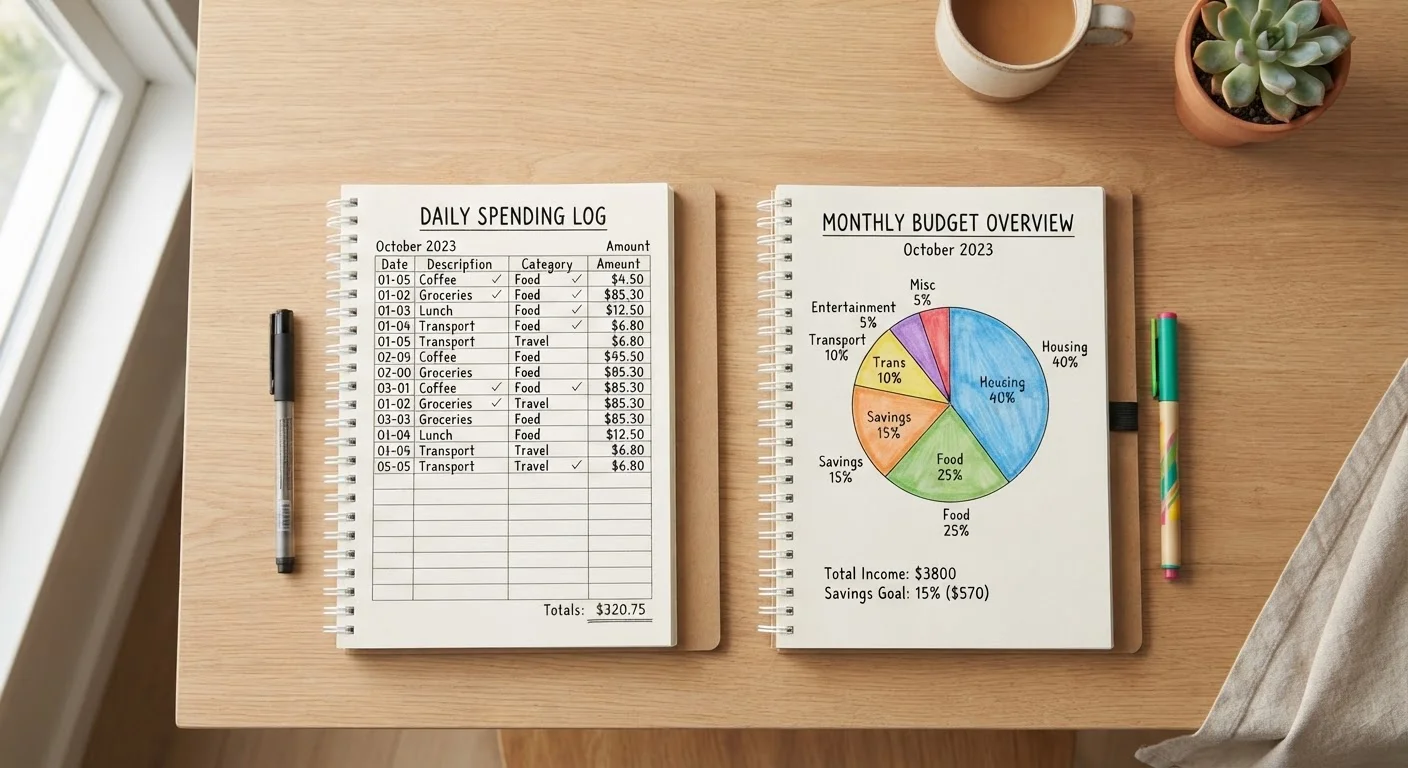
Zero-based budgeting (ZBB) starts with your total monthly take-home income and requires you to assign every single dollar to a category - housing, groceries, debt payments, savings, entertainment, and so on - until you reach zero dollars remaining. That doesn't mean spending everything; it means every dollar has a designated job, including dollars earmarked for savings or an emergency fund. If you earn $3,800 a month, your budget categories must add up to exactly $3,800.
Percentage-based budgeting works differently. Instead of building a line-by-line plan from scratch, you allocate your income using fixed ratios. The most widely referenced example is the 50/30/20 rule - 50% to needs, 30% to wants, and 20% to savings and debt repayment. You can read a detailed look at that framework in our article on the 50/30/20 rule. The percentages can be adjusted, but the idea is consistent: broad buckets, not granular categories.
Both methods share the same core goal - intentional spending - but they reach it through very different levels of detail.
| Criterion | Zero-Based Budgeting | Percentage-Based Budgeting |
|---|---|---|
| Core principle | Every dollar assigned; income minus allocations = $0 | Income split by fixed ratios (e.g., 50/30/20) |
| Setup time | Higher - rebuilt each month | Lower - set percentages, review periodically |
| Level of detail | Granular, line-by-line categories | Broad buckets (needs, wants, savings) |
| Best income type | Variable or irregular income | Stable, predictable income |
| Flexibility | High control, less flexibility month to month | More flexible within each bucket |
| Accountability | High - hard to ignore overspending | Moderate - broad categories can obscure detail |
| Learning curve | Steeper for beginners | Gentler, easier to start quickly |
Trade-Offs Worth Knowing
No budgeting method is perfect, and understanding the real-world friction points of each helps you choose one you'll actually stick with.
Zero-based budgeting takes more time. You're essentially building a new spending plan each month. For some people, that discipline is exactly what creates accountability. For others, it becomes a chore that gets abandoned by February. It also requires a reasonably complete picture of your upcoming expenses - something that's harder if your income varies or your costs are unpredictable.
Percentage-based budgeting is easier to maintain but less precise. A household spending 50% on needs might include someone paying $2,000 in rent and someone paying $900 - the percentage stays the same, but what that means in dollars is very different. Broad categories can also mask problem areas: if your "wants" bucket is consistently overspent, a percentage system may not surface that clearly.
Both Methods Require Honest Tracking
Neither zero-based nor percentage-based budgeting can work if your spending data isn't accurate. Before committing to either approach, spend two to four weeks tracking what you actually spend - not what you think you spend. That baseline will make whichever method you choose far more effective from day one.
If you're brand new to budgeting and haven't set up your first plan yet, our beginner's guide to building a first budget walks through the fundamentals before you commit to a specific method.
It's also worth noting that these approaches aren't mutually exclusive. Some people use percentage-based targets as guardrails and zero-based planning as a monthly check-in. The goal isn't methodological purity - it's a system that works for your life.
Which One Is Right for You?
The honest answer is: whichever one you'll actually use consistently. Research on personal finance behavior consistently suggests that the specific method matters less than showing up regularly to review and adjust your spending.
~33%
Americans with a formal household budget
Surveys by Gallup and similar organizations have consistently found that fewer than half of U.S. adults maintain a formal household budget.
1 month
Typical time to see budgeting habits form
Behavioral finance research generally suggests it takes at least one full monthly cycle to establish consistent budget-review habits.
That said, a few practical factors can point you in one direction. Zero-based budgeting tends to suit people who are dealing with debt, working toward a specific financial goal, have irregular expenses, or simply enjoy detailed tracking. Percentage-based budgeting tends to suit people with stable incomes who want a lower-effort system they can set up once and revisit periodically.
It also helps to think about your budget categories before choosing a method. If you're unsure what belongs in each spending area, our budget categories reference guide covers common groupings from housing and food to transport and savings.
Whichever framework you choose, the principles that keep a budget working long-term remain the same: regular reviews, honest tracking, and a willingness to adjust when life changes. Our article on building a budget that lasts covers those habits in depth.
This article is for general informational purposes only and does not constitute personalized financial advice. For guidance specific to your situation, consider speaking with a qualified financial professional.