
Money Avoidance vs. Money Vigilance: Understanding Two Opposite Financial Attitudes

Key Takeaways
- Money avoidance means steering clear of financial information to reduce anxiety or guilt.
- Money vigilance involves close attention to finances, but extreme versions can cause chronic stress.
- Both attitudes have roots in psychology and early experiences with money.
- Awareness of your own pattern is the first step toward more balanced financial behavior.
- Neither extreme is inherently good or bad - the goal is a healthy middle ground.
Our Verdict
Money avoidance and money vigilance sit at opposite ends of the financial attitude spectrum. Avoiders tend to let problems fester by staying disengaged, while highly vigilant people may manage their money well on the surface but carry unnecessary anxiety. Research in behavioral finance suggests that the healthiest financial behaviors tend to live in the middle - informed, intentional, and reasonably calm.
| Best for | Recommended |
|---|---|
| Those who feel anxious or guilty when thinking about money | Money Vigilance (in moderation) |
| Those who obsess over finances to the point of stress or rigidity | Money Avoidance (in small doses - permission to disengage briefly) |
| Those building foundational budgeting habits | Structured but flexible vigilance |
| Those exploring the psychological roots of their spending patterns | Financial self-awareness work |
What Are Money Scripts - and Why Do They Matter?
Financial psychologists use the term money scripts to describe the beliefs about money we carry, often unconsciously, from childhood and early experiences. These beliefs quietly steer how we earn, spend, save, and avoid. Two of the most studied and contrasting scripts are money avoidance and money vigilance.
Understanding which pattern influences you isn't about labeling yourself - it's about gaining the self-awareness needed to make more deliberate choices. For a deeper look at how these patterns connect to your sense of financial identity, see The Role of Financial Identity in How You Spend, Save, and Talk About Money.
These concepts are also explored in the broader field of behavioral finance. Key Terms in Behavioral Finance Every Everyday Consumer Should Understand offers a plain-English primer if the field is new to you.
Money Avoidance: What It Looks Like
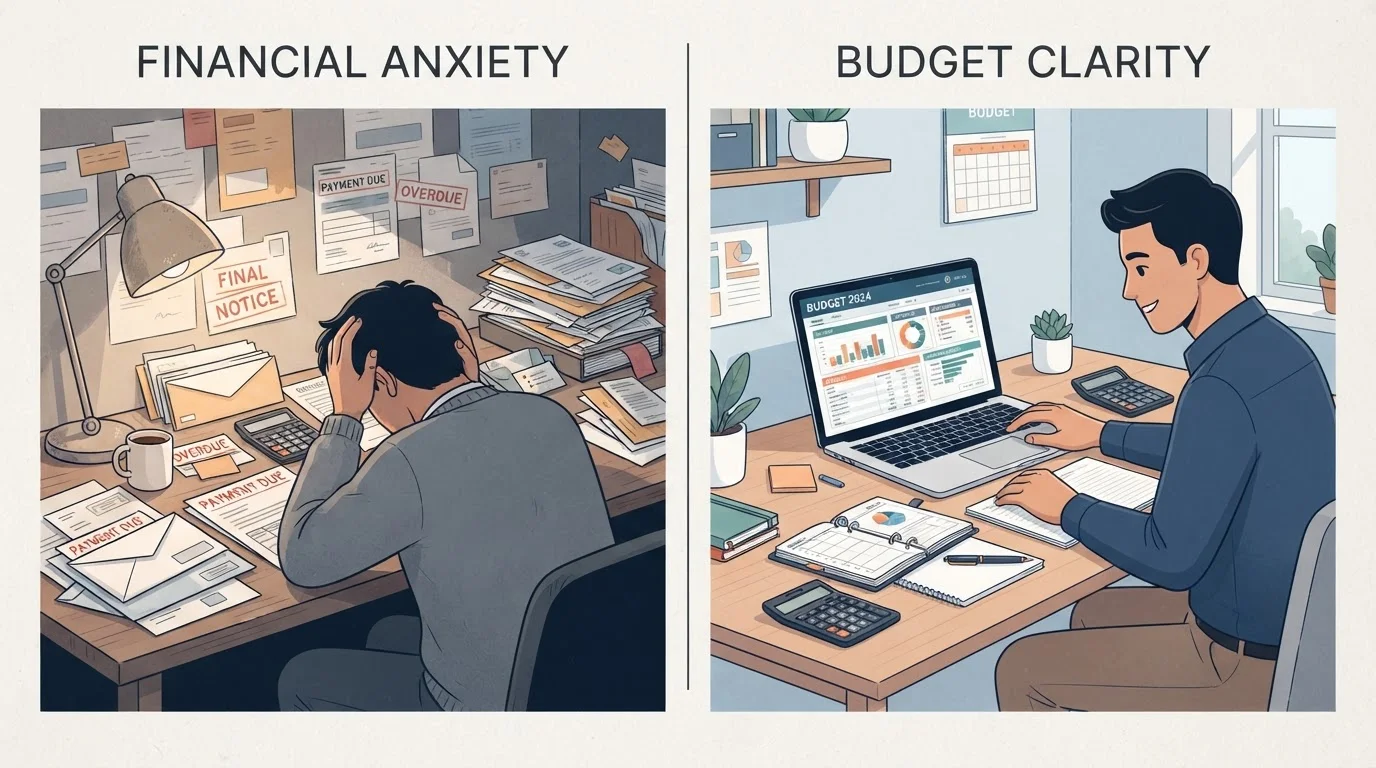
People with a money avoidance orientation tend to believe that money is stressful, shameful, or somehow corrupting. The response? Stay away from it - at least mentally. This doesn't necessarily mean spending recklessly. It often means not opening bills, not checking bank balances, or putting off financial decisions indefinitely.
- Common behaviors: Ignoring account statements, undercharging for work, giving money away impulsively, avoiding salary negotiations.
- Underlying beliefs: "Rich people are greedy." "I don't deserve financial comfort." "Thinking about money makes things worse."
- Real-world consequences: Missed payments, mounting debt, poor retirement readiness, a general sense that finances are out of control.
The avoidance itself provides short-term relief from anxiety, but it tends to create larger problems over time. What goes unexamined often gets worse. This connects directly to some of the widely believed money myths that shape everyday financial decisions that keep people stuck.
Avoidance Compounds Financial Problems
One of the most reliable features of money avoidance is that ignored problems tend to grow. A missed credit card payment becomes a late fee; a late fee becomes a collections account; a collections account affects your credit score for years. The anxiety that drives avoidance is understandable, but acting on that anxiety by looking away usually makes the underlying situation worse, not better. Starting small - checking just one account - can help break the cycle.
Money Vigilance: What It Looks Like
At the other end of the spectrum, money vigilance describes a strong emphasis on financial awareness, caution, and discipline. Vigilant people tend to track spending closely, distrust financial windfalls, and feel uneasy spending on themselves even when they can afford to.
- Common behaviors: Detailed budget tracking, reluctance to use credit, discomfort with financial generosity toward themselves, difficulty enjoying money.
- Underlying beliefs: "You should always save more than you spend." "Debt is dangerous." "Financial security requires constant monitoring."
- Real-world consequences: Generally positive financial outcomes - but chronic financial anxiety, difficulty enjoying life, and strain in relationships where partners or family have different attitudes.
Vigilance isn't harmful by itself. In fact, moderate vigilance is often associated with healthier savings habits and lower debt. The problem arises when it becomes rigid or anxiety-driven, turning financial management into a source of ongoing stress rather than stability.
Moderate Vigilance Is a Financial Strength
Research in behavioral finance generally links moderate financial vigilance - regular attention to spending, an emergency fund, aversion to high-interest debt - to better long-term financial outcomes. The key word is moderate. If tracking your budget is a daily source of dread rather than a useful habit, it may be worth examining whether vigilance has crossed into anxiety. Small, sustainable routines tend to outperform intense monitoring over the long run.
Side-by-Side: How the Two Attitudes Compare
These two orientations differ across almost every dimension of personal finance behavior. The table below summarizes the core contrasts.
| Money Avoidance | Money Vigilance | |
|---|---|---|
| Core belief about money | Money is stressful or corrupting | Money requires constant careful attention |
| Typical behavior | Ignoring bills, avoiding account checks | Detailed tracking, frequent account reviews |
| Spending tendency | Impulsive or neglectful | Cautious, sometimes restrictive |
| Savings habit | Often weak or inconsistent | Generally stronger |
| Debt relationship | Debt may accumulate unnoticed | Strong aversion to debt |
| Emotional experience | Anxiety, shame, or guilt about money | Worry, stress about financial security |
| Risk to watch for | Problems worsen from inattention | Chronic stress; difficulty enjoying money |
Neither pattern is a permanent personality trait. Most people carry elements of both, and situational stress - job loss, medical bills, relationship changes - can push someone temporarily toward one extreme or the other.
Finding a Healthier Middle Ground
The goal isn't to eliminate vigilance or fully embrace avoidance - it's to find a level of financial engagement that is informed without being obsessive, and calm without being blind.
A few practical starting points:
- Name the pattern. Simply recognizing "I avoid looking at my finances because it stresses me out" is meaningful. Awareness precedes change.
- Set scheduled check-ins. Rather than constant monitoring (vigilance) or never looking (avoidance), try a weekly 15-minute money review. Predictable structure reduces both anxiety and avoidance.
- Separate facts from feelings. Your account balance is a number. Your feelings about that number are separate. Practicing that distinction, even briefly, can reduce the emotional charge.
- Ask reflective questions before big decisions. Financial Self-Awareness: Questions Worth Asking Yourself Before Making Big Money Decisions offers a practical framework for doing exactly that.
These habits apply equally well whether you're working on budgeting basics or tackling saving and debt goals.
It's also worth exploring how avoidance and vigilance relate to broader thinking patterns. Scarcity vs. Abundance Thinking examines another dimension of how our mental framing shapes financial behavior.
This article is for general informational and educational purposes only and does not constitute personalized financial, psychological, or legal advice. For guidance specific to your situation, consider consulting a qualified financial adviser or licensed mental health professional.