
Key Takeaways
- The snowball method pays off smallest balances first, building momentum through quick wins.
- The avalanche method targets highest-interest debt first, typically reducing total interest paid.
- Neither method requires extra income — both work by redirecting freed-up minimum payments.
- The best method is the one you'll actually stick with consistently over time.
- Both approaches require paying at least minimums on all debts except the one being targeted.
Option A
Debt Snowball
The momentum-builder that prioritizes quick wins.
Best for: People who need motivation and visible progress to stay on track with debt repayment.
Option B
Debt Avalanche
The math-first method that minimizes total interest paid.
Best for: People who are disciplined and want to reduce overall debt cost as efficiently as possible.
If staying motivated is your biggest challenge
Debt Snowball
Eliminating small balances quickly gives you visible wins that help sustain momentum over the long haul.
If minimizing total interest paid is your priority
Debt Avalanche
Attacking high-interest debt first means less of your money goes to interest charges over the life of your repayment plan.
If you have several small debts cluttering your budget
Debt Snowball
Clearing small balances frees up cash flow faster and simplifies the number of payments you manage each month.
If your highest-interest debt also carries a large balance
Debt Avalanche
The interest savings on a large, high-rate balance can be substantial and worth the patience the avalanche method requires.
How Each Method Works
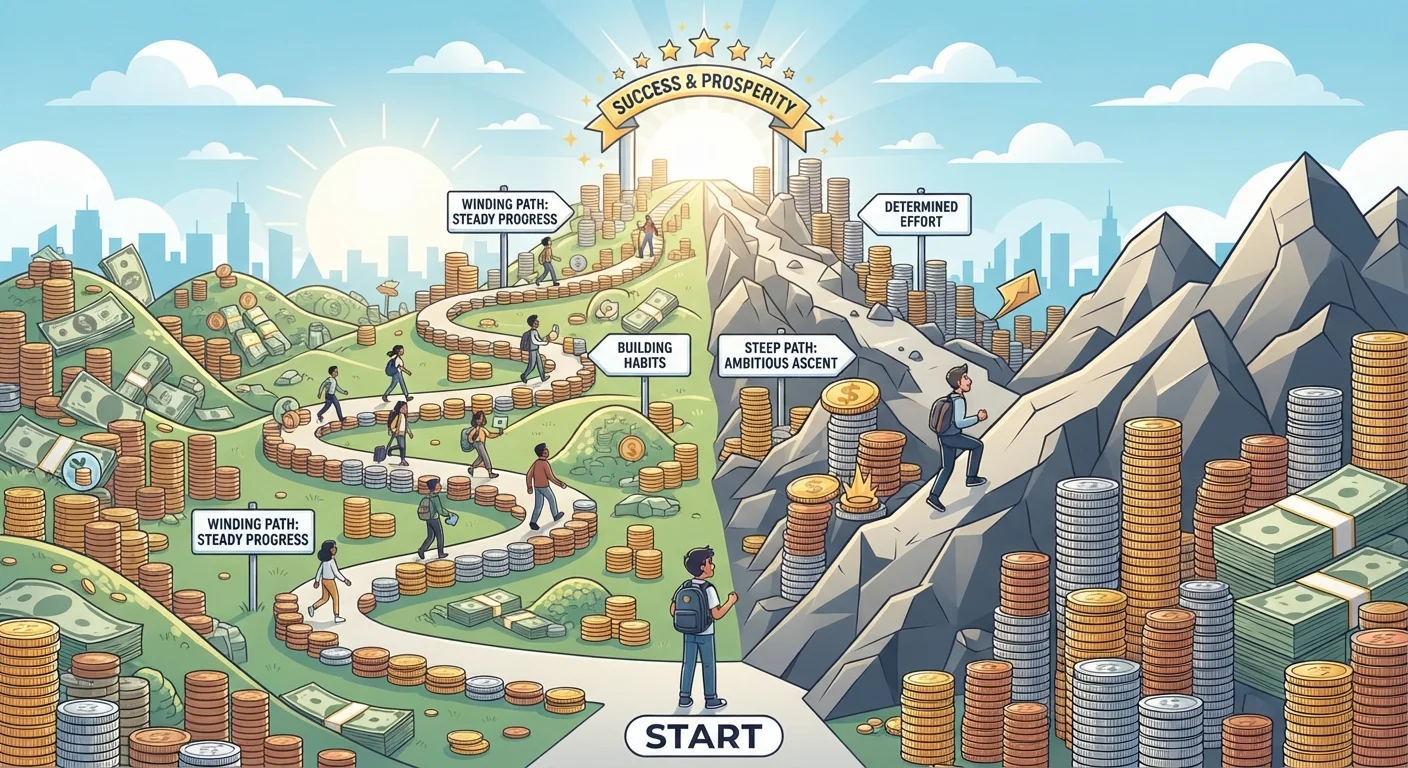
Both the snowball and avalanche methods share the same basic mechanic: you pay the minimum on every debt except one, then throw any extra money at that target debt. Once it's paid off, you roll that freed-up payment amount into the next target. The difference is in how you choose the order.
Debt Snowball: List your debts from smallest balance to largest, regardless of interest rate. Put extra money toward the smallest one first. When it's gone, move to the next smallest. The psychological payoff of eliminating accounts quickly is central to how this method works.
Debt Avalanche: List your debts from highest interest rate to lowest, regardless of balance size. Extra money goes toward the highest-rate debt first. Once it's paid off, redirect that payment toward the next highest-rate debt. This approach is designed to reduce what you spend on interest over time.
Before diving in, it helps to understand terms like interest rate, principal, and minimum payment — see our borrower's glossary for plain-language definitions.
| Criterion | Debt Snowball | Debt Avalanche |
|---|---|---|
| Repayment order | Smallest balance first | Highest interest rate first |
| Primary benefit | Motivational quick wins | Lower total interest paid |
| Best psychological fit | Needs visible momentum | Comfortable with delayed payoff |
| Interest rate consideration | Not the deciding factor | Central to the strategy |
| Account simplification | Happens quickly | May take longer |
| Math efficiency | May cost more in interest | Generally more cost-efficient |
The Real-World Trade-Offs
On paper, the avalanche method wins on math. By paying down high-interest debt first, you generally pay less total interest and — depending on your balances — may get out of debt faster. The snowball method, by contrast, may cost more in interest overall because smaller debts aren't always the most expensive ones.
But personal finance isn't purely a math problem. Research in behavioral economics consistently suggests that people are more likely to follow through on a plan when they feel progress. The snowball method is deliberately structured around that insight. Crossing debts off a list, even small ones, reinforces the habit of sticking with a repayment plan.
~20%
Average APR on credit card debt in the U.S.
Federal Reserve data has shown average credit card interest rates above 20% APR in recent years, underscoring why targeting high-rate debt can matter.
3 in 4
Americans carrying some form of debt
Federal Reserve surveys consistently find that a large majority of U.S. households carry at least one form of debt, from credit cards to student loans.
There's also a practical angle: if you have several small debts with low minimum payments, eliminating them quickly with the snowball method can simplify your monthly budget — fewer bills to track, fewer accounts to manage. That simplicity has real value.
Watch out for common repayment pitfalls like only paying minimums or taking on new debt mid-plan, which can derail either method.
Choosing the Right Fit for Your Situation
Neither method works if you stop using it. The honest question to ask yourself: Which approach will I actually maintain for months or years?
If you've struggled in the past to stay motivated with debt repayment, the snowball method's early wins may be more valuable than the interest savings the avalanche would provide. If you're disciplined and the numbers genuinely drive you, the avalanche may be a better match.
Some people also combine elements of both — for example, using the snowball to eliminate one or two very small nuisance debts, then switching to an avalanche approach for the remaining balances. That's not a compromise; it's a practical adaptation.
If your debt load feels genuinely overwhelming, it may be worth reading warning signs your debt is becoming unmanageable before settling on a DIY repayment plan. And if you're trying to build savings at the same time, our guide on balancing saving and debt repayment walks through how to approach both goals simultaneously.
This article is for general informational purposes only and does not constitute personalized financial advice. Consider speaking with a licensed financial professional about your specific situation.