

Key Takeaways
- Most training mistakes begin before the dog even arrives home — preparation is the real first step.
- Dogs thrive on predictability; establishing a schedule before day one reduces stress for everyone.
- Designating a quiet, defined space for your dog helps them decompress and feel secure faster.
- Consistency between all household members is more important than any single training technique.
- A vet visit within the first week is a foundational health priority, not an optional step.
Start here
Why Preparation Starts Before You Pick Up the Dog
Next
Setting Up Your Home the Right Way
Then
Building a Routine Before Day One
Shift your thinking
The Mindset Shift Every New Dog Owner Needs
Final step
Your First Health Steps
Why Preparation Starts Before You Pick Up the Dog
The excitement of getting a new dog can make it tempting to wing the first few days and figure things out as you go. But dogs don't experience novelty the way humans do — they experience uncertainty. How your home is set up and how consistently you respond in the first hours shapes the behaviors your dog will default to for months.
Most first-time owners focus on supplies — a leash, a bowl, a bed. Those matter, but they're secondary to having clear decisions made before the dog arrives: where the dog will sleep, who feeds them, what words you'll use as cues, and which spaces are off-limits. Making these calls in advance, and agreeing on them as a household, removes the ambiguity that leads to mixed signals.
If you're also managing existing animals, planning a gradual introduction before day one is equally critical to avoiding early tension.
Crate training
The process of teaching a dog to see a crate as a safe, comfortable space — used to support house training and give the dog a predictable retreat.
Socialization window
A critical developmental period (roughly 3–14 weeks for puppies) when positive exposure to new people, animals, and environments has the greatest long-term impact on behavior.
Decompression period
The initial days or weeks after a dog enters a new home when they need calm, low-pressure time to adjust before full training or introductions begin.
Positive reinforcement
A training approach where desired behaviors are rewarded (with treats, praise, or play) to make them more likely to happen again — no punishment involved.
House training
Teaching a dog where and when it is appropriate to relieve themselves, typically using a consistent schedule and designated outdoor or indoor location.
Setting Up Your Home the Right Way
Before your dog walks through the door, do a ground-level walkthrough of your space. Dogs explore with their mouths and noses, often at floor level, so look for electrical cords, toxic houseplants, loose trash access, and small objects that could be swallowed. Removing hazards now is far easier than redirecting a curious dog later.
Next, define your dog's core zones:
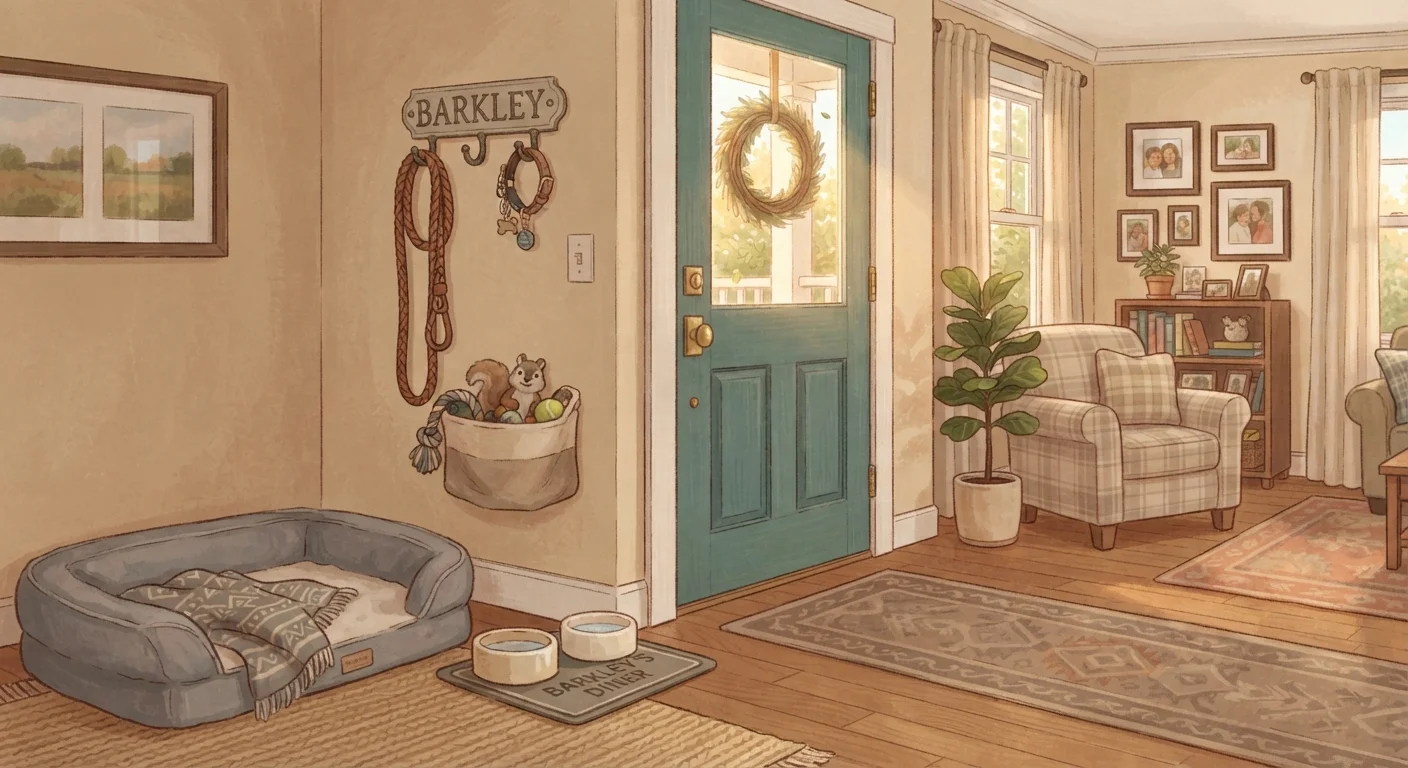
- Sleeping area: A crate or dog bed in a low-traffic corner gives the dog a predictable anchor point. Avoid rotating this spot early on.
- Feeding station: Consistent location reduces confusion and helps establish routine.
- Potty zone: Decide where outside (or indoors, for small-space living) the dog will relieve themselves. Taking them to the same spot every time accelerates house training.
Baby gates can be useful tools to limit access to certain rooms while the dog learns the household. Restricting space initially isn't harsh — it's manageable and prevents your dog from practicing behaviors you don't want.
Keep the First Day Low-Key
Resist the urge to invite friends and family over to meet the dog immediately. A quiet first day — just immediate household members and minimal stimulation — helps the dog begin decompressing. Overwhelming introductions on day one can spike anxiety and make the first week harder than it needs to be.
Building a Routine Before Day One
Dogs are routine animals. A predictable schedule — feeding, potty breaks, exercise, sleep — reduces anxiety and gives your dog clear expectations. Before the dog arrives, map out a realistic daily schedule based on your actual life, not an idealized version. If you work from 9 to 5, plan potty breaks and feeding times that reflect that.
Decide in advance:
- Feeding times (twice daily is standard for most adult dogs)
- Morning and evening potty walks
- Daily exercise or play window
- Designated quiet or rest periods
For puppies especially, the socialization window closes early. Planning ahead for exposure to different people, sounds, and environments in a calm, positive way pays dividends. See our guide on puppy socialization timing for specifics on when and how that process works.
The Mindset Shift Every New Dog Owner Needs
Training isn't a phase that begins after the dog settles in. It's happening continuously from the moment you bring your dog home. Every time the dog jumps and you laugh, they learn jumping is acceptable. Every time they sit calmly and you scratch their ears, they learn that calm behavior earns good things.
This isn't about being strict — it's about being consistent. Dogs don't generalize rules well. If one household member lets the dog on the couch and another doesn't, the dog isn't being stubborn when it keeps trying; it's following the pattern that sometimes works.
If you're adopting from a shelter, be aware that rescue dogs often carry unknown histories that affect how they respond to cues, handling, and new environments. Training a rescue dog often means building trust before focusing on commands, which requires a slightly different approach.
For a broader look at habits that derail new owners, common first-year mistakes are worth reviewing now — before you form them.
Inconsistency Is the Biggest Training Obstacle
If everyone in the household isn't following the same rules and using the same cues, training progress will stall — and the dog isn't at fault. Hold a brief family meeting before the dog arrives to align on which behaviors are allowed, which words will be used as commands, and how you'll respond when the dog tests boundaries. Misalignment between people, not lack of effort, is the most common reason early training fails.
Your First Health Steps
Even if your dog received a clean bill of health from a shelter or breeder, scheduling a veterinary visit within the first week is a non-negotiable baseline. A vet can verify vaccination records, screen for parasites, flag anything that may not have been noted, and help you establish a preventive care schedule specific to your dog's age and breed.
Come to that first appointment with records from wherever you got the dog, and a list of questions — feeding amounts, flea and tick prevention, spay/neuter timing if applicable, and any behavioral observations you've already made.
For a full checklist of health priorities in the first thirty days, the new pet health guide walks through what to address and when. And for everything else surrounding pet health and wellness, building a relationship with a trusted veterinarian early is the single best investment you can make.
Your First Week With a New Pet
A practical walkthrough of what the first seven days with a new dog typically look like and how to set a calm, confident foundation from the start.
Pet Care Basics Hub
A comprehensive resource covering everyday care for common household pets, from feeding and grooming to behavior and routine.
This article is for general informational purposes only and does not constitute veterinary or professional training advice. Consult a licensed veterinarian or certified trainer for guidance specific to your dog's individual needs.