

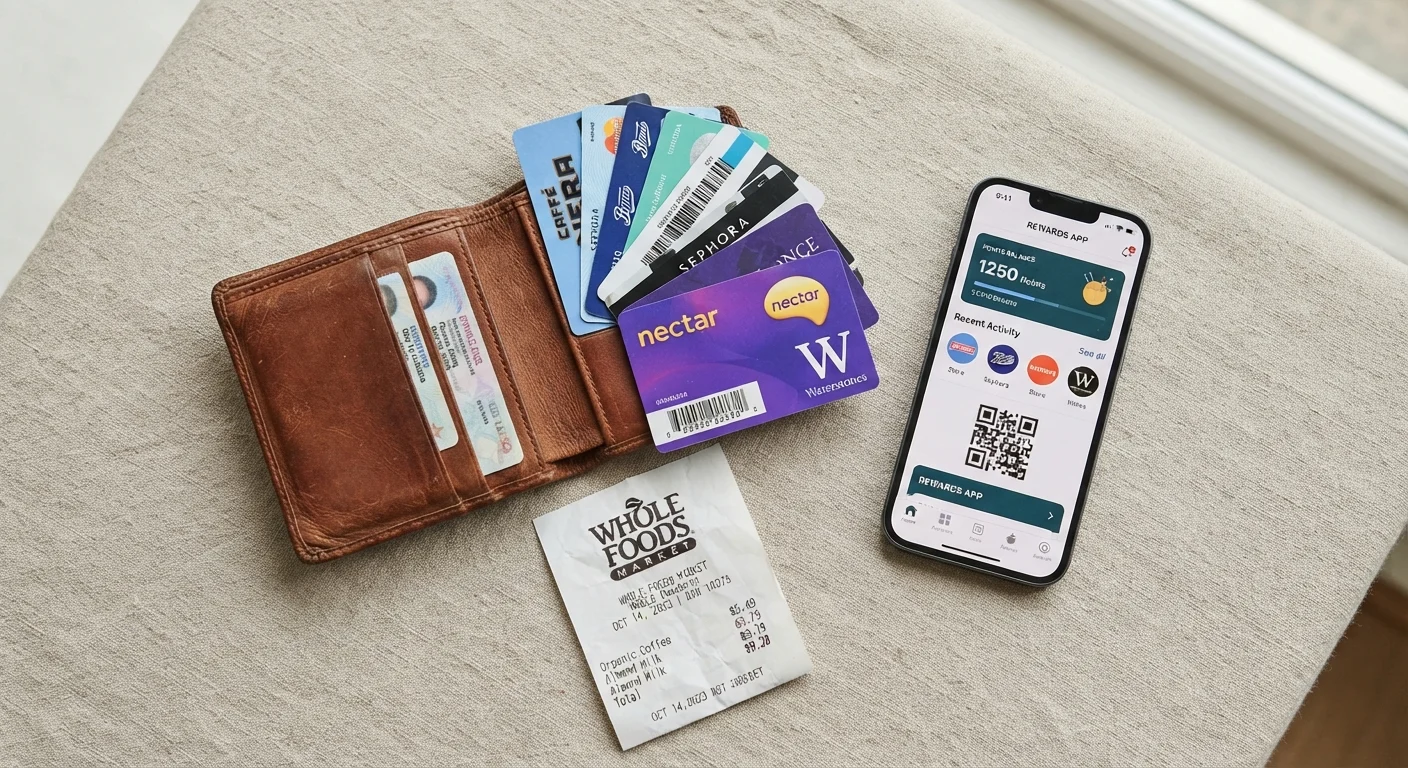
Key Takeaways
- Loyalty programs can return genuine savings, but only when spending patterns already match the program's structure.
- Programs collect detailed behavioral data — understanding what you share matters as much as what you earn.
- Overspending to chase rewards is one of the most common ways these programs backfire.
- Expiration dates and blackout restrictions can quietly erase earned rewards before you redeem them.
- Used strategically, loyalty programs are one tool among many — not a replacement for a broader spending plan.
Automatic discounts on routine purchases
Many grocery and pharmacy programs apply member pricing at checkout without requiring coupons or additional steps, reducing the cost of items you would have bought regardless.
Rewards accumulate on existing spending
If your spending habits align with a program's earning structure, you receive incremental value on purchases you were already going to make — effectively a delayed discount.
Early access and member-only perks
Some programs offer members advance notice of sales, exclusive pricing windows, or priority service, which can be genuinely useful for high-demand items or services.
Consolidated spending can simplify tracking
Consolidating purchases with fewer retailers — partly driven by loyalty membership — can make it easier to monitor spending patterns through a single account dashboard.
Birthday or milestone bonuses add unexpected value
Many programs include one-time bonus rewards tied to account anniversaries or birthdays, which represent pure upside when no extra spending is required to unlock them.
Programs are designed to increase your spending
Loyalty structures — tiered status, bonus-point windows, near-expiration alerts — are deliberately engineered to motivate additional purchases, sometimes beyond what a shopper planned or needed.
Points and rewards can expire before use
Many programs include expiration windows of 12 to 18 months. Infrequent shoppers may accumulate rewards that vanish before they reach a redemption threshold.
Significant data collection with limited transparency
Loyalty programs track purchase history, shopping frequency, and often location data. How that information is used, shared with third parties, or retained is not always made clear.
Redemption restrictions reduce practical value
Blackout dates, category exclusions, minimum balance requirements, and limited redemption windows mean the stated value of points often overstates what a shopper can realistically use.
Brand lock-in limits comparison shopping
Membership can create a subtle incentive to remain loyal to one retailer even when competitors offer better prices, effectively capping the shopper's ability to optimize value across the market.
Program terms change without meaningful notice
Retailers reserve the right to alter point values, expiration policies, or redemption rates. Accumulated balances can lose value overnight when terms are updated.
Our Verdict
Loyalty programs offer real, measurable value to shoppers who already buy frequently from a given retailer and take time to understand the redemption rules. For occasional shoppers or anyone who finds that membership subtly nudges them toward unplanned purchases, the trade-off may not favor the consumer. Like any financial tool, their worth depends almost entirely on how deliberately you use them.
Ideal for consistent, routine shoppers — especially those with predictable grocery, gas, or pharmacy spending — who will actively track and redeem rewards before they expire.
What Loyalty Programs Actually Promise
Nearly every major retailer, pharmacy, grocery chain, and airline now operates some form of loyalty program. The basic pitch is familiar: spend money, accumulate points or credits, eventually redeem them for discounts or free items. According to research from Accenture, U.S. consumers hold memberships in an average of more than a dozen loyalty programs — though many go largely unused.
What varies widely is how each program defines value. Some return a flat percentage on every purchase. Others tier rewards based on annual spend, restrict earnings to specific categories, or offer bonuses tied to promotional windows. Before you can evaluate whether a program works for you, you need to understand exactly what "earning" means in that program's terms — and what redemption actually requires. See our breakdown of how each rewards type functions for a plain-English comparison.
The Real Benefits: Where Loyalty Programs Deliver
When the structure of a program genuinely aligns with your existing habits, the advantages are concrete.
Automatic discounts on routine purchases
Many grocery and pharmacy programs apply member pricing at checkout without requiring coupons or additional steps, reducing the cost of items you would have bought regardless.
Rewards accumulate on existing spending
If your spending habits align with a program's earning structure, you receive incremental value on purchases you were already going to make — effectively a delayed discount.
Early access and member-only perks
Some programs offer members advance notice of sales, exclusive pricing windows, or priority service, which can be genuinely useful for high-demand items or services.
Consolidated spending can simplify tracking
Consolidating purchases with fewer retailers — partly driven by loyalty membership — can make it easier to monitor spending patterns through a single account dashboard.
Birthday or milestone bonuses add unexpected value
Many programs include one-time bonus rewards tied to account anniversaries or birthdays, which represent pure upside when no extra spending is required to unlock them.
~$48B
Estimated U.S. loyalty rewards issued annually
Industry estimates suggest tens of billions in loyalty rewards are issued to U.S. consumers each year, though a significant share goes unredeemed.
~50%
Share of loyalty memberships considered inactive
Research from Bond Brand Loyalty has found that roughly half of loyalty program memberships show little to no active engagement, meaning members earn nothing despite sharing their data.
Grocery and pharmacy programs tend to offer some of the most straightforward returns because spending in those categories is recurring and predictable. Member-exclusive pricing on staple items — offered at the point of sale, without coupon clipping — is a form of automatic savings that requires minimal effort. For households with consistent, high-volume grocery purchases, this can add up meaningfully over a year. Our guide to reducing grocery spending without changing what you eat covers how loyalty timing fits into a broader strategy.
The Trade-Offs: What You Give Up
Loyalty programs are not purely transactional — they come with costs that aren't always visible on the receipt.
Programs are designed to increase your spending
Loyalty structures — tiered status, bonus-point windows, near-expiration alerts — are deliberately engineered to motivate additional purchases, sometimes beyond what a shopper planned or needed.
Points and rewards can expire before use
Many programs include expiration windows of 12 to 18 months. Infrequent shoppers may accumulate rewards that vanish before they reach a redemption threshold.
Significant data collection with limited transparency
Loyalty programs track purchase history, shopping frequency, and often location data. How that information is used, shared with third parties, or retained is not always made clear.
Redemption restrictions reduce practical value
Blackout dates, category exclusions, minimum balance requirements, and limited redemption windows mean the stated value of points often overstates what a shopper can realistically use.
Brand lock-in limits comparison shopping
Membership can create a subtle incentive to remain loyal to one retailer even when competitors offer better prices, effectively capping the shopper's ability to optimize value across the market.
Program terms change without meaningful notice
Retailers reserve the right to alter point values, expiration policies, or redemption rates. Accumulated balances can lose value overnight when terms are updated.
The most consequential trade-off for many shoppers is behavioral: programs are designed to increase purchase frequency and basket size, and they're often effective at it. Spending more to unlock a reward tier, or buying something you didn't need because it carries bonus points, means the program has shaped your spending rather than simply rewarded it. That's a meaningful distinction. Learn how deal framing can make poor purchases look sensible — a pattern loyalty programs frequently exploit.
A Note on Data Privacy
When you join a loyalty program, you're entering a data-sharing arrangement, not just a discounts agreement. Retailers use purchase history to build detailed behavioral profiles that inform personalized pricing, targeted marketing, and sometimes third-party data partnerships. Most programs disclose this in their privacy policies, but those policies are rarely straightforward reading. If data privacy matters to you, it's worth reviewing what a program collects and whether you can opt out of data sharing while retaining membership benefits — many programs allow this, but it usually requires an active opt-out request.
How to Use Loyalty Programs Without Letting Them Use You
The difference between a loyalty program that helps your budget and one that quietly inflates it usually comes down to a few deliberate habits.
- Audit your active memberships. If you haven't earned or redeemed from a program in six months, it may not reflect your actual spending. Unused memberships mean your data is being collected with no corresponding benefit to you.
- Check redemption rules before you earn. Some programs require a minimum balance before redemption, expire points after 12 months, or restrict high-value redemptions to specific products. Knowing these rules upfront prevents disappointment later.
- Track what you're sharing. Many programs require an email address and purchase history at minimum. Higher-tier programs may link to payment cards, location data, or browsing behavior. Decide in advance what that data exchange is worth to you.
- Pair programs with a spending baseline. If membership in a program causes you to cross-shop or consolidate spending at one retailer more than you otherwise would, measure whether total spend has increased. A 3% return on 20% more spending is a net loss.
For a wider perspective on shopping channel trade-offs, see The Hidden Trade-Offs Every Shopper Should Know About. And if you're comparing loyalty programs against credit card rewards or cash-back tools, Making Sense of Rewards Program Trade-Offs offers a side-by-side framework.
This article is for general informational purposes only and does not constitute financial or legal advice. Readers should review individual program terms and consult a qualified financial professional for guidance tailored to their circumstances.