

Key Takeaways
- Clothing sizes are not standardized across brands, countries, or even product lines.
- Body measurements — not label sizes — are the most reliable starting point for online shopping.
- Fit descriptions like 'relaxed' or 'slim' mean different things to different manufacturers.
- Customer reviews mentioning fit and sizing are often more useful than the official size chart.
- Return policies vary significantly; knowing them before you buy reduces costly surprises.
Why Online Sizing Is So Unreliable
Shopping for clothes online offers real convenience — but it comes with a persistent fit problem that frustrates even experienced shoppers. The root cause isn't carelessness; it's the absence of any universal sizing standard. A women's size 10 from one retailer can measure several inches differently than a size 10 from another. The same is true for men's and children's clothing.
This inconsistency isn't a new development. Brands size to their target customer base, adjust patterns over time, and often use different sizing for different product lines within the same label. When you add international manufacturers to the mix — each working from their own regional conventions — the variation multiplies. For a deeper look at what sizing terminology actually means in practice, see our plain-language guide to clothing fit.
The result is that your label size is only a rough starting point — not a reliable order guide. Understanding why sizing drifts is the first step to shopping around it.
Trusting your usual label size without checking brand-specific measurements.
Why it happens: Shoppers reasonably assume a size Medium is consistent everywhere, but there is no universal sizing standard in the U.S. or globally. One brand's Medium can be another's Large.
Ignoring the difference between 'model measurements' and the garment's actual dimensions.
Why it happens: Product pages list model height and the size they're wearing, which shoppers interpret as a proxy for fit. But the model's proportions may differ significantly from yours even at the same size.
Overlooking fabric content when judging whether a size will work.
Why it happens: Shoppers focus on the number or letter on the tag and forget that a 100% cotton shirt and a cotton-spandex blend in the same labeled size will fit very differently due to stretch and drape.
Skipping customer reviews that specifically discuss fit and sizing.
Why it happens: Many shoppers scan star ratings and move on, missing the detailed written feedback where real buyers flag that items run small, large, or oddly proportioned.
Assuming international size conversions are exact.
Why it happens: Conversion charts suggest a clean equivalence — a U.S. 8 equals a UK 12 — but these are approximations that vary by brand, country, and era of manufacture.
Buying without checking the return policy first.
Why it happens: Shoppers focus on the item and the price, treating returns as an afterthought. When the fit is wrong, they discover too late that returns are paid, time-limited, or excluded for certain items.
How to Shop Smarter When You Can't Try It On
The gap between what a product page shows and what arrives at your door is real and well-documented. What product pages can't tell you about fit goes beyond sizing — fabric hand, garment weight, and structure only reveal themselves in person. That said, there are concrete steps that reduce fit surprises before checkout.
30%
Average online clothing return rate
Industry estimates consistently place online apparel return rates around 30%, with fit cited as the leading reason by a wide margin.
3–4 inches
Sizing variation across brands at the same label size
Consumer research has found that garments labeled the same size can differ by several inches in key measurements depending on the brand and country of manufacture.
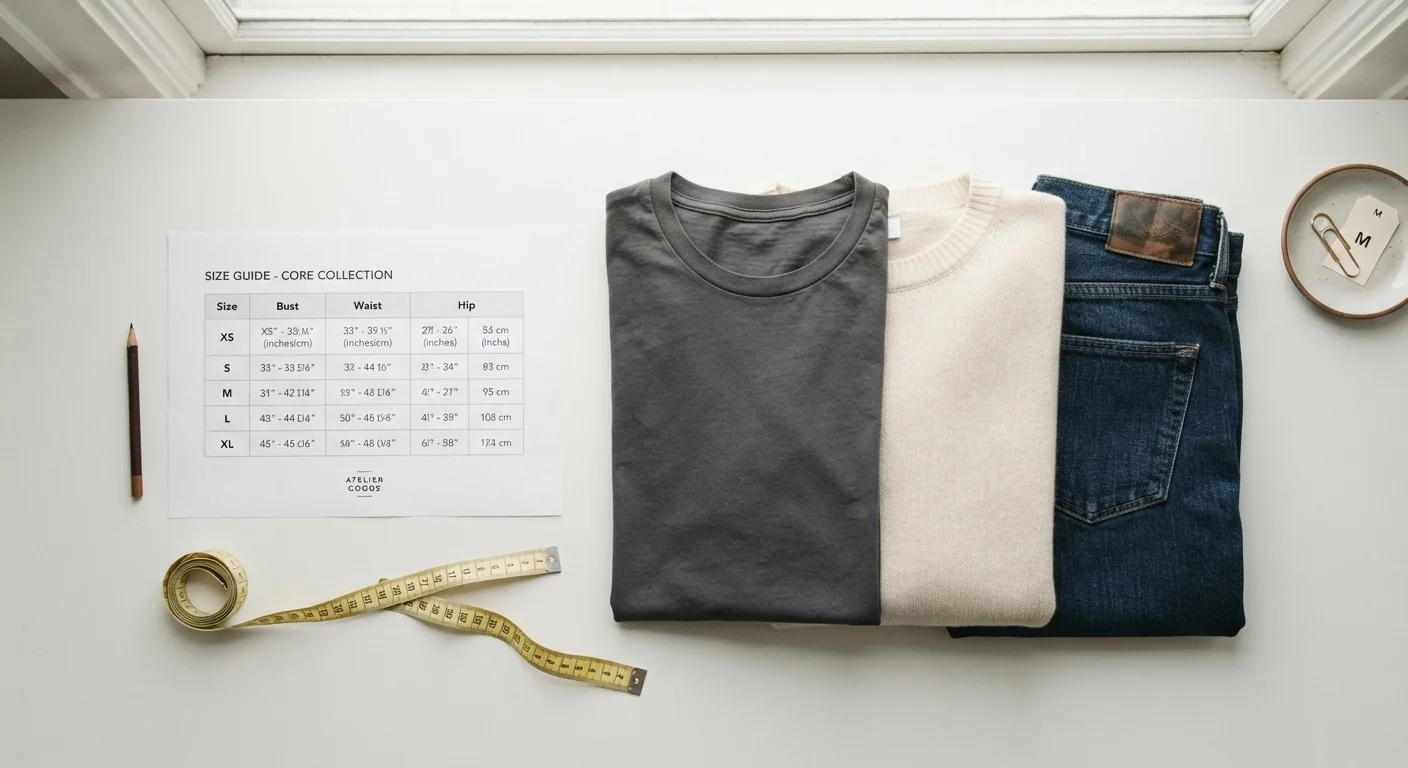
Start with your body measurements. Chest, natural waist, high hip, low hip, and inseam are the numbers that matter — not whatever size you wore five years ago. Keep a note of these on your phone so they're accessible while browsing. Then match them directly to each brand's measurement chart, not a generic size conversion grid.
Pay attention to fit descriptors in the product copy, but know that terms like 'relaxed,' 'slim,' or 'oversized' carry no standardized definition. Cross-reference those terms with garment dimensions when available. When they're not available, prioritize retailers with generous return windows and treat your first order as a fit test.
For a broader look at what you genuinely gain and give up shopping online versus in person, the real tradeoffs between online and in-store shopping are worth understanding before you build a habit either way. And if you've ever wondered why what you ordered looks different from the photos, the reasons your order doesn't match expectations go well beyond sizing alone.
Don't Assume Free Returns Are Always Available
Return policies vary widely and change over time. Some retailers charge return shipping, others restrict returns on sale items, and many have shortened their return windows. Always read the policy before you order — especially for higher-cost pieces — so you're not caught with a non-returnable item that doesn't fit.
Building a reliable size profile for each brand you shop regularly — noting what size worked and in what garment type — takes a few orders but pays off in fewer returns over time. Treat it as a practical record, not extra effort.