

Key Takeaways
- Omnichannel shopping means retailers connect their online and physical channels so your experience flows seamlessly between them.
- Most purchase journeys today cross at least two channels — browsing online, then buying in store, or vice versa.
- Options like buy online, pick up in store (BOPIS) and curbside pickup are practical omnichannel tools available to many shoppers.
- Knowing how omnichannel works helps you choose the channel that best fits each purchase decision.
- Not all retailers execute omnichannel equally well — inventory syncing and return policies vary widely.
Start here
What Omnichannel Shopping Actually Means
Next
How a Typical Omnichannel Journey Unfolds
Build vocabulary
Key Concepts You Need to Know
Apply it
When Omnichannel Works Best for Shoppers
Troubleshoot
Common Friction Points and How to Navigate Them
What Omnichannel Shopping Actually Means
The word omnichannel gets thrown around in retail news, but for everyday shoppers it has a simple meaning: a retailer has connected its online store, mobile app, and physical locations so they behave like one system rather than separate businesses.
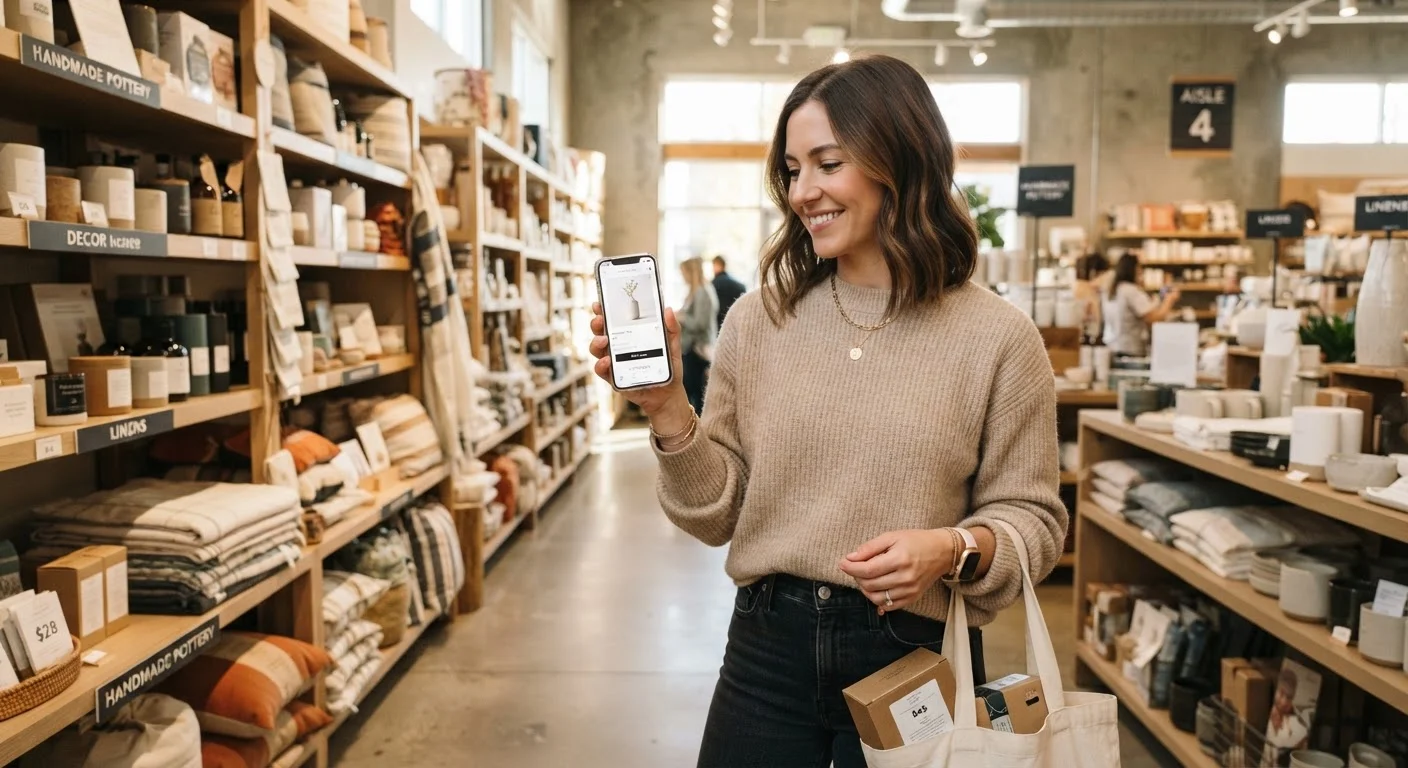
In a well-executed omnichannel setup, your cart, loyalty points, order history, and even browsing data travel with you across channels. You might research a product on the retailer's app during your commute, check in-store availability, and then pick it up that afternoon — all without starting over. That continuity is what distinguishes omnichannel from simply having a website alongside a store.
For a deeper look at how the online and in-store experiences differ on their own terms, see our complete consumer's guide to online vs. in-store shopping.
How a Typical Omnichannel Journey Unfolds
Most shoppers move through multiple channels without thinking of it as a strategy — it just happens naturally. A common pattern looks like this:
- Discovery online: You search for a product, read reviews, and narrow your options using a retailer's website or a third-party platform.
- In-store evaluation: For items where feel, fit, or size matters — a sofa, a jacket, a pair of headphones — you visit a store to see the item firsthand.
- Purchase in the most convenient channel: You might buy in store immediately, or return home and order online if the website has a better selection or the store is out of your size.
- Post-purchase via any channel: Returns, exchanges, or warranty claims may happen online, by mail, or at a counter, depending on what's easier.
The key insight is that no single channel owns the whole experience. Combining channels strategically can reduce guesswork and regret, especially for larger purchases.
Check In-Store Availability Before You Go
Most major retailers now display real-time store inventory on their websites and apps. Search the item, select your local store, and confirm stock before making the trip. This takes about 30 seconds and saves a wasted visit — especially for specific colors, sizes, or configurations.
Key Concepts You Need to Know
A few terms come up repeatedly when reading about or using omnichannel retail. Understanding them makes it easier to use these systems to your advantage.
Omnichannel retail
A retail model where a company's online store, mobile app, and physical locations are integrated into one connected system, sharing inventory, pricing, and customer data.
BOPIS
Buy Online, Pick Up In Store. You order through a retailer's website or app and collect the item at a physical location, often the same day, without paying for shipping.
Inventory sync
The process by which a retailer's system updates product availability across all channels in real time, so the website reflects what's actually on the store shelf.
Curbside pickup
A variation of BOPIS where a store employee brings your pre-ordered items to your vehicle in the parking lot, so you never need to enter the store.
Ship from store
A fulfillment method where an online order is packed and shipped directly from a physical retail location rather than a central warehouse, often enabling faster local delivery.
Unified loyalty program
A rewards or points system that treats your online and in-store purchases as one account, so earnings and redemptions apply regardless of which channel you shop through.
When Omnichannel Works Best for Shoppers
Omnichannel retail shines in specific scenarios. Knowing when to lean on it — and when a single channel is simpler — saves time and frustration.
- High-consideration purchases: Electronics, appliances, furniture, and clothing that requires fit are ideal candidates. Research online; evaluate in person; buy wherever terms are best.
- Time-sensitive needs: BOPIS (Buy Online, Pick Up In Store) is faster than shipping and avoids the uncertainty of stock availability you'd face walking in without checking first.
- Flexible returns: If a retailer lets you return online purchases to a store, you gain the convenience of home delivery with the ease of an in-person return — no repacking, no shipping labels.
- Loyalty and rewards: Many programs now unify points across channels, so your in-store and online spending count toward the same balance.
For a framework on choosing between channels based on product type and your priorities, browse our Smarter Decisions hub. And if saving money is the primary driver, this breakdown of where each channel actually saves more is worth reading before your next major purchase.
BOPIS Pickup Windows Have Deadlines
When you place a BOPIS order, the retailer typically holds your item for a limited window — commonly 3 to 7 days — before canceling and refunding the order. If your plans change, check the confirmation email for the exact deadline so you don't lose the item.
Common Friction Points and How to Navigate Them
Omnichannel sounds seamless in theory, but real-world execution varies. These are the gaps shoppers encounter most often:
- Inventory discrepancies
- A website may show a product as available in a nearby store when it's actually out of stock. Before making a special trip, call ahead or use the retailer's real-time in-store availability tool if one exists.
- Channel-specific pricing
- Some retailers price online and in-store differently for the same item. It's generally acceptable to ask in-store staff to match an online price the retailer itself is offering — though matching is at their discretion.
- Inconsistent return policies
- Not every retailer allows in-store returns for online orders. Check the policy page before buying, particularly for items likely to need a return — such as clothing or gifts.
- App or account fragmentation
- If a retailer hasn't fully unified its systems, your in-store purchase history may not appear in your online account. Keep digital or paper receipts as a backup.
The habits that experienced cross-channel shoppers develop — like verifying stock before visiting a store and bookmarking retailer return policies — are covered in detail in our guide to smart habits for hybrid shoppers.