

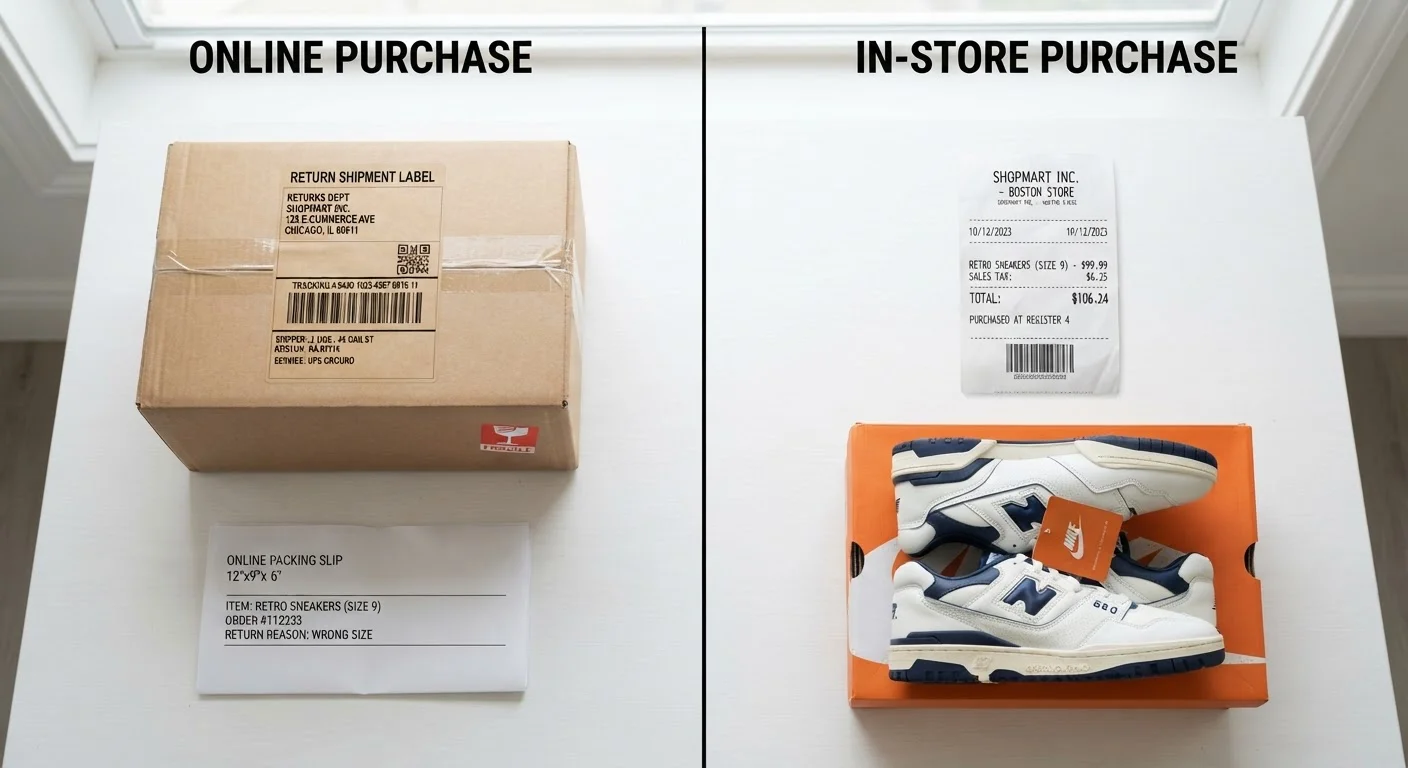
Why the Channel You Buy From Changes Your Return Rights
Where you make a purchase isn't just a matter of convenience — it can determine how long you have to return an item, whether you pay for return shipping, and whether you get cash back or store credit. Retailers are not legally required to accept returns in most states, which means policies are set at the retailer's discretion and can vary dramatically between channels, even at the same company.
Understanding these differences before you buy — not after — is the simplest way to avoid being stuck with something you can't use. See our guide to reading return policies before you buy for a deeper breakdown of terms like restocking fees and final-sale designations.
Online Returns: What's Different and What to Watch For
When you shop online, a few friction points appear that simply don't exist in physical stores.
- Return shipping costs: Many online retailers require you to pay return postage unless a mistake was made on their end. Costs vary but can reduce or eliminate a refund's value on lower-priced items.
- Return windows: Online return windows are commonly 30 days from delivery, though some retailers extend this to 60 or 90 days. The clock typically starts when the item arrives, not when you order it.
- Restocking fees: Electronics and large appliances sold online are particularly prone to restocking fees — often 10–20% of the purchase price — if returned opened.
- Condition requirements: Online returns frequently require original packaging, all accessories, and sometimes a printed return authorization label. Missing components can result in a partial refund.
- Refund method: Expect 5–10 business days for a refund to post after the retailer receives your return, compared to an immediate in-store transaction.
Credit card purchase protections can sometimes extend your return window or help dispute a refusal. For a fuller comparison of where each shopping channel wins financially, see our online vs. in-store cost breakdown.
Restocking fee
A charge deducted from your refund when you return an opened item, intended to cover the retailer's cost of repackaging or reselling it. Common with electronics and large appliances.
Return window
The number of days after purchase or delivery during which a retailer accepts returns. Once this window closes, most retailers will not issue a refund or exchange.
BORIS (Buy Online, Return In Store)
A fulfillment option that lets you return an item purchased online at a physical store location, avoiding the cost and hassle of return shipping.
Return authorization
A code or label issued by an online retailer that must accompany a mailed return. Sending a return without one can result in the package being refused or the refund denied.
Final sale
A designation indicating an item cannot be returned or exchanged under any circumstances. Common during clearance events or on heavily discounted merchandise.
In-Store Returns: Simpler, But Not Without Catches
Physical store returns generally offer more immediacy — you walk in, hand over the item, and walk out with your refund or exchange. But a few nuances still matter.
- Receipt requirements: Many stores require a receipt or order confirmation. Without one, you may receive a store-credit refund at the current selling price, which could be lower than what you paid.
- Return windows: In-store windows often match the online policy, but some retailers operate separate policies for each channel. Always verify which applies to your purchase location.
- "Buy online, return in store" (BORIS): Most major retailers now accept online purchases back at physical locations, which eliminates return shipping costs. However, not every retailer supports this, and some exclude marketplace or third-party items sold through their website.
- Seasonal and holiday extensions: Many retailers extend return windows for items purchased during the holiday season, but these extensions typically apply to in-store purchases made after a stated date.
Weighing what you give up or gain in each channel — including the tactile experience that reduces the need for returns in the first place — is worth considering before committing to a channel.
Key Differences at a Glance and How to Protect Yourself
The table below summarizes where online and in-store return experiences typically diverge. Actual terms depend on the specific retailer and product category.
| Factor | Online | In-Store |
|---|---|---|
| Return shipping | Often buyer's cost | Not applicable |
| Refund speed | 5–10 business days after receipt | Immediate at register |
| Restocking fees | More common | Less common |
| Original packaging required | Frequently yes | Sometimes |
| Receipt requirement | Order confirmation typically sufficient | Often required for full refund |
Practical steps to protect yourself:
- Read the return policy before checkout, not after — policy links are typically in the website footer or on the product page.
- Keep original packaging until you are certain you want to keep the item.
- Screenshot or save your order confirmation email as proof of purchase.
- For high-value purchases, check whether your credit card offers extended return protection.
For a broader look at consumer protections and what retailers are actually obligated to offer, see the truth about return policies and buyer protections.
This article is for general informational purposes only. Return policies are set by individual retailers and may change at any time. Always review the current policy directly with the retailer before making a purchase.