

Key Takeaways
- Needs sustain basic functioning; wants enhance it — the gap between them is where overspending lives.
- Context changes category: a car is a need in a rural area but a want in a walkable city.
- Pausing before purchasing and asking one honest question cuts impulse decisions significantly.
- Wants are not inherently bad — budgeting deliberately for them prevents guilt and deprivation cycles.
- A clear personal framework reduces decision fatigue and regret across all spending categories.
Option A
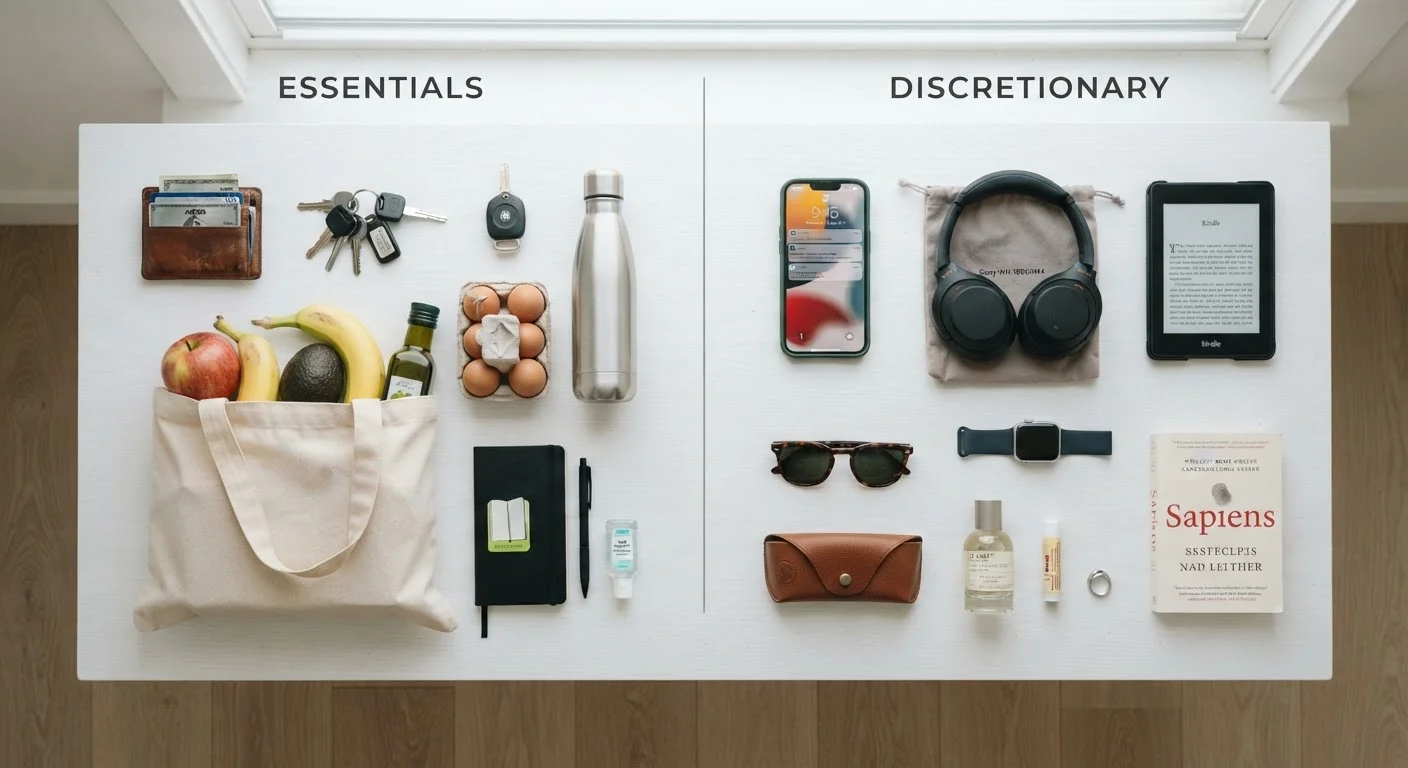
Needs
The non-negotiable foundation of every budget.
Best for: Purchases that maintain health, safety, shelter, income, or core daily functioning.
Option B
Wants
The discretionary layer that adds comfort and enjoyment.
Best for: Purchases that improve quality of life but can be delayed, downsized, or skipped without real consequence.
If you're trying to cut spending without a clear starting point
Needs
Audit your current expenses against strict need criteria first. Every line item that fails the test is a candidate for reduction or elimination.
If you consistently feel deprived and abandon budgets
Wants
Deliberately allocating a fixed amount for wants each month makes budgets sustainable — deprivation without relief tends to trigger spending rebounds.
If you're facing an unplanned purchase and feel uncertain
Needs
Default to the need standard under pressure. If it doesn't meet the threshold, wait 48 hours before deciding — most urgency is manufactured.
If you want to build long-term financial confidence
Needs
Anchoring your budget around genuine needs first creates the stable financial base from which deliberate want spending becomes guilt-free.
Why the Distinction Actually Matters
The needs vs. wants framework sounds elementary — and that's exactly why people underestimate it. In practice, most Americans don't mismanage money because they can't do math. They mismanage it because they haven't clearly defined which category a purchase falls into before making it. That ambiguity is where retailers, algorithms, and our own psychology exploit us.
A need is anything that maintains basic health, safety, shelter, or your ability to generate income. A want is everything else — including things that feel urgent in the moment. The challenge isn't the definition; it's the honest application under real shopping conditions.
Understanding why we overspend in the first place helps explain why this framework breaks down so easily. Cognitive biases — including social comparison and loss aversion — routinely dress wants in the language of needs. "I need a new phone" often means "I want an upgrade." Closing that gap between perception and reality is the core skill this framework builds.
| Criterion | Needs | Wants |
|---|---|---|
| Definition | Required for basic functioning or safety | Enhances comfort, convenience, or enjoyment |
| Skippability | Cannot be skipped without real consequence | Can be delayed or foregone without harm |
| Budget priority | Funded first, before discretionary spending | Funded from what remains after needs are covered |
| Upgrade risk | Minimum viable version is the baseline | Upgrades are common — and where overspending hides |
| Context-dependence | High — location, job, and health affect the threshold | High — preferences and lifestyle define the category |
| Emotional pressure | Low — genuine needs are stable over time | High — wants often feel urgent due to marketing or mood |
Where the Line Gets Genuinely Blurry
Context is everything. A reliable vehicle is a hard need for someone commuting 40 miles each way to work in a region with no transit. For someone who walks to work in a dense city, a car slides firmly into want territory. Neither answer is universal — which is why rigid category lists rarely hold up.
The same logic applies across categories. Internet service is a need for remote workers; streaming add-ons are wants. A winter coat in Minnesota is a need; a fourth jacket for variety is a want. This context-dependence is explored in depth in why the line is blurrier than you think.
Three questions help cut through the gray:
- What specifically happens if I don't buy this? If the honest answer is "nothing serious," it's a want.
- Is this the minimum viable version, or am I upgrading? The minimum version may be a need; the upgrade is a want.
- Am I making this decision calmly, or under manufactured urgency? Pressure — sales countdowns, social influence, emotional states — reliably pushes wants into perceived need territory.
~36%
Americans who make impulse purchases weekly
Surveys by financial research organizations consistently find that a significant share of U.S. adults report making unplanned purchases on a weekly basis, with emotional state cited as a leading trigger.
48 hours
Waiting period that reduces impulse purchases
Consumer behavior research suggests that introducing a short delay — commonly 24 to 48 hours — before completing a non-essential purchase significantly reduces follow-through on impulse decisions.
~70%
Shoppers who regret impulse buys
Multiple consumer surveys have found that the majority of people who make unplanned purchases report feeling some degree of regret afterward, particularly on larger discretionary items.
Applying the Framework Before You Buy
Knowing the distinction intellectually isn't enough. The framework only works when it's applied at the moment of purchase temptation — which is also when it's hardest to think clearly. Building a simple pre-purchase habit changes that.
Before completing any non-routine purchase, run it through this sequence:
- Name the category honestly. Say aloud or write: "This is a need" or "This is a want." Ambiguity favors spending.
- If it's a want, check your want budget. A predetermined monthly allowance for discretionary spending means wants don't require agonizing — they're either within budget or they're not.
- If it's a need, check the minimum standard. Needs justify spending, but not unlimited spending. The basic version that fulfills the need is the reference point.
This pairs naturally with building a personal buying framework that reflects your values and financial situation — not a generic template.
For more targeted decisions — especially by product category — a personal buying criteria list can standardize how you evaluate electronics, clothing, appliances, and more before temptation clouds judgment.
The Upgrade Trap: When Needs Become Wants
One of the most common ways wants masquerade as needs is through the upgrade path. You genuinely need a laptop for work — but the high-end model with premium features is a want layered on top of that need. Separating the base need from the upgrade helps you spend on the need confidently while making the upgrade a deliberate, budgeted choice rather than a default.
Wants Deserve a Place in Your Budget
A common mistake is treating wants as inherently irresponsible. They aren't. Budgets that eliminate all discretionary spending tend to fail — not because the math is wrong, but because humans aren't wired for indefinite deprivation. Planned want spending is a stability feature, not a weakness.
The goal is intentionality, not austerity. When you allocate a specific amount for wants each month — whether that's dining out, entertainment, or a clothing refresh — those purchases stop carrying guilt because they're already accounted for. Unplanned want spending is the problem; budgeted want spending is part of a functioning financial life. This mindset shift connects directly to broader money mindset principles that make financial habits durable over time.
Readers working with tighter margins can also find practical guidance through budget shopping strategies that help stretch dollars without eliminating the things that make spending feel worthwhile.
This article is for general informational and educational purposes only. It does not constitute personalized financial advice. Consult a qualified financial professional for guidance specific to your situation.