

Key Takeaways
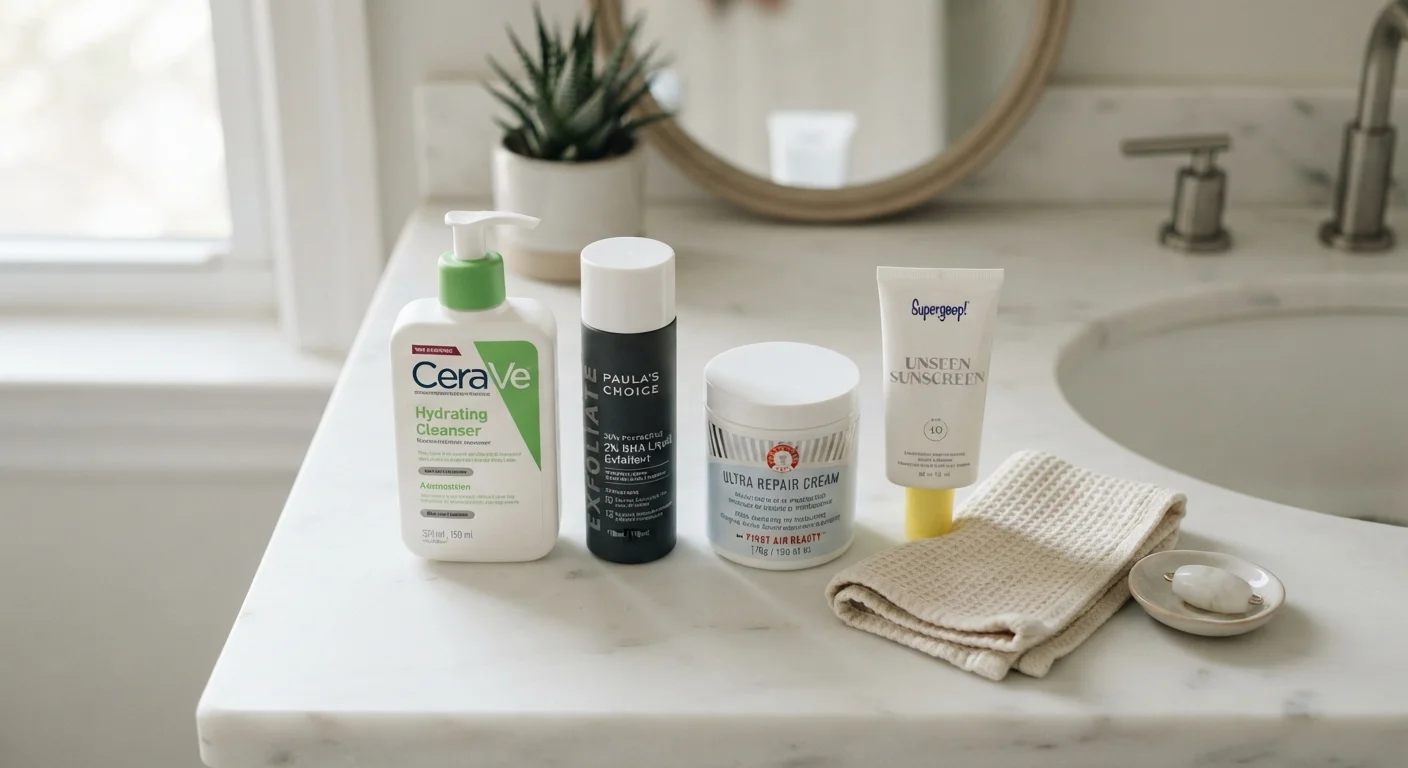
- A three-step routine — cleanse, moisturize, protect — is enough to make a real difference for most beginners.
- Identifying your skin type before buying products helps you avoid unnecessary irritation and wasted money.
- Introduce new products one at a time to pinpoint what works and what causes a reaction.
- Sunscreen every morning is the single most evidence-backed step you can add to any routine.
- Consistency over a few weeks matters more than the specific products you choose.
Start here
Why a Simple Routine Beats a Complicated One
Next
Know Your Skin Type First
Core skills
The Three Core Products Every Beginner Needs
Apply it
How to Layer Products in the Right Order
Level up
Adding Products Over Time Without Overwhelming Your Skin
Why a Simple Routine Beats a Complicated One
Scroll through any beauty feed and you might think glowing skin requires a 12-step arsenal and a chemistry degree. It doesn't. In fact, overwhelming your skin with too many products at once is one of the most common beginner mistakes — it makes it nearly impossible to tell what's helping and what's causing that unexpected breakout.
Think of building a skincare routine the way you'd think about building your first budget: start with the non-negotiables, get consistent, and only add more when you're ready. The goal is a repeatable habit, not a lab experiment. Three well-chosen products used daily will outperform ten products used sporadically every single time.
Consistency Is the Secret Ingredient
Even an imperfect routine done daily will beat a perfect routine done occasionally. Pick products you genuinely enjoy using — texture, scent, and feel all matter because they determine whether you'll stick with the habit. Give your routine at least four to six weeks before deciding whether it's working.
Know Your Skin Type First
Before you pick up a single product, spend a few minutes understanding your skin — it'll save you from buying things that don't suit you. The four most commonly referenced skin types are dry, oily, combination, and normal, with a fifth consideration being sensitive skin, which can overlap with any of the others.
Non-comedogenic
A product labeled non-comedogenic is formulated to avoid clogging pores, making it a safer choice for acne-prone or oily skin types.
Broad-spectrum SPF
Sunscreen that protects against both UVA rays (linked to aging) and UVB rays (linked to burning). 'Broad-spectrum' means coverage across both wavelength types.
Skin barrier
The outermost layer of your skin that locks in moisture and keeps out irritants. A healthy barrier is the foundation of well-functioning skin.
Patch test
Applying a small amount of a new product to a discreet patch of skin — often the inner arm or behind the ear — and waiting 24–48 hours to check for a reaction before using it on your face.
T-zone
The forehead, nose, and chin form a T-shape across the face. This area tends to produce more oil and is a defining feature of combination skin.
A simple at-home test: cleanse your face with a mild product, pat dry, and observe your skin after 60 minutes without applying anything. Tightness points to dry skin; overall shine suggests oily; shine concentrated on the forehead, nose, and chin with drier cheeks indicates combination. If your skin reacts easily to new products, winds, or temperature changes, factor sensitivity into your choices regardless of type.
Skin type isn't permanent — hormones, seasons, diet, and age all influence it. Check in with your skin periodically rather than treating your type as fixed forever.
The Three Core Products Every Beginner Needs
Once you know your skin type, you're ready to build your starting lineup. Here's what each step actually does:
- Cleanser: Removes dirt, oil, sweat, and any product residue from the skin's surface. Look for a gentle, non-stripping formula — if your face feels tight or squeaky-clean after washing, the cleanser may be too harsh. Most people benefit from cleansing once in the morning and once at night.
- Moisturizer: Replenishes water content in the skin and helps maintain its natural protective barrier. Even oily skin types benefit from a lightweight, non-comedogenic (pore-safe) moisturizer — skipping it can actually prompt your skin to produce more oil.
- Sunscreen: Broad-spectrum SPF 30 or higher every morning, rain or shine. UV exposure contributes to premature aging and increases the risk of skin damage over time. This is consistently the step dermatologists point to as having the strongest evidence behind it.
That's genuinely it for a solid foundation. Everything else — serums, toners, exfoliants — is optional and can come later.
Don't Mix Active Ingredients Without Research
Some skincare ingredients — like retinoids and certain acids — can cause irritation when used together or too frequently. As a beginner, stick to gentle, straightforward formulas and avoid layering multiple actives until you understand how each one affects your skin. When in doubt, a dermatologist can offer personalized guidance.
How to Layer Products in the Right Order
Product order matters because each layer needs to reach the skin effectively. The general rule is to apply from thinnest to thickest consistency:
- Cleanser (rinse off — doesn't stay on skin)
- Toner or essence, if you use one (water-based, applied while skin is still slightly damp)
- Serum (lightweight, targeted actives)
- Moisturizer
- Sunscreen — always last in the morning, after moisturizer
For your beginner three-step routine, this simplifies to: cleanse → moisturize → sunscreen (AM) or cleanse → moisturize (PM). Keep it that straightforward until the habit is locked in. Once you are ready to level up to a five-minute morning routine, the layering instinct will already feel natural.
Adding Products Over Time Without Overwhelming Your Skin
Once your three-step routine feels comfortable — usually after four to six weeks — you can consider adding a targeted product if you have a specific concern. The golden rule: introduce one new product at a time, wait at least two weeks before adding another, and track how your skin responds.
Common additions beginners explore include exfoliants (to help with texture and dullness), serums with ingredients like niacinamide or hyaluronic acid, and eye creams. Before introducing anything new, run through a product introduction checklist — patch testing and gradual rollout protect your skin barrier and help you identify reactions early.
Building a consistent skincare practice is part of a broader approach to personal wellbeing. If you're working on multiple habits at once, our guide on starting a health routine from scratch offers a helpful framework for doing that sustainably. You can also explore more grooming fundamentals in our personal grooming hub.
This article is for general informational and educational purposes only. For concerns about skin conditions, allergies, or reactions, please consult a qualified dermatologist or healthcare professional.