

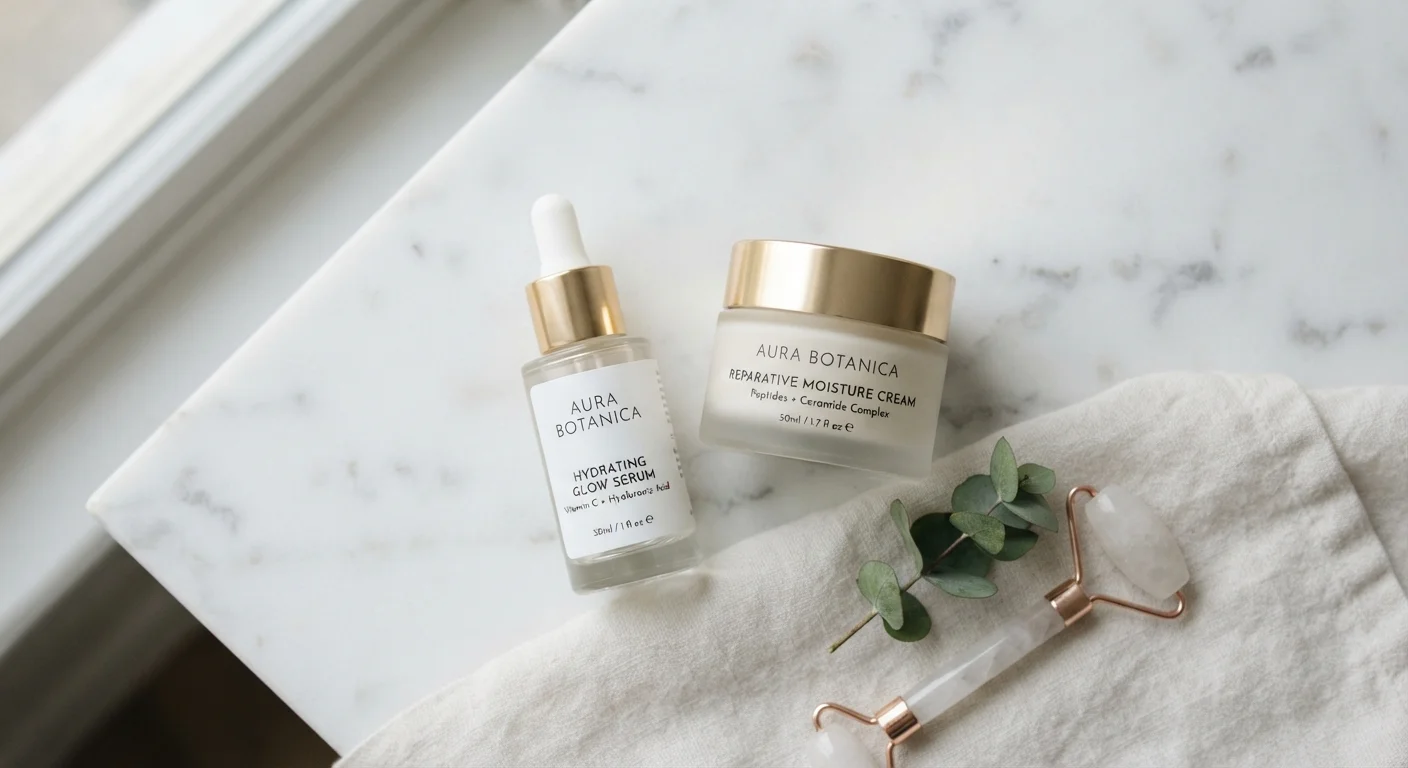
Key Takeaways
- Moisturizers primarily seal and protect the skin barrier, reducing water loss throughout the day.
- Serums deliver concentrated active ingredients designed to target specific skin concerns.
- Serums go on before moisturizer because their smaller molecules need direct skin contact.
- You don't always need both — your skin type and goals should guide the decision.
- Neither product replaces sunscreen, which remains a separate and essential daily step.
Option A
Moisturizer
The everyday skin-barrier defender.
Best for: Anyone who wants to lock in hydration, protect the outer skin barrier, and keep dryness at bay daily.
Option B
Serum
The targeted, concentrated skin treatment.
Best for: Those looking to address a specific concern — like dullness, dark spots, fine lines, or uneven texture — with active ingredients.
If you want a simple, minimal daily routine
Moisturizer
A good moisturizer covers the basics — hydration and barrier protection — without adding extra steps or cost.
If you have a specific skin concern to address
Serum
Serums contain higher concentrations of active ingredients precisely formulated for issues like hyperpigmentation, fine lines, or uneven tone.
If you have dry or sensitive skin that needs consistent comfort
Moisturizer
Rich moisturizers with occlusives and emollients are particularly effective at easing tightness and shielding reactive skin from environmental triggers.
If you want to build a more complete skincare routine
Serum
Layering a serum under your moisturizer lets each product do its specialized job, giving skin both targeted treatment and lasting hydration.
What Each Product Is Actually Doing
The confusion between moisturizers and serums is understandable — both come in bottles, both go on your face, and both claim to help your skin. But they work in fundamentally different ways, and understanding that difference makes choosing between them (or combining them) much easier.
A moisturizer is designed to manage the skin's hydration balance at the surface. It typically contains a mix of humectants (ingredients that attract water, like glycerin), emollients (which smooth and soften), and occlusives (which form a barrier to slow water loss). The result: skin that feels comfortable, plump, and protected. Most moisturizers sit on or just below the skin's surface and work across the entire face as a general maintenance tool. For a deeper look at how humectants like glycerin work, see our guide to hyaluronic acid vs. glycerin.
A serum, by contrast, is a concentrated delivery system. Serums are water-based or oil-based formulas with a much lighter consistency and smaller molecular structure, which allows active ingredients to penetrate more deeply into the skin. Common actives include vitamin C for brightening, retinol for cell turnover, niacinamide for pore appearance and tone, and peptides for firmness. Serums aren't designed to hydrate broadly — they're formulated to address a specific skin concern with precision.
| Criterion | Moisturizer | Serum |
|---|---|---|
| Primary purpose | Hydrate and protect skin barrier | Deliver concentrated active ingredients |
| Texture | Cream, lotion, or gel | Lightweight liquid or oil |
| Molecule size | Larger — works at surface | Smaller — penetrates deeper |
| Application order | Second (after serum) | First (on clean skin) |
| Who needs it | Nearly everyone, daily | Those with specific skin concerns |
| Typical key ingredients | Glycerin, ceramides, shea butter | Vitamin C, retinol, niacinamide, peptides |
How to Layer Them (and Why Order Matters)
If you decide to use both, the order is non-negotiable: serum goes on first, moisturizer goes on second. This isn't arbitrary. Because serums have smaller molecules and lighter formulas, they need unobstructed access to the skin. Applying moisturizer first creates a film that blocks the serum's active ingredients from absorbing properly.
After cleansing and any toning steps, apply a few drops of serum to clean skin and press it in gently. Wait about 30 to 60 seconds for it to absorb, then follow with your moisturizer to seal everything in. Think of the serum as the treatment and the moisturizer as the finish coat. For more on how similar layering logic applies across skincare steps, our breakdown of toners, essences, and serums is a useful companion read.
Neither Product Replaces Sunscreen
Moisturizers and serums both contribute to skin health, but neither substitutes for a dedicated broad-spectrum SPF applied every morning. Some moisturizers include SPF, which can be convenient — but if you're also using a vitamin C or retinol serum, pairing that combination with a separate sunscreen is generally recommended by dermatologists. Sunscreen remains its own essential step, regardless of what else is in your routine.
It's also worth noting that serums aren't a replacement for moisturizer even if you have oily skin. Skipping moisturizer entirely can actually signal the skin to produce more oil. A lightweight, non-comedogenic moisturizer still plays an important role for every skin type.
Do You Actually Need Both?
Not necessarily — and that's a liberating answer. If your skin is generally balanced and your main goal is basic upkeep, a solid moisturizer alone may be all you need. Moisturizers have evolved considerably; many now include functional ingredients like hyaluronic acid or antioxidants that blur the line slightly.
Where a serum earns its place is when you have a clear, specific concern you're trying to improve over time — whether that's post-acne marks, fine lines around the eyes, or a persistently uneven complexion. In those cases, a moisturizer alone won't deliver the concentration of active ingredients needed to make a meaningful difference.
Your skincare routine should reflect your skin's actual needs, not someone else's 10-step regimen. Just as knowing the difference between cleansing products helps you choose wisely — bar soap vs. body wash is a good example of that same logic applied to cleansing — understanding what each product does helps you invest only in what your routine genuinely requires.
~65%
Adults who use a daily facial moisturizer
Survey data from Statista has consistently shown moisturizer to be among the most widely used skincare products among U.S. adults.
5–30x
Higher active ingredient concentration in serums vs. most moisturizers
Dermatology educators note that serums are formulated to carry significantly higher concentrations of actives than typical moisturizers.