

Key Takeaways
- Modern lithium-ion batteries do not need to be drained to zero before recharging.
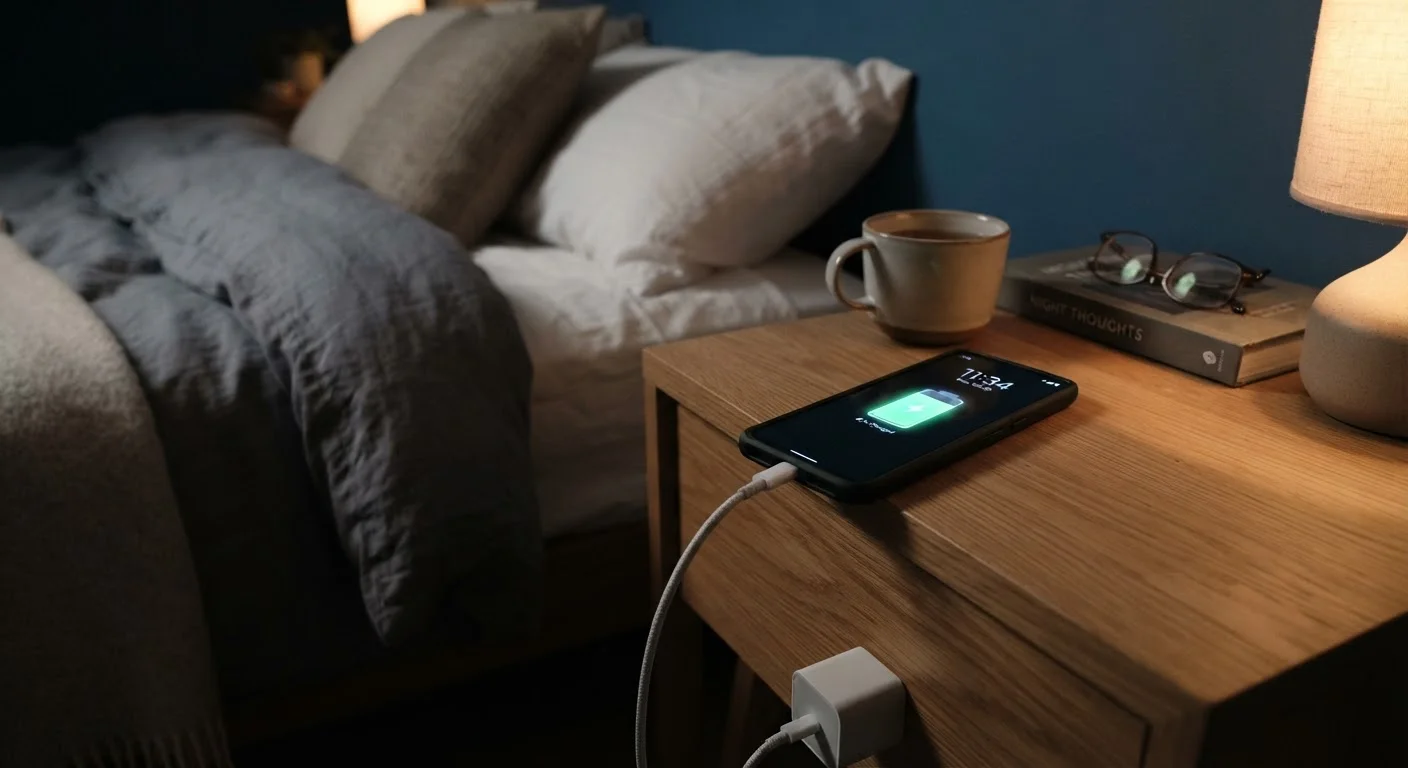
- Overnight charging is generally safe on current smartphones due to built-in charge management systems.
- Keeping your battery between roughly 20% and 80% tends to reduce long-term wear.
- Heat is a far bigger threat to battery health than charging frequency.
- Third-party chargers are not automatically harmful — wattage and quality matter more.
Why Battery Myths Are So Persistent
Many of the charging habits people swear by were developed during the era of nickel-cadmium (NiCd) batteries — the rechargeable cells that powered older camcorders and cordless phones. Those batteries genuinely did benefit from a full discharge before recharging, a behavior known as conditioning. The problem is that virtually every smartphone sold today uses lithium-ion (Li-ion) technology, which operates on completely different chemistry and responds poorly to the same treatment.
Because the old advice sounded scientific and spread person-to-person before authoritative corrections caught up, it embedded itself into everyday routines. The result: millions of users are actively stressing their batteries by following tips that were never meant for the devices in their pockets. Understanding what actually governs Li-ion health is the fastest way to stop the damage.
For a broader look at what affects your phone day-to-day, see what really drains your smartphone battery.
Myth
You should always drain your battery to 0% before plugging in to charge.
Fact
Fully draining a Li-ion battery regularly accelerates wear rather than preventing it.
This advice made sense for older NiCd batteries, which developed a "memory effect" and lost capacity if not fully discharged. Lithium-ion cells have no such memory. Instead, deep discharges — dropping consistently to 0% — put the battery under chemical stress, contributing to faster capacity loss over time. Partial charges are not just acceptable; they are preferable.
Myth
Leaving your phone plugged in overnight will overcharge and destroy the battery.
Fact
Modern smartphones automatically stop drawing charge current once they reach 100%, preventing overcharge.
Every current smartphone has charge management circuitry that cuts off active charging when the battery is full. The phone then runs directly off the power source rather than continuing to push current into the battery. Some manufacturers go further with adaptive charging features that intentionally hold the battery at around 80% until just before your usual wake time, reducing the hours spent at peak charge.
Myth
Closing background apps constantly saves your battery and extends its life.
Fact
Repeatedly force-closing and relaunching apps can actually consume more power than letting the OS manage them.
Mobile operating systems are designed to suspend background apps efficiently — they use minimal resources when not in active use. When you force-close an app and then reopen it minutes later, the CPU works harder to reload it from scratch than it would have if the app had simply resumed from a suspended state. Occasional app management makes sense; obsessive closing rarely helps and may hurt.
Myth
Using a third-party charger will always damage your battery.
Fact
Charger quality and output wattage matter far more than the brand name on the cable.
A reputable third-party charger that meets the wattage specifications for your device is generally safe. The real risk comes from very cheap, uncertified chargers — particularly those lacking safety certifications — which may deliver inconsistent voltage or skip protective circuitry. Checking for recognized safety certifications and matching the charger's output to your device's rated input is a more reliable guide than brand origin alone.
Myth
Heat from charging is normal and harmless.
Fact
Sustained heat is one of the primary causes of permanent lithium-ion battery capacity loss.
Li-ion cells degrade faster at elevated temperatures. Charging while running a graphics-heavy game, leaving the phone in direct sunlight, or charging inside a thick case that traps heat all accelerate this process. If your phone regularly feels very warm during charging, removing the case and placing the device on a hard, flat surface to dissipate heat is a practical step. Occasional warmth is normal; sustained heat is not.
What You Should Actually Do
Good battery habits are simpler than most myths suggest. Charging little and often — sometimes called "top-up charging" — is genuinely better for Li-ion cells than waiting for a deep discharge. Avoiding sustained exposure to heat (direct sunlight, leaving the phone in a hot car) is one of the single most effective things you can do for long-term capacity retention.
~500
Typical full charge cycles before noticeable capacity loss
Battery manufacturers generally rate Li-ion cells for around 300–500 full charge cycles before capacity drops to roughly 80%, though partial charging habits can meaningfully extend this range.
20–80%
Recommended charge range for long-term Li-ion health
Battery researchers and device manufacturers frequently cite keeping charge within this band as a way to reduce electrochemical stress on lithium-ion cells over time.
Many phones now include built-in battery management features — sometimes labeled "optimized charging" or "adaptive charging" — that learn your overnight routine and slow the final charge phase to reduce stress at 100%. Enabling these settings costs nothing and removes much of the risk associated with plugging in before bed.
If battery health is a concern across all your devices, the same principles apply to wearables. Our coverage of why smartwatch batteries drain faster than expected goes deeper on that side of the equation. And if you want to see how battery myths fit into a wider set of smartphone misconceptions, common smartphone myths debunked covers the full picture.
Extreme Temperatures Pose a Real Risk
Exposing your phone to temperatures above roughly 95°F (35°C) for extended periods can permanently reduce battery capacity — even if the phone is not charging. Similarly, charging a battery that has become very cold (below 32°F / 0°C) can cause internal damage. When possible, charge your phone at room temperature and keep it out of hot cars or freezing environments.