

Key Takeaways
- Most nutritional gaps at home come from patterns in what you routinely skip buying, not single meals.
- A pantry audit focuses on food categories, not calorie counts or rigid diet rules.
- Small, consistent swaps - like adding canned legumes or whole grains - can close common nutrient gaps.
- Checking labels for sodium, added sugar, and fiber gives you actionable information without a nutrition degree.
- This checklist is a general educational tool, not a substitute for personalized dietary advice.
Summary
22 items · 20-40 minutes
Why Audit Your Pantry Instead of Your Diet?
Most people receive conflicting nutrition advice from apps, social media, and well-meaning friends. The result is decision fatigue - and a pantry that reflects habit rather than intention. A pantry audit sidesteps the noise by asking a simpler question: what food categories are consistently missing from your shelves?
This approach works because what you buy and store is a reliable proxy for what you actually eat over time. A single meal doesn't define nutritional patterns; a month of grocery receipts does. By scanning the categories represented in your kitchen right now, you can spot structural gaps - too little fiber, too few plant proteins, an overabundance of high-sodium convenience foods - without tracking every bite.
This checklist pairs naturally with building smarter shopping habits. The pantry inventory habits covered in our shopping guide show how the same audit mindset saves money as well as improves nutrition. For a broader household review, the seasonal declutter checklist includes pantry sorting as part of a quarterly home refresh.
This article provides general nutrition education only and is not a substitute for advice from a registered dietitian or qualified healthcare provider. Consult a professional for guidance tailored to your health needs.
Tools You'll Need Before You Start
You don't need special equipment - just a few basic items to make the audit systematic rather than a casual glance.
Notepad or phone notes app
Record which categories are present, absent, or need improvement as you work through the checklist.
Recent grocery receipts (last 2-3 trips)
Reveal buying patterns for items you may have run out of - a useful supplement to what's physically in your pantry right now.
Nutrition labels on packaged goods
Check fiber, sodium, added sugar, and protein content on items already in your pantry to assess quality within each category.
A basic food category reference
MyPlate (USDA) or a similar public resource can serve as a quick visual reminder of recommended food group proportions.
The Pantry Audit Checklist
Work through each group below. For every category, ask yourself: Is this represented on my shelves right now? If the answer is consistently no across a whole group, that's a meaningful pattern worth addressing. Check off what you have, and flag what's absent.
Whole Grains & Starchy Staples
Protein Sources
Vegetables & Fruits
Healthy Fats & Oils
Sodium & Added Sugar Audit
Fiber Check
Avoid Over-Correcting All at Once
Finding multiple gaps in your pantry audit can feel overwhelming, but addressing everything in one shopping trip often leads to food waste and unnecessary spending. Focus on one or two categories per week. Small, consistent changes are more sustainable than a full pantry overhaul, and they're less likely to disrupt your household's actual eating habits.
Making Sense of What You Found
After completing the checklist, look at your flagged gaps holistically. A few common patterns and what they generally suggest:
- Few or no whole grains: Refined grains dominate many American pantries. Whole grains contribute fiber, B vitamins, and minerals often missing from white-flour alternatives.
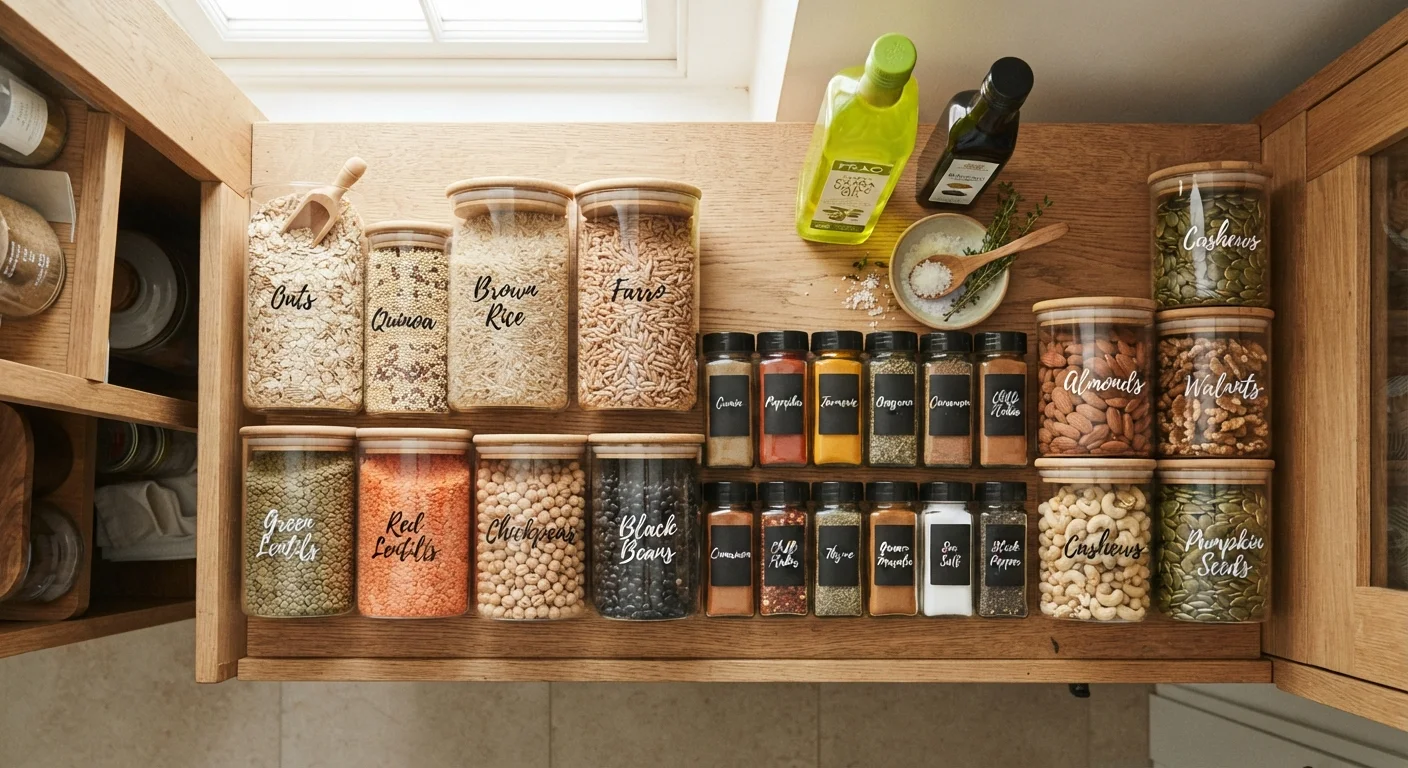
- No legumes or plant proteins: Canned beans, lentils, and chickpeas are among the most nutrient-dense, affordable pantry staples available - their absence is one of the most common and easily corrected gaps.
- Mostly high-sodium canned or packaged goods: Compare sodium on labels; lower-sodium versions of the same products are widely available and require no recipe changes.
- Little variety in fats: If every fat source is the same oil or comes from processed snacks, there may be room to add nuts, seeds, or a different cooking oil for broader nutrient coverage.
You don't need to overhaul everything at once. Choosing one or two gaps to address per shopping trip is a realistic, sustainable approach. For a structured way to make those adjustments without overspending, the pre-checkout spending audit helps you add nutritional staples intentionally rather than impulsively.
Individual Nutritional Needs Vary Significantly
This checklist reflects general nutrition principles for healthy adults based on widely accepted dietary guidance. It is not designed for people managing specific health conditions, food allergies, or medically supervised diets. If you have a chronic condition, are pregnant, or are supporting a child's nutrition, consult a registered dietitian or healthcare provider before making significant changes to your household's food supply.