

Key Takeaways
- Inventory awareness prevents duplicate purchases and reduces food and product waste across all households.
- Price anchoring is a retailer tactic — knowing it exists helps you evaluate actual value, not perceived savings.
- A structured shopping list is one of the most reliable tools for holding a budget over time.
- Seasonal price cycles exist across clothing, appliances, and groceries — timing matters.
- A simple price reference log helps you distinguish genuine deals from inflated discounts.
- A pre-checkout pause catches impulse additions before they reach your final total.
Why These Habits Work at Any Income Level
The most durable shopping habits aren't tied to how much money someone earns. They're rooted in decision-making clarity — the ability to separate what you need from what you're being nudged to want. Whether a household runs on a strict budget or has room to flex, the same cognitive traps apply: impulse triggers, anchored pricing, and the friction-free design of modern retail all work against deliberate spending.
The habits covered here are not about deprivation. They're about reducing the gap between what you intend to spend and what you actually spend. That gap costs Americans significantly each year in the form of duplicated purchases, unused items, and sales that weren't actually savings. Closing it is a skill — and like most skills, it compounds over time.
For a deeper look at how these habits connect to a broader financial framework, see the Budgeting Basics hub for practical context on building a workable spending plan.
Know What You Own Before You Buy More
Inventory awareness is unglamorous but genuinely powerful. Before a grocery run, a quick scan of your pantry, fridge, and freezer prevents buying items you already have — a common source of food waste and unnecessary spending. The same logic applies to clothing, cleaning supplies, and personal care products.
A simple habit: before adding something to a list, check whether it's already in your home. This works against the tendency to shop from memory, which is unreliable. If you've ever come home with a third bottle of hot sauce, you understand the cost.
Smart pantry stocking habits can save money — but only when they're paired with honest awareness of what you already have on hand.
Make a Quick Inventory Check a Default Habit
Keep a running "already have" list on your phone for categories you tend to over-purchase — pantry staples, cleaning products, or personal care items. Checking it before adding to a shopping list takes seconds and catches duplicates before they become waste. Pairing this with a household pantry audit once a season adds a nutritional dimension to the same habit.
Understand Price Anchoring and Retailer Psychology
Price anchoring is a well-documented phenomenon in consumer psychology: when a shopper sees a high "original" price next to a lower "sale" price, the original price sets a mental reference point that makes the sale feel like a win — even if the original price was inflated or rarely charged. Retailers, both physical and online, use this deliberately.
The practical defense is simple: ask what the item is worth to you, not how much you're supposedly saving. A 40% discount on something you don't need is still money spent, not saved.
"Sale" Framing Doesn't Guarantee Savings
Promotional pricing — including percentage-off banners, crossed-out prices, and limited-time labels — is a standard retail design choice, not a guarantee of genuine value. Before acting on a sale, consider whether you would have bought the item at its current price without the promotional framing. If the answer is no, it may not represent real savings for your household.
Common smart-shopping myths explores this further — including why bulk purchases and flash sales often don't deliver the value they appear to.
Build a List That Reflects Real Needs
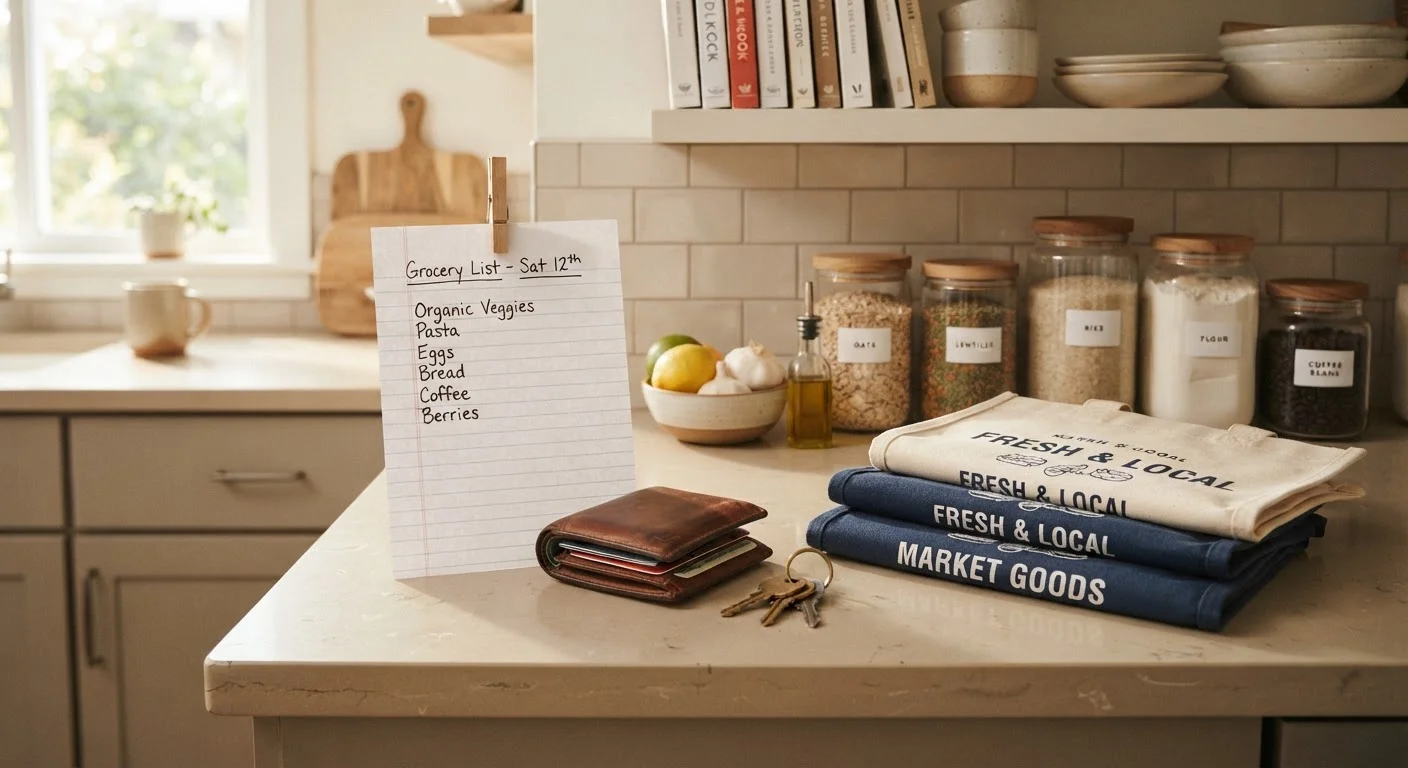
A well-constructed list does more than prevent forgotten items — it acts as a budget anchor. The key is building it from actual need (what's running low, what's planned for meals this week) rather than from store layouts, promotional displays, or habit. Lists built reactively, in the store or app, tend to include more unplanned additions.
Writing the list before engaging with any retail environment — before opening an app, before entering a store — gives it more authority over your cart. It's a small behavioral shift with measurable impact on final totals.
See the step-by-step guide to building a weekly shopping list for a practical framework designed for real households.
~$1,500
Average annual U.S. food waste per household
Research from the USDA and related food policy institutions consistently estimates American households discard significant value in food annually, much of it tied to overbuying.
60%+
Grocery purchases made without a list
Consumer behavior research has found that a majority of shoppers enter stores without a written list, increasing exposure to unplanned purchases.
Time Purchases Strategically
Prices on everyday categories — clothing, appliances, bedding, and certain groceries — follow fairly predictable seasonal cycles. End-of-season clearances, post-holiday markdowns, and category-specific sale windows exist across most major retail channels. Knowing these patterns means you can plan larger purchases rather than react to them.
This isn't about waiting indefinitely for a deal. It's about building enough lead time into planned purchases that you can buy at a more favorable moment. A new winter coat needed before November is a different decision than one planned for purchase in January.
The seasonal buying calendar offers a category-by-category reference for common price drop windows. For households managing irregular large expenses, sinking funds are a complementary tool worth understanding.
Maintain a Running Cost Reference
A price book — a simple log of what you actually pay for regularly purchased items over time — is one of the most practical tools available to consistent shoppers. It doesn't require special software. A notes app or a notebook works fine. The goal is to record prices for staples so you build a personal baseline over time.
With that baseline, you can recognize when a sale price is genuinely below normal versus merely framed as a deal. Most shoppers rely on memory for this, which is imprecise. A written record is more reliable and surprisingly quick to build.
Start your price log with just five items you buy every month — staple proteins, a cleaning product, a personal care item. Five entries is enough to start recognizing patterns within two or three shopping cycles.
The common barrier to keeping a price book is scope. A minimal starting point removes that barrier while still delivering useful data quickly.
When reviewing your cart before checkout, move through it backward — start with the last item added. Impulse additions tend to cluster at the end of a shopping session when decision fatigue is highest.
Decision fatigue is a documented cognitive pattern. Reviewing in reverse order targets the items added under the lowest scrutiny.
Learn more about how to set one up in the price book guide, and see price drop patterns for context on retailer markdown cycles.
Apply a Quick Checkout Audit
Before finalizing any purchase — in-store or online — a brief pause to review what's in the cart catches additions that slipped in without real intention. This doesn't need to be a lengthy process. A 60-second review asking "Do I need this, and do I need it today?" is sufficient for most trips.
Online carts are especially vulnerable to quiet inflation: recommended add-ons, free-shipping thresholds that encourage overspending, and one-click restocks all add up. Online shopping habits that quietly inflate cart totals covers these patterns in detail.
The pre-checkout spending audit is a structured checklist version of this habit, applicable to any shopping trip. Applied consistently, these habits shift the balance from reactive to intentional — the defining difference between spending and smart shopping.
This article provides general consumer information and education. It is not financial advice. Readers with specific financial concerns should consult a qualified financial professional.