

Key Takeaways
- Most American adults consume only about half the recommended daily amount of fiber.
- Fiber comes in two types - soluble and insoluble - and both serve distinct health functions.
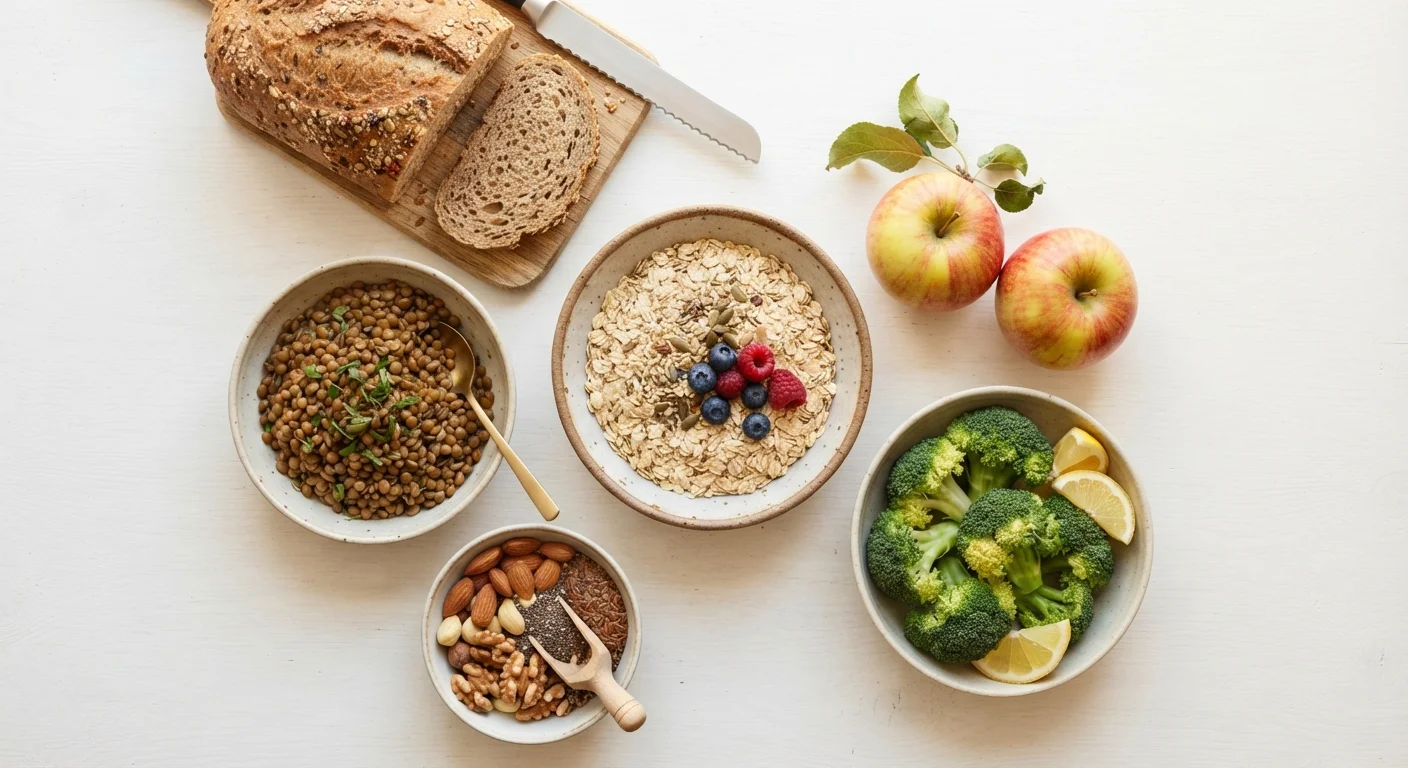
- Whole grains, legumes, fruits, and vegetables are among the richest dietary sources of fiber.
- Adequate fiber intake is associated with better digestive health, steadier blood sugar, and reduced cardiovascular risk.
- Increasing fiber intake gradually and drinking enough water helps minimize digestive discomfort.
Dietary Fiber
Dietary fiber is the part of plant foods your body cannot fully digest. Unlike proteins, fats, and most carbohydrates, fiber passes through your digestive system largely intact. It comes in two main forms - soluble and insoluble - and both play important roles in keeping your body functioning well.
Fiber is classified as a non-digestible carbohydrate. Soluble fiber dissolves in water to form a gel-like substance, while insoluble fiber adds bulk to stool and does not dissolve.
What Dietary Fiber Actually Is
When most people think about nutrition, they focus on protein, calories, or fat. Fiber rarely gets top billing - yet it's one of the few nutrients where Americans consistently fall well short of recommended amounts. Understanding what fiber is and what it does is a practical first step toward a more balanced diet.
Fiber is found exclusively in plant foods. Meat, dairy, and eggs contain none. Because the human digestive system lacks the enzymes needed to break it down completely, fiber travels through the stomach and small intestine without being absorbed - and that's exactly what makes it useful. Different types of fiber interact with your body in different ways, delivering benefits well beyond simple digestion.
If you want to track your fiber intake, reading a nutrition label is one of the most straightforward ways to start - fiber content is listed on most packaged food labels.
Fiber Is Found Only in Plant Foods
Animal products - including meat, poultry, seafood, dairy, and eggs - contain no dietary fiber. If your diet leans heavily on animal proteins with limited plant foods, your fiber intake is likely well below recommended levels. A registered dietitian can help you identify practical ways to integrate more plant-based sources without overhauling your entire eating pattern.
Two Types, Two Jobs
Soluble fiber dissolves in water and forms a thick gel as it moves through your gut. This gel slows digestion, which helps moderate how quickly sugar enters the bloodstream after a meal. It also binds to certain compounds in the digestive tract, including cholesterol, and carries them out of the body. Good sources include oats, barley, apples, citrus fruits, and legumes like lentils and kidney beans.
Insoluble fiber does not dissolve in water. Instead, it adds bulk to stool and speeds the passage of food through the intestines, which supports regularity and reduces the time potentially harmful substances stay in contact with the gut lining. Whole wheat, nuts, seeds, and most vegetables are rich in insoluble fiber.
Most plant foods contain a mix of both types, so a varied, plant-forward diet naturally covers both bases. For a deeper look at how these mechanisms work inside the body, see how dietary fiber works.
~15g
Average daily fiber intake for U.S. adults
According to data from the Dietary Guidelines for Americans, most U.S. adults consume roughly 15 grams of fiber daily - well below general recommendations.
25-38g
Recommended daily fiber intake for adults
The Institute of Medicine's Dietary Reference Intakes recommend approximately 25 grams per day for women and 38 grams per day for men under age 50.
95%
Americans not meeting fiber recommendations
The Dietary Guidelines for Americans have identified dietary fiber as a nutrient of public health concern, with an estimated 95% of Americans falling short of recommended intake.
Why Fiber Matters for Your Health
Research consistently links higher fiber intake to a range of health benefits, though it's worth noting that diet studies are complex and fiber-rich diets also tend to be rich in other beneficial nutrients. With that context in mind, here is what the evidence generally supports:
- Digestive regularity: Insoluble fiber helps prevent constipation by adding bulk and promoting movement through the colon.
- Blood sugar management: Soluble fiber slows carbohydrate absorption, helping reduce blood sugar spikes after meals - a benefit relevant to both general wellness and diabetes management.
- Heart health: Soluble fiber, particularly a type called beta-glucan found in oats, is associated with modest reductions in LDL (low-density lipoprotein) cholesterol levels.
- Gut microbiome support: Certain fibers - called prebiotics - feed beneficial bacteria in the large intestine, supporting a diverse and healthy gut environment. For more on this connection, see gut health habits worth building.
- Satiety: Fiber-rich foods tend to be more filling, which may naturally support portion awareness during meals.
“Dietary fiber is one of the most underappreciated nutrients in the American diet. A consistent body of evidence links adequate fiber intake to better digestive health, improved glycemic control, and reduced cardiovascular risk - yet intake remains stubbornly low across nearly every demographic group.”
— Walter Willett, Professor of Epidemiology and Nutrition, Harvard T.H. Chan School of Public Health
This article is for general informational and educational purposes only. It is not a substitute for professional medical or nutritional advice. Consult a qualified healthcare provider before making significant changes to your diet, especially if you have an existing health condition.
Practical Ways to Eat More Fiber
Closing the fiber gap doesn't require a dramatic diet overhaul. Small, consistent swaps tend to be the most sustainable approach.
- Choose whole grain bread, pasta, and cereals over refined versions.
- Add legumes - beans, lentils, chickpeas - to soups, salads, or grain bowls a few times a week.
- Eat fruits and vegetables with their skins on when possible, as the skin is often where fiber concentrates.
- Snack on nuts, seeds, or raw vegetables rather than processed options.
- Stir chia seeds or ground flaxseed into yogurt, smoothies, or oatmeal.
Increase Fiber Gradually
If your current diet is low in fiber, aim to add roughly 5 grams per week rather than making a sudden large increase. This gradual approach gives your gut microbiome and digestive system time to adapt, reducing the likelihood of uncomfortable side effects like bloating or gas. Staying well-hydrated throughout the process also helps fiber move through the digestive tract as intended.
One important caution: increasing fiber intake too quickly can cause bloating, gas, and cramping. A gradual increase spread over a few weeks, along with adequate water intake, helps your digestive system adjust comfortably. If you have a gastrointestinal condition such as irritable bowel syndrome, Crohn's disease, or diverticular disease, speak with your healthcare provider before significantly changing your fiber intake.