

Key Takeaways
- Poor drainage can quietly erode your home's foundation long before visible damage appears.
- Standing water, soggy soil, and basement moisture are early warning signs worth acting on quickly.
- Many drainage problems worsen over time - catching them early usually means less expensive repairs.
- Some drainage fixes are DIY-friendly; others require a licensed professional, especially near the foundation.
- Grading, gutters, and downspout extensions are the three most common correctable causes of yard drainage issues.
Water Has a Way of Finding Your Home's Weak Spots
Drainage problems rarely announce themselves loudly. Instead, they show up gradually - a damp smell in the basement, grass that stays soggy for days, or a crack in the driveway that keeps getting wider. By the time the damage is obvious, water has usually been working against your home's structure for months or years.
The good news is that many drainage issues leave clear warning signs well before they become emergencies. Recognizing these signals early gives you options: some fixes are as straightforward as repositioning a downspout extension; others require a licensed contractor, particularly when the foundation is involved. Either way, knowing what to look for is the most important first step.
The warning signs below cover both interior and exterior cues that water is moving where it shouldn't - or pooling where it has nowhere to go.
Water pools near your foundation after rain
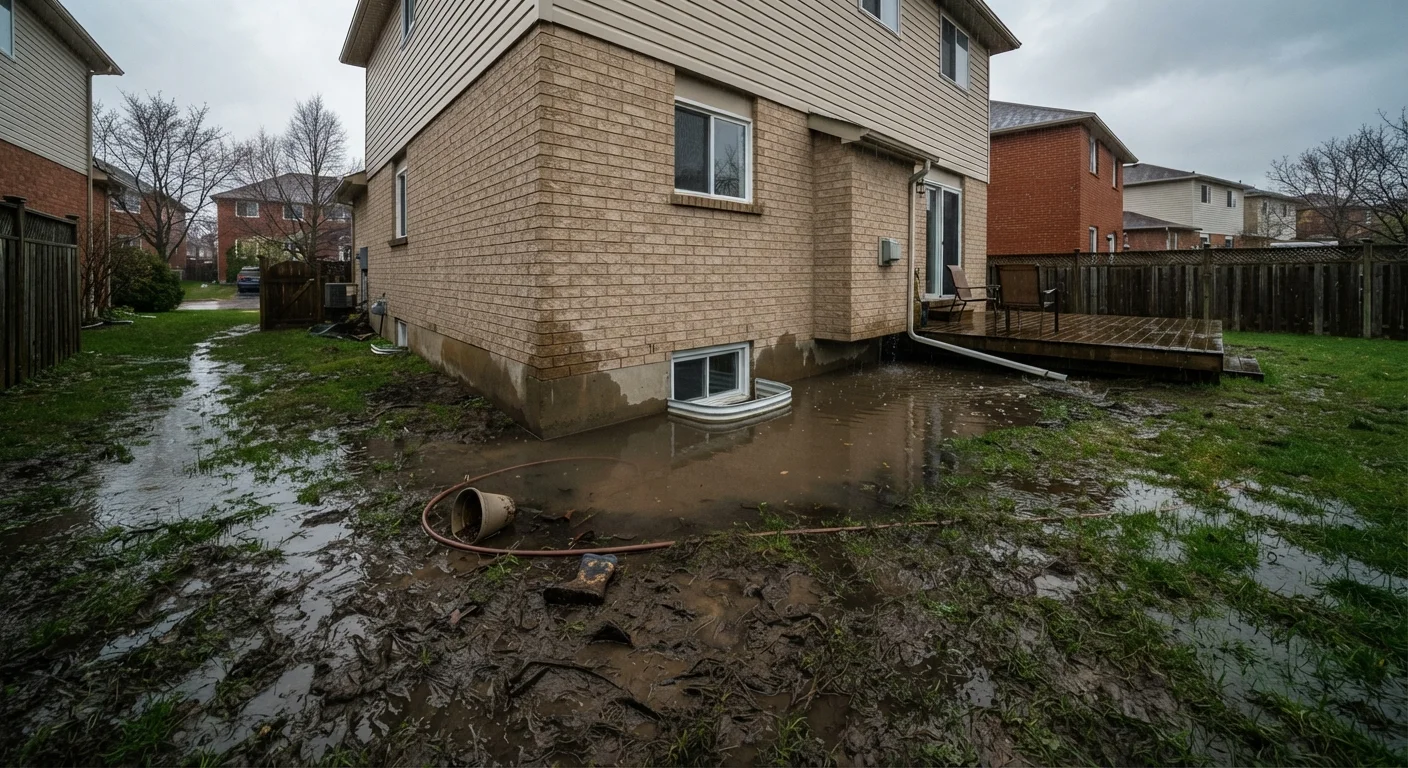
When rainwater collects and sits within a few feet of your home's foundation, it has nowhere to go but down - and eventually in. Soil that is level or slopes toward the house rather than away from it is the most common culprit. Over time, this standing water saturates the soil, increases hydrostatic pressure against foundation walls, and can cause cracks or water intrusion in basements and crawl spaces.
A healthy yard should slope away from the foundation at a grade of roughly one inch per foot for the first six to ten feet. If your yard is flat or pitches inward, regrading that zone is often the most effective long-term fix.
Soil sloping toward your house is the most common cause of foundation water intrusion.
Gutters overflow or dump water at the base of the house
Clogged, undersized, or improperly pitched gutters are among the most common contributors to drainage problems. When gutters overflow, large volumes of water cascade directly against your siding and foundation rather than being channeled away. Similarly, downspouts that discharge within a foot or two of the house accomplish little - that water still ends up saturating the soil right next to your foundation.
Downspout extensions that carry water at least four to six feet from the house are a low-cost, high-impact improvement. Splash blocks placed at the downspout outlet also help redirect flow away from the structure.
Downspouts should discharge water at least four to six feet away from the foundation.
Basement walls show efflorescence or moisture stains
Efflorescence - the chalky white mineral deposits that appear on basement walls or concrete blocks - is a reliable indicator that water is migrating through your foundation. It forms when water carries dissolved salts through masonry and deposits them on the surface as it evaporates. While efflorescence itself is not structurally dangerous, it confirms that liquid water is regularly passing through your walls.
Staining, dampness, or a persistent musty odor in a basement or crawl space are companion signs. These conditions also encourage mold growth, which carries its own set of concerns. A waterproofing professional can evaluate whether the source is exterior drainage, interior condensation, or a combination of both.
Chalky white deposits on basement walls confirm that water is regularly moving through your foundation.
Soggy or dead patches in your yard that don't match rainfall
If certain areas of your lawn stay saturated well after a rainstorm - or if grass dies in low spots regardless of how you water - you may have a drainage or grading issue below the surface. Compacted soil, buried debris like construction fill, or a high clay content can all prevent water from percolating downward, leaving it to pool at the surface.
Persistently wet zones can also signal a broken or overloaded underground drainage line. If the soggy area is near your home's perimeter drain, a sewer cleanout, or a downspout discharge point, those are logical starting places to investigate.
Soggy lawn patches that persist days after rain often point to compacted soil or underground drainage failure.
Cracks are forming in your driveway, walkways, or foundation
Concrete and masonry crack for many reasons, but water is one of the most common. When soil beneath a driveway or walkway absorbs excess water and then dries out repeatedly, it shifts - and the hardscape above it reflects that movement with cracks, heaving, or uneven sections. Foundation cracks, particularly horizontal ones in basement walls, can indicate hydrostatic pressure buildup from saturated soil.
Not all cracks signal an emergency, but any crack in a foundation wall - especially a growing one - warrants professional evaluation. Do not attempt to seal foundation cracks from the interior without understanding the source of moisture first; trapping water can accelerate damage.
Horizontal foundation cracks can signal dangerous hydrostatic pressure and always warrant professional evaluation.
You notice erosion channels or bare soil after rain
Visible erosion channels - small trenches carved by runoff across bare soil, mulch beds, or sloped areas - tell you that water is moving quickly and concentrating in specific paths. Left unaddressed, erosion strips away topsoil, undercuts hardscape, and can eventually work its way toward the foundation. It also deposits sediment in lower-lying drainage infrastructure, reducing its effectiveness over time.
Erosion is both a symptom of drainage problems and a cause of new ones. Ground cover plants, erosion-control fabric, gravel channels, or French drains are common solutions depending on the severity and slope involved. For steep slopes or significant erosion near the structure, consult a landscaping or drainage contractor.
Erosion channels in your yard are a sign that runoff is concentrating and accelerating - and needs to be redirected.
When to Call a Professional - and When You Can Handle It
Some drainage issues fall well within the reach of a motivated homeowner. Cleaning gutters, extending downspouts away from the foundation, or regrading a small patch of compacted soil are reasonable weekend projects for many people. However, drainage problems that involve the foundation, basement walls, or underground pipe systems are a different matter entirely.
Start With a Simple Walk-Around After Rain
One of the most effective diagnostic tools costs nothing: walk your property perimeter within an hour after a significant rainstorm. Note where water pools, where it flows toward the house, and where downspouts discharge. Photographs taken during and after rain can be invaluable when describing the situation to a contractor or landscaper.
If you suspect water is entering your home through foundation cracks, walls, or a crawl space floor, consult a licensed waterproofing contractor or structural engineer before attempting any repair. Improper fixes can trap moisture, accelerate deterioration, or void existing warranties. Our guide on keeping a crawl space dry covers what actually works for below-grade moisture control.
It's also worth reviewing what you think you know about your home's plumbing before digging in. Common plumbing myths can lead homeowners to make drainage worse without realizing it. Addressing drainage proactively - even if it means a professional assessment - almost always costs less than repairing structural damage after water has had its way.
This article is for general informational purposes only. Drainage and waterproofing work near foundations may require permits or licensed contractors depending on your local building codes. Always verify requirements with your local municipality before beginning any significant repair or modification.