

Home & Living

Your Annual Home Maintenance Calendar, Season by Season

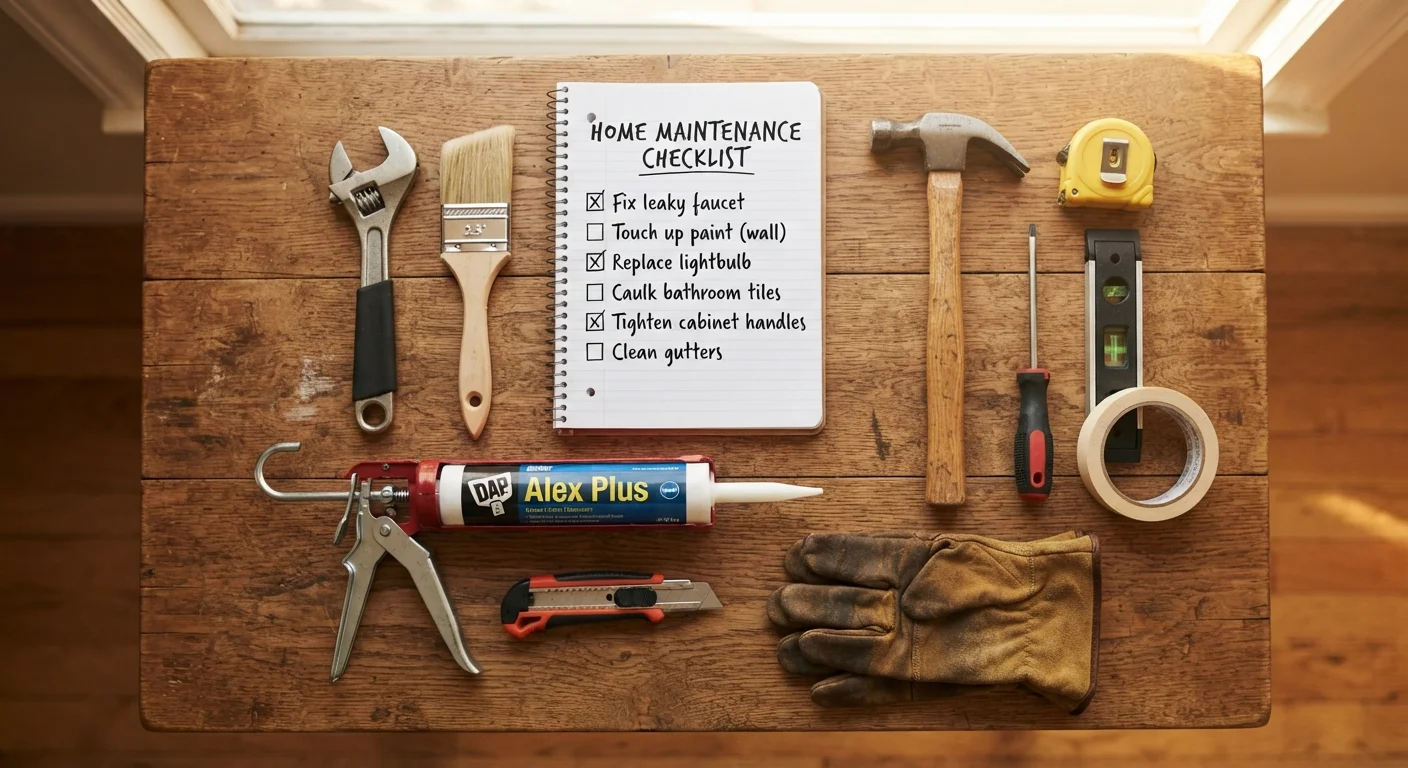
Home maintenance tools including wrench, paintbrush, caulk gun, and checklist notebook on wood surface

Key Takeaways

  • Breaking maintenance into seasonal chunks makes upkeep manageable and consistent.
  • Many costly repairs trace back to small tasks that were skipped or postponed.
  • You don't need professional skills for most routine home maintenance checks.
  • A written calendar helps you stay proactive rather than reactive with home care.
  • Some tasks — especially electrical, gas, and structural — should always go to a licensed professional.
20–40 min

Summary

28 items · 20–40 minutes to review; tasks spread across the year

Why a Seasonal Maintenance Calendar Works

Homeownership comes with a steady stream of upkeep responsibilities, and without a plan, it's easy for small tasks to pile up until they become expensive problems. A season-by-season calendar turns that pile into a predictable rhythm — a handful of tasks each quarter instead of an overwhelming annual scramble.

The costs of deferred home maintenance are well documented: a $15 tube of caulk applied in fall can prevent water damage that runs into the thousands. Staying ahead of routine checks is one of the most practical things a homeowner can do to protect their investment.

This calendar is organized by season. Use it as a reference guide, adapting tasks to your climate, home age, and local conditions. If any task involves electrical panels, gas lines, structural concerns, or roofing work, consult a licensed professional rather than attempting it yourself.

Required

Caulking gun and silicone caulk

Used to seal gaps around windows, doors, and exterior penetrations to block drafts and water intrusion.

Required

Screwdriver set and cordless drill

Needed for tightening loose hardware, replacing outlet covers, and minor repairs throughout the checklist.

Required

Gutter scoop and garden hose

Used to clear debris from gutters and flush downspouts each season.

Required

Replacement furnace filters

Kept on hand so filter swaps happen on schedule rather than being deferred due to a supply run.

Optional

Non-contact voltage tester

Allows safe verification that power is off before touching any electrical components during inspections.

Required

Ladder (6-ft or extension)

Needed for gutter cleaning, exterior light checks, and reaching high areas safely.

The Full Season-by-Season Checklist

Work through the checklist below at the start of each season. Most items take only minutes; a few require a half-day. Pairing this with a seasonal declutter pass makes the most of your time each quarter.

Spring

Inspect the exterior of your home for cracks, peeling paint, or damage that accumulated over winter. Must
Clean gutters and downspouts of debris left from fall and winter to allow proper drainage. Must
Check window and door caulking and weatherstripping; replace any that is cracked or missing. Must
Test smoke detectors and carbon monoxide detectors; replace batteries if needed. Must
Service your air conditioning unit or schedule a professional HVAC tune-up before peak cooling season. Should
Inspect your deck, porch, or patio for loose boards, rust on fasteners, or signs of wood rot. Should
Flush your water heater tank to remove sediment buildup that reduces efficiency. Nice to have

Summer

Check and clean dryer vents to reduce fire risk — lint buildup is a leading cause of dryer fires. Must
Inspect and test GFCI outlets in kitchens, bathrooms, and outdoor areas; press the test and reset buttons. Must
Trim trees and shrubs away from the house, especially branches near the roof or power lines. Should
Inspect window screens for tears and replace or patch them to keep insects out. Should
Check attic ventilation and insulation for signs of moisture, mold, or pest activity. Should
Touch up exterior paint on trim, siding, or fencing to prevent moisture intrusion. Nice to have

Fall

Clean gutters again after leaves have fallen completely to prevent ice dams and water backup. Must
Have your heating system or furnace inspected and serviced by a qualified technician before cold weather arrives. Must
Drain and shut off exterior hose bibs to prevent pipes from freezing. Must
Seal any gaps around pipes, vents, or exterior openings where pests could enter for winter. Should
Test your sump pump to confirm it operates before heavy rain or snowmelt season. Should
Stock emergency supplies — flashlights, batteries, a first-aid kit — and check expiration dates on existing supplies. Nice to have

Winter

Check for drafts around windows and doors; use draft stoppers or rope caulk as a temporary fix. Must
Monitor pipes in unheated areas during cold snaps; keep cabinet doors open under sinks on exterior walls. Must
Replace furnace filters if you haven't recently — a clogged filter reduces efficiency and indoor air quality. Must
Clear snow and ice from walkways and steps promptly to reduce slip-and-fall hazards. Must
Inspect your basement or crawl space for signs of moisture or leaks after heavy rain or snowmelt. Should
Review your home insurance policy to confirm coverage levels still match your property's current condition. Nice to have
Use the quieter winter months to plan and budget for larger projects coming in spring. Nice to have

Know When to Call a Professional

Tasks involving your electrical panel, gas appliances, structural elements, or roof surface should always be handled by a licensed contractor. Attempting these without proper training can create serious safety hazards and may void your homeowner's insurance coverage. When in doubt, get a professional opinion before proceeding.

For a broader look at every major system in your home, the complete homeowner's maintenance overview covers what to maintain and how often across your entire property. And if your seasonal walkthrough raises questions about your roof, what you can safely inspect from ground level is a useful companion read.

Permits May Be Required for Some Work

Even seemingly minor upgrades — replacing a water heater, adding an outlet, or making structural repairs — may require a permit in your municipality. Working without required permits can complicate home sales and create liability. Always check with your local building department before starting any regulated work.

Home & Living Editorial Team is the collective byline for our editorial team and contributor network. Articles published under this byline or an editorial pen name are researched, written, and reviewed according to our editorial standards for clarity, consistency, and independence before publication.

View all articles by Home & Living Editorial Team →
Disclaimer: The content on this site is for informational purposes only and is not a substitute for professional advice. Always consult a qualified professional for guidance specific to your situation.