

Key Takeaways
- Paper clutter grows primarily because decisions about incoming documents are repeatedly delayed.
- Most household paper falls into just four categories: action needed, to file, to read, and to shred.
- A simple daily sort habit-taking two minutes to process mail-can prevent most pile-ups.
- Going paperless where possible significantly reduces inflow and future clutter.
- Even well-organized homes need a quarterly paper audit to stay manageable.
Paper Clutter
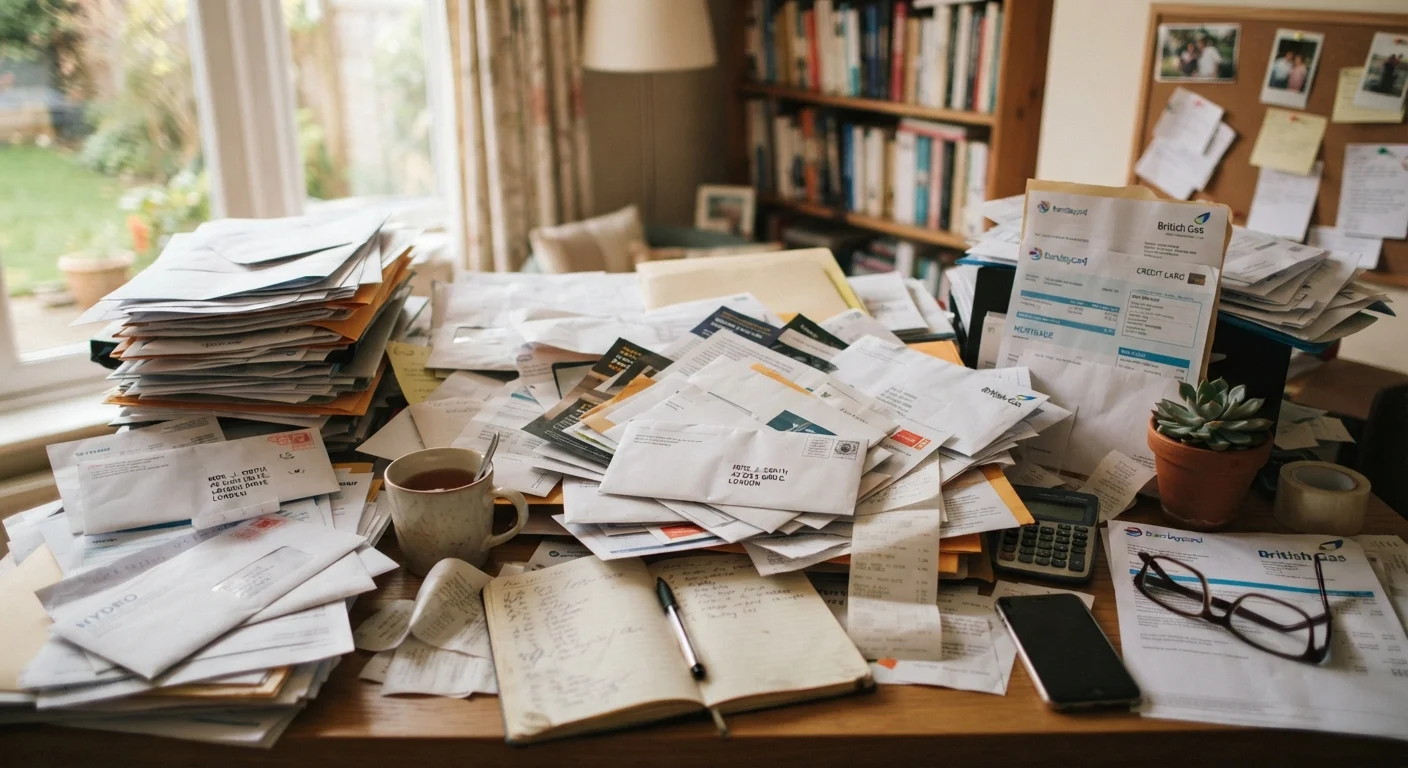
Paper clutter refers to the buildup of physical documents-mail, bills, receipts, manuals, flyers, and forms-that accumulates without a clear system for handling or storing them. It typically grows because paper arrives continuously but decisions about what to do with it get postponed. Over time, even small piles become overwhelming and difficult to sort.
Unlike other types of household clutter, paper clutter is uniquely driven by external inflow-mail, school forms, and work documents arrive on schedules you don't control, making it harder to manage without a deliberate intake system.
Why Paper Keeps Winning
Paper is one of the few categories of household clutter that arrives whether you invite it or not. Mail drops through the slot, school folders come home with kids, receipts accumulate in pockets and bags, and appliance manuals get set aside for later. Unlike a piece of furniture or a stack of books you chose to own, paper inflow is largely outside your control-which is exactly why it so reliably overwhelms even otherwise organized homes.
The core problem isn't volume alone. It's decision fatigue. Each piece of paper requires a small judgment call: keep it, act on it, file it, or toss it. When you're tired, busy, or unsure, the easiest choice is to set it down temporarily. That temporary pile becomes a permanent one. As the psychology of clutter suggests, deferred decisions accumulate as mental weight, making the pile feel even harder to approach over time.
Paper Clutter Is Not a Personality Flaw
Struggling with paper buildup doesn't reflect disorganization as a character trait-it reflects a system gap. Most homes were never set up with a specific paper-handling workflow, so paper defaults to available flat surfaces. Recognizing this as a structural issue rather than a personal failing makes it easier to address practically.
The Four Categories That Cover Almost Every Piece of Paper
One reason paper sorting feels complicated is that people try to invent a unique filing category for each document. A simpler framework works better. Most paper falls into just four buckets:
- Act on it: Bills to pay, forms to complete, invitations to respond to. These need a clear action within a set timeframe.
- File it: Documents you need to keep but don't need to do anything with right now-tax records, insurance summaries, medical paperwork.
- Read it later: Magazines, catalogs, or articles you genuinely want to review. This pile needs a size limit, or it expands indefinitely.
- Shred or recycle it: Junk mail, expired coupons, outdated statements, and anything containing personal information that needs secure disposal.
The moment a piece of paper touches your hands, assigning it to one of these four categories prevents it from becoming a fifth category: the pile on the counter.
80%
Of filed papers are reportedly never referenced again
Commonly cited in professional organizing literature, suggesting that most paper kept 'just in case' adds storage burden without practical value.
2 min
Average time to sort a day's worth of incoming mail
Home organization professionals frequently note that daily sorting sessions are brief enough to complete before or after another routine task.
Building a System That Holds
A working paper management system has three parts: an intake point, a sorting routine, and a storage method. Without all three, the system breaks down.
Intake point: Designate one physical spot-a tray near the door, a wall-mounted organizer, or a designated drawer-where all incoming paper lands. Never more than one spot. Multiple landing zones multiply the chaos.
Sorting routine: Set a two-minute daily habit to move paper from the intake point into your four categories. This is the most important step. Sorting once a week creates a larger, more discouraging task. Daily sorting keeps any single session brief and manageable.
Storage method: Action items go in a visible, accessible folder or slot. Filed documents go in a labeled filing system. The read-later pile gets a fixed container with a capacity limit. Everything else gets shredded or recycled immediately.
If your organizing efforts tend to restart and then stall, you're not alone-why organizing efforts don't stick is a common pattern that usually comes down to a missing routine rather than a missing product.
Handle Once: A Simple Rule That Works
Try applying the 'handle once' principle to incoming paper: when you pick up a piece of paper, decide its category before setting it down again. This single habit eliminates the 'temporary pile' phase entirely. It takes practice, but it becomes automatic faster than most people expect.
Cutting Inflow and Keeping Up
The most sustainable way to manage paper clutter is to reduce how much arrives. Switching to paperless billing and digital statements removes a significant daily inflow for most households. Opting out of catalogs and direct mail lists can also reduce unsolicited paper over time, though results aren't immediate.
For families, paper management is more complex-school folders, permission slips, and activity schedules add a layer that solo households don't face. If organizing with kids in the picture feels like a different challenge altogether, organizing with children at home addresses the specific patterns parents often encounter.
Even with a solid system in place, a quarterly paper audit is worth building into your calendar. Pull out the filing system, shred anything outdated, and reassess whether your categories still match your actual life. Paper clutter doesn't require a dramatic overhaul-it responds well to small, consistent habits applied over time.