

Key Takeaways
- Full minimalism reduces visual clutter and daily decision fatigue significantly.
- Letting go of sentimental or practical items is harder than decluttering books suggest.
- A minimalist home can save time on cleaning and maintenance.
- Living with fewer possessions may require re-purchasing items you discarded.
- Minimalism can work well in moderation without committing to an all-or-nothing approach.
Less clutter means faster, easier cleaning
Fewer surfaces covered with objects means less dusting, wiping, and reorganizing. Many minimalist households report spending noticeably less time on routine cleaning tasks.
Reduced decision fatigue day to day
When you own fewer things, you spend less mental energy deciding what to use, wear, or keep track of. This psychological benefit is one of the most commonly cited reasons people pursue minimalism.
More intentional spending habits
Committing to minimalism tends to make people more deliberate about what they bring into their home, which can reduce impulse purchases over time.
Spaces feel larger and calmer
Visual openness created by fewer objects can make even small rooms feel more spacious and less chaotic, which many people find genuinely restful.
Sentimental items are painful to part with
Gifts, inherited objects, and keepsakes carry emotional weight that practical decluttering frameworks often underestimate. Many people feel genuine regret after discarding meaningful items.
You may re-buy things you discarded
Removing 'rarely used' items often means repurchasing them when a specific need arises - a particular tool, a spare blanket, backup kitchenware. This can negate any savings.
Difficult to maintain with children or shared households
Children need toys, supplies, and gear that accumulates quickly. In shared homes, minimalism requires full buy-in from everyone, which isn't always realistic.
Can become a stressful aesthetic pursuit
When minimalism shifts from a practical goal to an appearance-driven standard, it can create anxiety rather than reduce it - especially when the 'ideal' look feels impossible to maintain.
Risk of discarding genuinely useful items
The pressure to reduce can lead to getting rid of functional objects that would have served a future purpose. Replacing specialized or seasonal items can be inconvenient and costly.
Our Verdict
Going fully minimalist can genuinely improve daily calm, reduce cleaning burdens, and bring more intentionality to your space. However, it demands honest self-assessment about what you actually use, and it doesn't suit every household or lifestyle. A middle-ground approach - decluttering meaningfully without chasing an aesthetic extreme - often delivers the real benefits without the regret.
Full minimalism tends to work best for people living alone or with a like-minded partner, those with stable, predictable lifestyles, and anyone who finds visual clutter genuinely distressing.
What 'Fully Minimalist' Actually Means
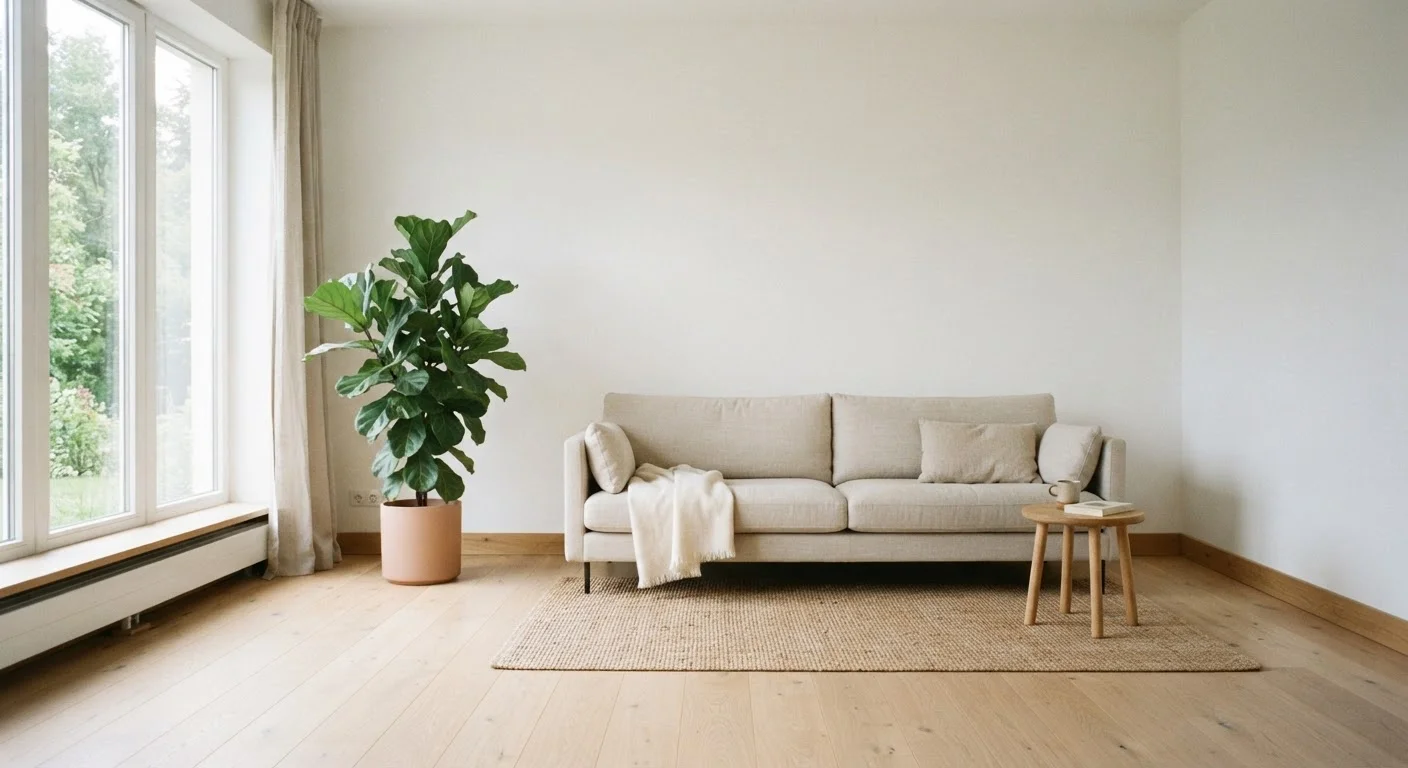
Minimalism at home goes beyond tidying up. It means intentionally reducing your possessions to only what you regularly use or genuinely value - and then maintaining that reduced baseline over time. For some, that's a streamlined kitchen with one set of dishes. For others, it means furniture-free rooms and bare countertops throughout the house.
This is different from simply organizing your belongings. Minimalism asks you to remove things permanently, not just store them more neatly. That distinction matters, because the trade-offs stem directly from what you choose to keep out - and what you decide to let go of for good. If you're considering starting this process, it helps to understand realistic expectations first. Our decluttering guide for beginners covers the core principles before you dive in.
The Genuine Advantages
The benefits of a minimalist home are real, and they go beyond aesthetics.
Less clutter means faster, easier cleaning
Fewer surfaces covered with objects means less dusting, wiping, and reorganizing. Many minimalist households report spending noticeably less time on routine cleaning tasks.
Reduced decision fatigue day to day
When you own fewer things, you spend less mental energy deciding what to use, wear, or keep track of. This psychological benefit is one of the most commonly cited reasons people pursue minimalism.
More intentional spending habits
Committing to minimalism tends to make people more deliberate about what they bring into their home, which can reduce impulse purchases over time.
Spaces feel larger and calmer
Visual openness created by fewer objects can make even small rooms feel more spacious and less chaotic, which many people find genuinely restful.
These advantages compound over time. A space with fewer things to dust, move, or organize requires less mental overhead. Many people report that reducing clutter helps them feel calmer at home - though individual responses vary, and the research on environment and mood is still developing. For a related angle, see how the same logic applies to clothing in our look at the case for owning fewer clothes.
The Real Downsides
Minimalism also comes with costs that aren't always acknowledged in its popular portrayals.
Sentimental items are painful to part with
Gifts, inherited objects, and keepsakes carry emotional weight that practical decluttering frameworks often underestimate. Many people feel genuine regret after discarding meaningful items.
You may re-buy things you discarded
Removing 'rarely used' items often means repurchasing them when a specific need arises - a particular tool, a spare blanket, backup kitchenware. This can negate any savings.
Difficult to maintain with children or shared households
Children need toys, supplies, and gear that accumulates quickly. In shared homes, minimalism requires full buy-in from everyone, which isn't always realistic.
Can become a stressful aesthetic pursuit
When minimalism shifts from a practical goal to an appearance-driven standard, it can create anxiety rather than reduce it - especially when the 'ideal' look feels impossible to maintain.
Risk of discarding genuinely useful items
The pressure to reduce can lead to getting rid of functional objects that would have served a future purpose. Replacing specialized or seasonal items can be inconvenient and costly.
Minimalism Looks Different for Everyone
There's no single definition of a minimalist home. What counts as 'enough' varies widely based on household size, lifestyle, disability or medical needs, and personal values. Comparing your space to online examples can set an unrealistic benchmark. Focus on what actually reduces friction in your own daily life rather than hitting a specific visual standard.
It's also worth noting that extreme minimalism can feel unwelcoming to guests or family members who don't share the same preference. A home that feels serene to one person may feel cold or impersonal to another - and that tension is worth thinking through before making irreversible decisions.
Where Most People Land
In practice, very few people sustain a fully minimalist home long-term without adjustment. Life changes - a new hobby, a growing family, a medical need - often require adding items back. The households that tend to thrive with a minimalist approach are those who treat it as a set of ongoing values rather than a fixed aesthetic to achieve once and freeze.
1 in 4
Americans struggle with clutter at home
According to a UCLA Center on Everyday Lives of Families study, clutter was a significant source of stress for American mothers, highlighting how widespread the issue is.
~$18,000
Average annual spending on nonessential goods
U.S. Bureau of Labor Statistics consumer expenditure data suggests a significant portion of household spending goes toward items beyond core needs, underscoring the potential financial impact of more intentional purchasing.
A practical middle path is to apply minimalist thinking selectively: pare down categories that genuinely stress you out (junk drawers, overflowing closets, duplicate kitchen tools) while leaving room for things that bring real value to your daily life. That's a more durable approach for most Americans than chasing a magazine-ready empty room. Thinking carefully about purchases before they enter your home is equally part of the equation - our smarter decisions hub offers useful frameworks for reducing future clutter at the source.