

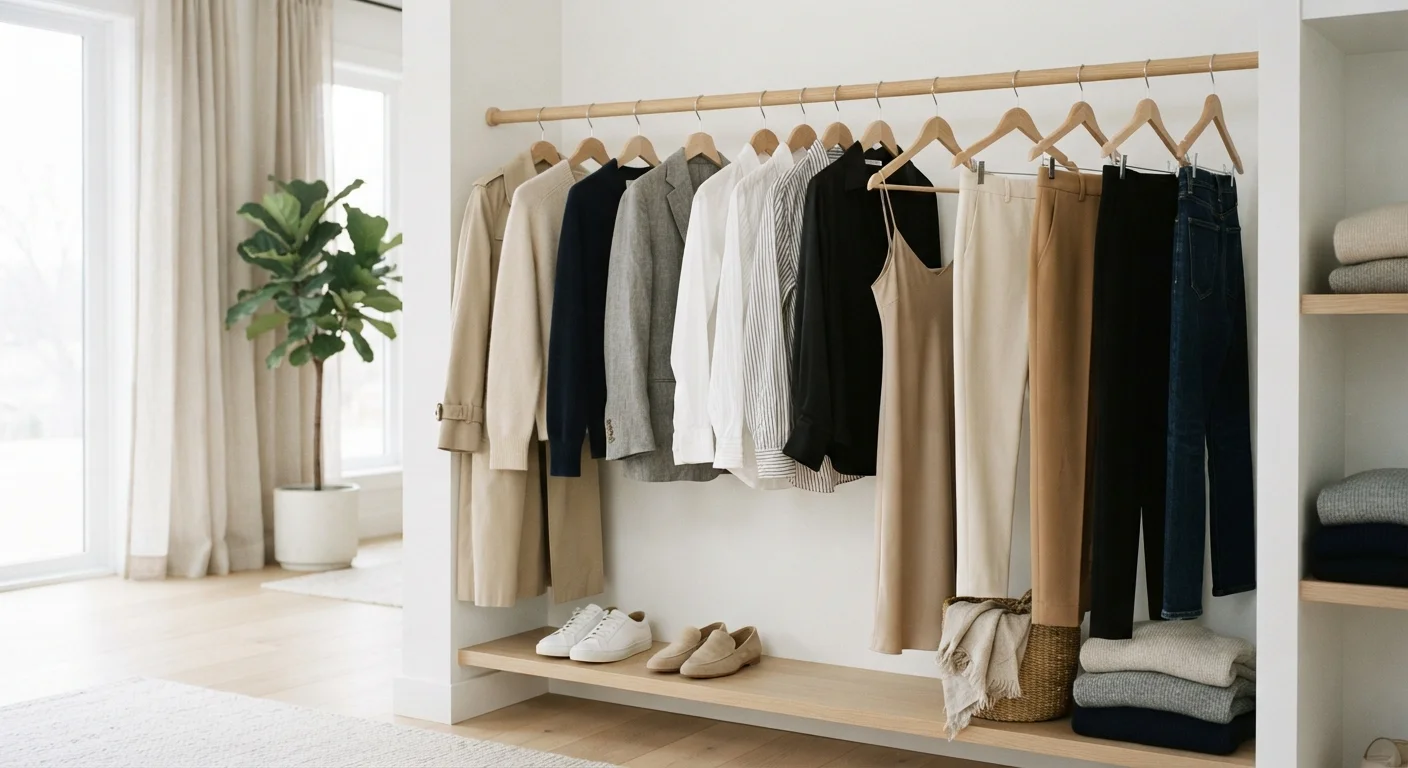
Key Takeaways
- A smaller wardrobe reduces daily decision fatigue and can make getting dressed feel faster and more intentional.
- Owning fewer clothes often encourages investing in better-quality pieces that last longer.
- Minimalist wardrobes can fall short during seasonal changes, special occasions, or unpredictable weather.
- The financial upside of buying less is real, but the transition can require upfront spending on versatile staples.
- A minimal closet works best when your lifestyle is consistent — it suits some people more than others.
Getting dressed becomes faster and less stressful
Fewer options mean fewer decisions each morning. Research on decision fatigue suggests that limiting low-stakes choices early in the day can preserve mental energy for more important tasks.
Encourages investment in quality over quantity
With a smaller closet, each piece carries more weight, which naturally pushes toward buying better-made items. Higher-quality garments often last longer and hold their appearance through more wears and washes.
Reduces clutter and storage pressure
A lean wardrobe is easier to organize and maintain. Drawers close properly, hangers aren't jammed, and finding what you want takes seconds rather than minutes.
Can lower long-term clothing spend
Buying less frequently — even at higher per-item prices — often reduces overall spending compared to habitually buying cheap, trend-driven pieces that get discarded quickly.
Clarifies your personal style
Editing your wardrobe forces you to identify what you actually like to wear, often revealing a clearer, more consistent aesthetic than a cluttered closet would suggest.
Limited coverage for unexpected occasions
A lean wardrobe struggles when life throws a last-minute formal event, a job interview, or an outdoor adventure at you. Without a buffer of options, gaps in coverage become obvious fast.
Individual pieces wear out faster
When you rotate through a small number of items regularly, each one takes more wear and washing cycles. Even quality garments show wear sooner when they're used this frequently.
Less room for mood-driven dressing
Some days you want to experiment, play with color, or dress differently than your usual look. A very small wardrobe can make that kind of spontaneous expression hard to act on.
Seasonal transitions become logistically tricky
A compact wardrobe designed for one climate or season often doesn't stretch comfortably into another. Bridging spring-to-summer or fall-to-winter may require strategic additions that temporarily inflate the collection.
The upfront cost of 'doing it right' can be high
Transitioning to a quality-focused minimal wardrobe often means replacing lower-quality items with more expensive staples — which requires real upfront spending before any savings are realized.
Can feel restrictive as lifestyle or taste shifts
A career change, a new social scene, or simply an evolving sense of style can quickly make a tightly curated wardrobe feel more like a constraint than a clarity tool.
Our Verdict
Owning fewer clothes offers genuine benefits — less clutter, clearer choices, and a more intentional relationship with what you wear. But it's not a magic solution, and the trade-offs are real. Gaps in coverage for special occasions, limited flexibility for shifting moods or weather, and the pressure to make every piece work hard can make a stripped-down wardrobe feel restrictive rather than freeing.
This approach works best for people with relatively consistent daily routines, a strong sense of their personal style, and the patience to build a thoughtful, high-quality foundation rather than chasing trend-driven variety.
What 'Owning Fewer Clothes' Actually Means
Reducing your wardrobe doesn't require counting every item or following a strict number. The idea is simpler: keep only what you genuinely wear, and stop filling space with clothes that don't serve you. This overlaps with the concept of a capsule wardrobe — a curated, mix-and-match collection built around versatile pieces. If you haven't looked at that idea closely, the capsule wardrobe breakdown is a solid place to start.
The appeal is easy to understand. Most people wear a small fraction of what they own on a regular basis. Cutting the rest down to size means your closet reflects your actual life — not a wishful version of it. But before committing to a major edit, it helps to go in with eyes open about both the upside and the friction.
The Real Advantages of a Smaller Wardrobe
There are some genuinely compelling reasons people scale back — and they go beyond aesthetics.
Getting dressed becomes faster and less stressful
Fewer options mean fewer decisions each morning. Research on decision fatigue suggests that limiting low-stakes choices early in the day can preserve mental energy for more important tasks.
Encourages investment in quality over quantity
With a smaller closet, each piece carries more weight, which naturally pushes toward buying better-made items. Higher-quality garments often last longer and hold their appearance through more wears and washes.
Reduces clutter and storage pressure
A lean wardrobe is easier to organize and maintain. Drawers close properly, hangers aren't jammed, and finding what you want takes seconds rather than minutes.
Can lower long-term clothing spend
Buying less frequently — even at higher per-item prices — often reduces overall spending compared to habitually buying cheap, trend-driven pieces that get discarded quickly.
Clarifies your personal style
Editing your wardrobe forces you to identify what you actually like to wear, often revealing a clearer, more consistent aesthetic than a cluttered closet would suggest.
~20%
Clothes worn regularly from the average wardrobe
Wardrobe audit studies and consumer surveys consistently suggest that most people regularly wear only a small fraction of the clothes they own.
3x
More wears needed to offset fast fashion's footprint
Sustainability researchers have estimated that wearing a garment significantly more times than typical fast-fashion usage can substantially reduce its per-wear environmental cost.
Less clothing also tends to mean less laundry, less storage strain, and less visual clutter. For anyone who regularly feels overwhelmed by a full closet, a smaller selection can actually feel like more freedom rather than less. The key is that everything you keep should earn its place.
The Downsides You Shouldn't Overlook
The minimalist wardrobe pitch can make the trade-offs sound minor. They aren't always. Here's what can genuinely trip people up:
Limited coverage for unexpected occasions
A lean wardrobe struggles when life throws a last-minute formal event, a job interview, or an outdoor adventure at you. Without a buffer of options, gaps in coverage become obvious fast.
Individual pieces wear out faster
When you rotate through a small number of items regularly, each one takes more wear and washing cycles. Even quality garments show wear sooner when they're used this frequently.
Less room for mood-driven dressing
Some days you want to experiment, play with color, or dress differently than your usual look. A very small wardrobe can make that kind of spontaneous expression hard to act on.
Seasonal transitions become logistically tricky
A compact wardrobe designed for one climate or season often doesn't stretch comfortably into another. Bridging spring-to-summer or fall-to-winter may require strategic additions that temporarily inflate the collection.
The upfront cost of 'doing it right' can be high
Transitioning to a quality-focused minimal wardrobe often means replacing lower-quality items with more expensive staples — which requires real upfront spending before any savings are realized.
Can feel restrictive as lifestyle or taste shifts
A career change, a new social scene, or simply an evolving sense of style can quickly make a tightly curated wardrobe feel more like a constraint than a clarity tool.
Minimalism Looks Different for Everyone
There's no universal number of items that defines a minimal wardrobe. What feels lean and intentional to one person may feel sparse and stressful to another. The point isn't to hit a specific count — it's to make deliberate choices about what earns closet space in your life. If you're also exploring a minimal approach to grooming, the same principles and trade-offs tend to apply, as explored in the minimal grooming routine guide.
It's also worth acknowledging that personal style evolves. A wardrobe that felt perfectly curated one year may feel limiting the next — especially if your social life, work environment, or body changes. The neutral vs. colorful wardrobe debate is one lens for thinking through how personal expression fits into a leaner closet.
Is a Minimal Wardrobe Right for Your Life?
The honest answer is: it depends heavily on your lifestyle. A consistent daily routine — say, a predictable work environment and a stable social calendar — makes a pared-down closet much easier to sustain. Variety of context (formal events, outdoor activities, travel, changing seasons) adds complexity that a very small wardrobe may struggle to handle gracefully.
If you're drawn to the broader idea of owning less intentionally, it connects naturally to minimalism beyond the wardrobe — where many of the same rewards and frustrations appear. The smarter decisions framework can also help when you're weighing exactly what to keep and what to let go.
Whatever you decide, the goal isn't to own the fewest clothes possible — it's to own the right clothes for the life you actually live.