

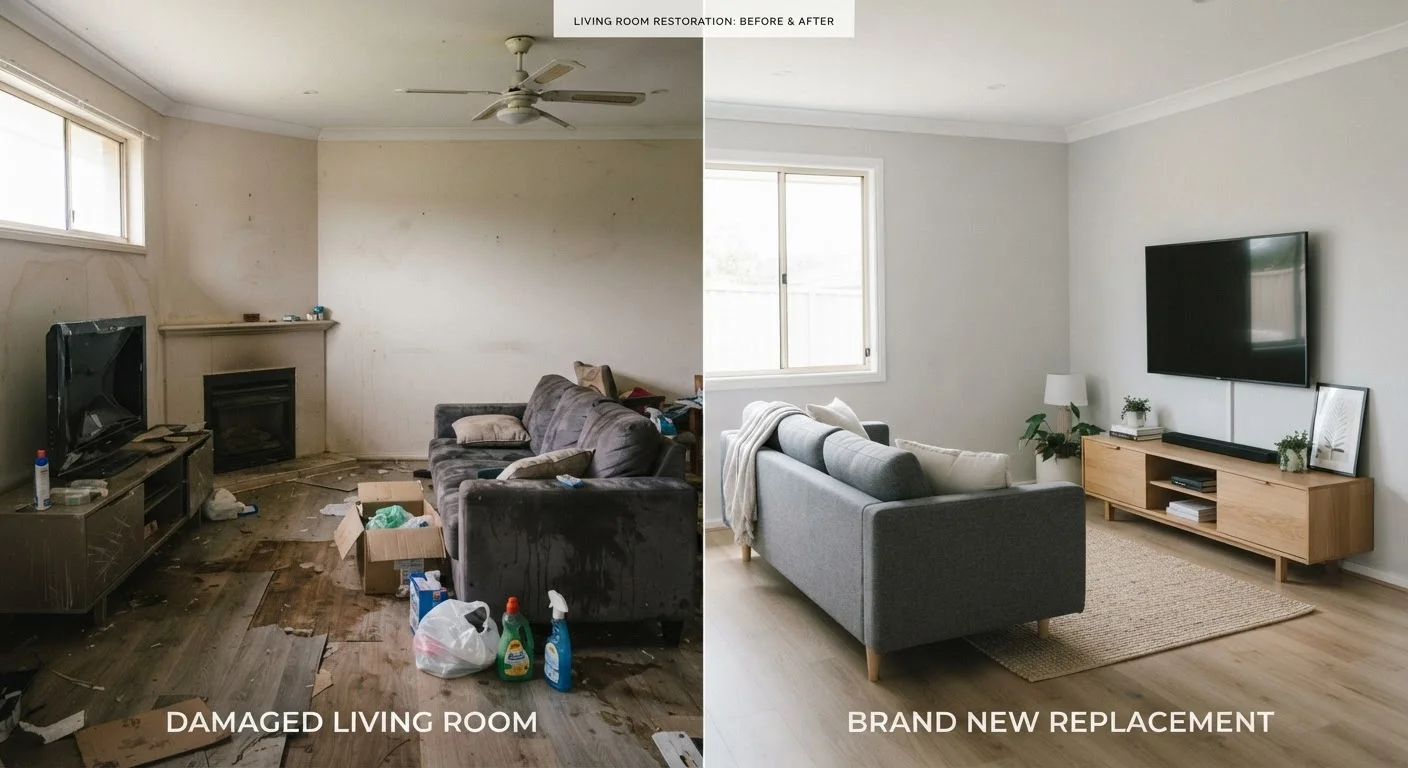
Key Takeaways
- ACV pays what your property was worth at the time of loss - after depreciation is subtracted.
- Replacement cost pays what it actually costs to buy a comparable new item today.
- The gap between ACV and RCV payouts can be thousands of dollars on a single claim.
- RCV policies typically carry higher premiums than ACV policies.
- Your policy documents - not the agent's verbal summary - define which method applies.
- Reviewing your valuation method annually helps ensure your coverage still matches your needs.
Option A
Actual Cash Value (ACV)
The depreciation-adjusted payout method.
Best for: Policyholders seeking lower premiums who can absorb some out-of-pocket cost after a loss.
Option B
Replacement Cost Value (RCV)
The full replacement payout method.
Best for: Homeowners and renters who want to fully restore lost or damaged property without a depreciation penalty.
If you want the lowest possible premium and can cover some gap out of pocket
Actual Cash Value (ACV)
ACV policies cost less month to month and may make sense if you have savings set aside to bridge any depreciation shortfall after a claim.
If you want to fully restore your home or belongings without an out-of-pocket gap
Replacement Cost Value (RCV)
RCV coverage removes the depreciation variable, so your payout reflects what it actually costs to replace damaged property with something comparable today.
If you own a home with newer appliances, electronics, or furnishings
Replacement Cost Value (RCV)
Newer high-value items depreciate quickly; an ACV settlement on a two-year-old HVAC system or roof could leave a significant funding gap.
If you own older property with heavily depreciated contents
Actual Cash Value (ACV)
When items are already near the end of their useful life, the premium savings from ACV may outweigh the reduced payout you'd receive at claim time.
What These Two Terms Actually Mean
When you buy a home or renters insurance policy, one of the most important - and often overlooked - decisions is how your insurer will calculate a payout if you suffer a loss. Two methods dominate the market: Actual Cash Value (ACV) and Replacement Cost Value (RCV).
Actual Cash Value is roughly what your property was worth in the open market at the moment it was damaged or destroyed. Insurers calculate this by starting with the cost to replace the item and then subtracting depreciation - an adjustment for age, wear, and obsolescence. A five-year-old laptop that costs $1,200 to replace new might receive an ACV payout of only $500 once depreciation is applied.
Replacement Cost Value skips that depreciation step. Your insurer pays what it would actually cost you to purchase a comparable item new, at today's prices. That same laptop would be settled closer to $1,200 under an RCV policy.
For a deeper look at how these calculations work in practice, see how ACV and RCV are calculated.
| Criterion | Actual Cash Value (ACV) | Replacement Cost Value (RCV) |
|---|---|---|
| Payout basis | Depreciated market value at time of loss | Cost to buy a comparable new item today |
| Depreciation deducted | Yes | No |
| Typical premium cost | Lower | Higher |
| Out-of-pocket gap after claim | Potentially significant | Minimal to none |
| Best suited for | Older property, budget-conscious buyers | Newer property, full-restoration priority |
| Common in | Basic home, renters, and auto policies | Upgraded home and renters policy tiers |
Why the Gap Matters More Than You Might Expect
The difference between the two methods can feel abstract until a real loss occurs. Consider a house fire that damages a roof, several appliances, and a living room's worth of furniture. Under an ACV policy, depreciation on each item is calculated separately - and on a ten-year-old roof, that reduction can be dramatic. Homeowners in this situation sometimes discover their payout covers only a fraction of what repairs actually cost.
20-30%
Typical depreciation on common household items per claim
Insurance industry guidance generally applies age-and-condition depreciation schedules that can reduce ACV settlements by 20-30% or more on items like electronics and appliances.
~40%
Gap between ACV and RCV on a 10-year-old roof
Roofs depreciate substantially with age; on a decade-old roof, the ACV payout may reflect less than 60% of current replacement costs depending on material and insurer schedules.
This is a common source of post-claim frustration. Many policyholders assume their coverage will make them whole, when the policy wording says something more limited. That disconnect is exactly the kind of misconception that costs people real money - see common insurance myths that leave people worse off for more examples.
RCV policies narrow that gap considerably, but they do come at a cost: premiums are typically higher. The trade-off is a financial decision that depends on your savings, the age of your property, and how much uncertainty you can comfortably absorb.
Reading Your Policy to Find Your Valuation Method
Your policy's declarations page and the coverage definitions section are the authoritative source - not a verbal summary from an agent, not a marketing brochure. Look for language like "actual cash value," "replacement cost," or "depreciation" in the property coverage section. If the wording is unclear, ask your insurer or a licensed agent to walk you through specifically how a partial loss and a total loss would each be calculated.
A few nuances worth knowing:
- Some RCV policies pay ACV initially and release the remaining "recoverable depreciation" only after you complete repairs or replacement. This is called a holdback provision - so you may need to front money before receiving the full settlement.
- Extended or guaranteed replacement cost endorsements exist for dwelling coverage and offer additional protection above your policy limit if rebuilding costs exceed the insured amount.
- Auto insurance operates similarly: if your car is totaled, an ACV settlement reflects the vehicle's market value before the accident - which for an older car can be well below what a replacement would cost. When repair bills start outweighing what a car is worth explores how to think through that calculation.
Holdback Provisions: Know Before You File
Some replacement cost policies require you to complete the repair or replacement before releasing the full payout. The insurer first pays ACV, then reimburses the depreciation difference - called recoverable depreciation - once you provide receipts. If you are not aware of this process, you may be caught short on funds during the repair period. Confirm with your insurer exactly when and how supplemental payments are released.
It's worth revisiting this choice whenever your circumstances change. An annual policy review is a practical way to confirm your valuation method still fits your situation.
This article is for general informational purposes only and does not constitute insurance, financial, or legal advice. Coverage terms, eligibility, and payouts vary by policy and provider. Always read your actual policy documents and consult a licensed insurance professional before making coverage decisions.