

Key Takeaways
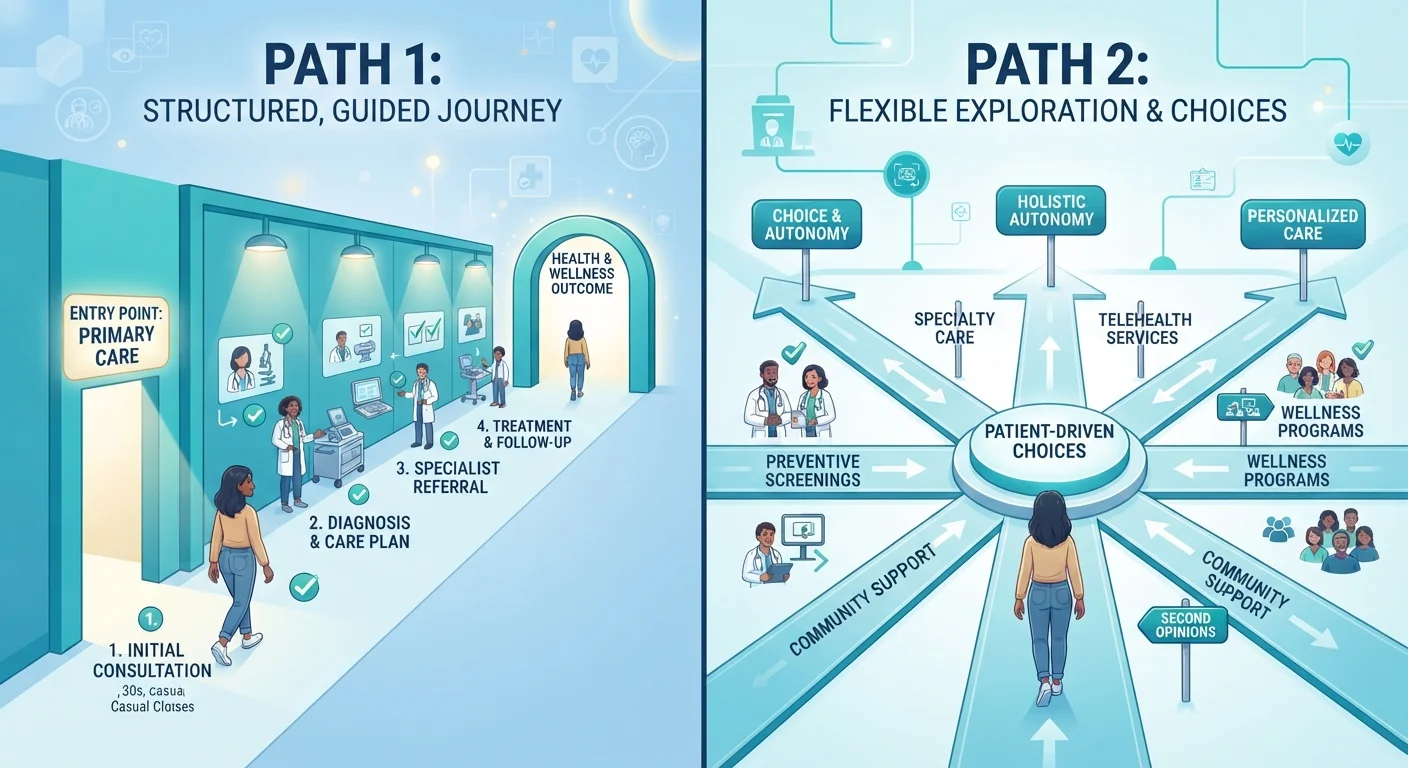
- HMOs require you to choose a primary care physician who coordinates all your care and specialist referrals.
- PPOs let you see specialists and out-of-network providers directly, but typically charge higher premiums.
- HMO plans generally have lower monthly premiums and out-of-pocket costs than comparable PPO plans.
- Going out-of-network on an HMO usually means paying the full cost yourself, with rare exceptions.
- Neither plan type is universally better - the right choice depends on your health needs, budget, and preferred doctors.
Option A
HMO (Health Maintenance Organization)
The coordinated, lower-cost network plan.
Best for: People who want predictable costs and don't mind working through a primary care doctor to access specialists.
Option B
PPO (Preferred Provider Organization)
The flexible, broader-access plan.
Best for: People who see multiple specialists, travel frequently, or want the option to go out-of-network without a referral.
If you want lower monthly premiums and predictable costs
HMO
HMOs consistently carry lower premiums and copays. If you're generally healthy and don't need frequent specialist visits, the savings can be significant over the course of a year.
If you manage a chronic condition and see multiple specialists
PPO
PPOs let you coordinate care across specialists without needing referrals each time, which reduces friction when ongoing specialist access is a regular part of your care.
If you live in a rural area or travel often for work
PPO
HMO networks can be thin outside major metro areas. A PPO's out-of-network coverage gives you a safety net when your in-network providers aren't accessible.
If you have a young family with routine care needs
HMO
Families focused on preventive care, pediatric visits, and routine checkups can benefit from HMO cost structures without needing the flexibility a PPO offers.
If your preferred doctors are not in any single network
PPO
PPOs allow you to see out-of-network providers at partial coverage, meaning you can keep established relationships with specific doctors even if they aren't fully in-network.
What Each Plan Type Actually Means
When you sign up for health insurance - whether through an employer or on your own - one of the first choices you'll face is the plan type. HMO stands for Health Maintenance Organization. PPO stands for Preferred Provider Organization. These labels describe how your insurer structures access to doctors and what rules govern your care.
With an HMO, you pick one primary care physician (PCP) who becomes your medical home base. That doctor manages your overall care and issues referrals when you need to see a specialist. Your coverage is generally limited to doctors and hospitals inside the plan's network. Stepping outside that network - except in a genuine emergency - typically means paying the full bill yourself.
With a PPO, there's no required PCP and no referral system. You can make appointments directly with specialists, and you have the option to see out-of-network providers, though you'll usually pay more for that flexibility. The tradeoff is higher premiums and, often, a more complex cost structure with separate in-network and out-of-network deductibles.
For a broader look at how provider networks shape what you pay, see how health insurance networks actually work.
| Criterion | HMO | PPO |
|---|---|---|
| Monthly premiums | Generally lower | Generally higher |
| Primary care physician required | Yes | No |
| Referrals needed for specialists | Yes | No |
| Out-of-network coverage | Rarely (emergencies only) | Yes, at higher cost |
| Network size | Narrower | Broader |
| Copay predictability | High - flat copays common | Variable - coinsurance applies OON |
| Care coordination | Managed by PCP | Self-directed |
Cost Differences: Premiums, Copays, and Out-of-Pocket Exposure
HMOs tend to cost less month to month. Because the insurer can negotiate more aggressively with a defined, limited network of providers, those savings are typically passed along as lower premiums and predictable copays. You'll usually pay a flat fee at each visit and face a lower annual deductible.
PPOs price in their flexibility. Higher premiums reflect the broader network and the added option to go out-of-network. Out-of-network care under a PPO usually comes with a separate, higher deductible and coinsurance (meaning you pay a percentage of the bill rather than a flat copay). If you rarely use out-of-network care, you may end up paying for flexibility you don't use.
~$100-$200+
Typical monthly premium difference between HMO and PPO
Premium gaps vary widely by region, employer, and plan tier, but PPOs consistently carry higher average premiums than HMOs for comparable coverage levels.
~90%
Employer-sponsored plans offering both HMO and PPO options
According to KFF (Kaiser Family Foundation) employer health benefits surveys, most large employers offer workers a choice between plan types during open enrollment.
When comparing plans side by side during open enrollment, look beyond the monthly premium. Factor in your expected number of doctor visits, any prescriptions you take, and whether your preferred providers are in-network. Those numbers often tell a clearer story than the premium alone.
If you're evaluating plans outside of employer coverage - say, after a job change or going freelance - the cost dynamics can shift. Our employer-sponsored vs. individual health insurance comparison covers what changes when you're buying on your own.
Referrals, Networks, and Access to Specialists
The referral requirement is one of the most practical differences between HMOs and PPOs, and it affects care more than people often expect.
Under an HMO, seeing a dermatologist, cardiologist, or orthopedist typically requires a referral from your PCP first. This can add a step - sometimes an extra appointment - before you get the specialist visit you need. On the upside, your PCP is coordinating your whole picture, which can catch things a fragmented approach might miss.
Under a PPO, you call the specialist's office directly and book. There's no gatekeeper. This matters most when you're managing an ongoing condition that requires regular specialist involvement, or when you want a second opinion without navigating a referral process.
Network size is also worth checking. HMO networks can be narrower, especially outside major cities. If you live somewhere rural or suburban, verify that the HMO's network includes providers within a reasonable distance before enrolling. PPO networks are generally wider and include more hospitals, though out-of-network care always costs more even under a PPO.
Emergency Care Is Covered Under Both Plan Types
Federal law requires that both HMO and PPO plans cover genuine emergency care regardless of whether the provider is in-network. If you go to an emergency room for a true emergency, your plan cannot deny coverage simply because the facility is out-of-network. However, follow-up care after stabilization may still be subject to network rules, so it's worth contacting your insurer as soon as you're able after an emergency visit.
Before committing to any plan, review the provider directory carefully - it's updated regularly and what's listed at enrollment is what counts. Our article on questions to ask before signing up for a plan can help you know what to look for.