

Key Takeaways
- In-network providers have agreed to negotiated rates with your insurer, lowering your out-of-pocket costs.
- Out-of-network care can cost substantially more, and some plans won't cover it at all.
- Your plan type - HMO, PPO, EPO, or POS - determines how strictly the network rules apply to you.
- Always verify a provider is in-network before your appointment, not after.
- Network size and composition vary widely between plans, even on the same insurance marketplace.
Health Insurance Network
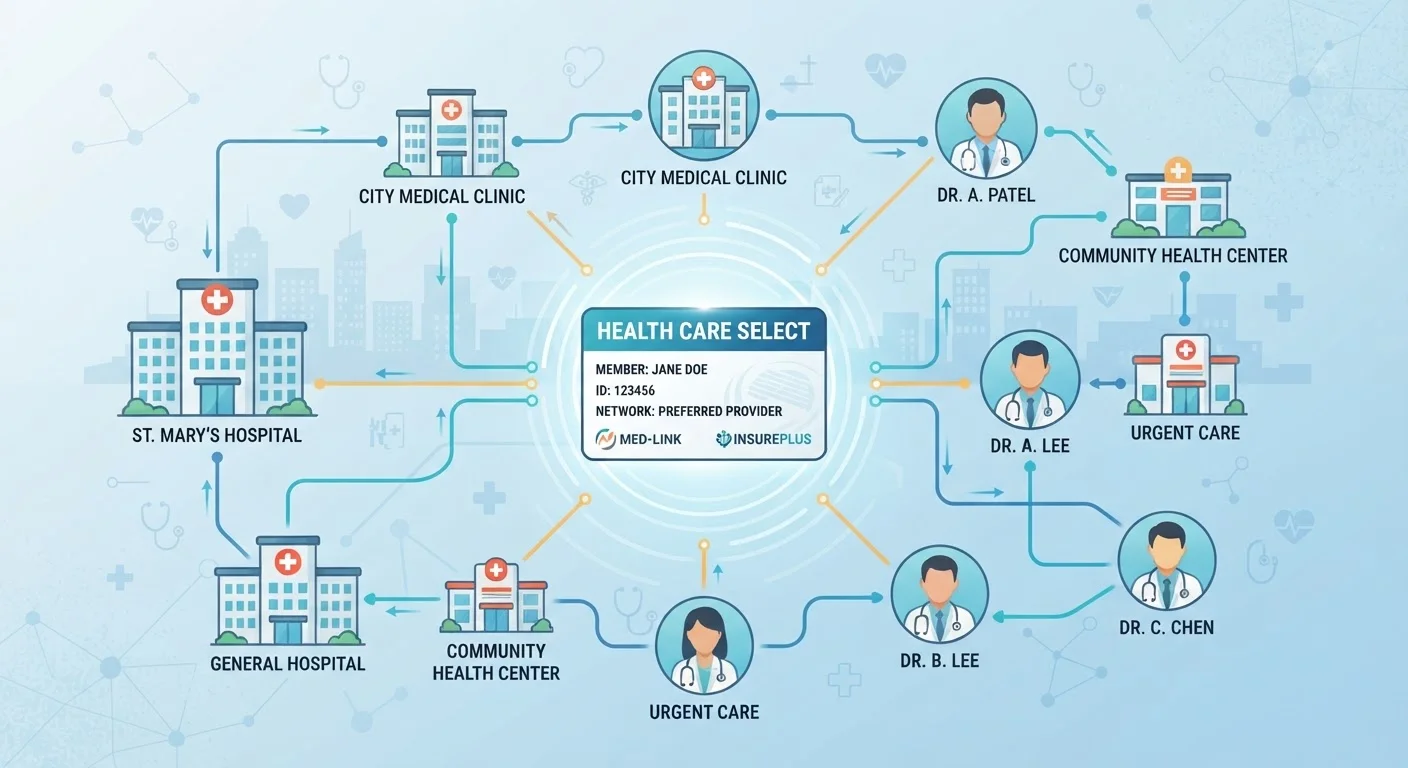
A health insurance network is the group of doctors, hospitals, specialists, and other healthcare providers that have signed a contract with your insurance company. When you see a provider in that group, you're considered "in-network" and your insurer covers a larger share of the bill. Providers outside that group are "out-of-network," and your costs go up - sometimes significantly.
Contracts between insurers and providers establish negotiated rates, which is why in-network care is priced lower than what an uncontracted provider would bill.
The Basic Idea: Contracts Create the Network
When an insurance company builds a health plan, it negotiates agreements with individual providers - doctors, urgent care clinics, labs, hospitals, and specialists. These providers agree to accept a set rate for their services in exchange for being included in the insurer's directory and receiving a steady stream of patients. That collection of contracted providers is your network.
The negotiated rate is almost always lower than what the same provider would charge an uninsured patient. Because your insurer has already agreed on pricing, both you and your plan pay less. Outside the network, no such deal exists - the provider can bill their standard rates, leaving you responsible for the difference.
This is also why understanding where your premium goes matters: part of what you're paying for each month is access to those negotiated rates.
In-Network vs. Out-of-Network: What It Costs You
The financial gap between in-network and out-of-network care can be significant. For in-network visits, your plan typically pays a set percentage after your deductible is met - say, 80% - and you pay the rest. For out-of-network visits, that split often flips, or coverage may not apply at all.
Up to 40%
Higher cost-sharing for out-of-network care
Many plans shift significantly more cost to the patient for out-of-network services, with some plans applying cost-sharing ratios of 60/40 or worse compared to 80/20 in-network splits.
1 in 5
Emergency visits involving an out-of-network provider
Research published by health policy organizations has found that roughly one in five emergency visits involved at least one out-of-network provider, even when the facility itself was in-network.
Some plans have a separate, higher out-of-network deductible you'd need to meet before any coverage kicks in. And certain plan types - like EPOs (Exclusive Provider Organizations) - simply won't pay for out-of-network care except in a documented emergency. Understanding your deductibles, copays, and out-of-pocket limits alongside network rules gives you a clearer picture of real exposure.
How Plan Type Shapes Network Rules
The type of health plan you choose determines how tightly you're bound to the network.
- HMO (Health Maintenance Organization): Requires you to use in-network providers almost exclusively. You typically need a primary care physician (PCP) who coordinates referrals to specialists.
- PPO (Preferred Provider Organization): Allows you to see out-of-network providers at a higher cost. No referrals needed, more flexibility.
- EPO (Exclusive Provider Organization): In-network only, except for emergencies. No referrals required, but no out-of-network coverage.
- POS (Point of Service): A hybrid - requires a PCP and referrals like an HMO, but allows some out-of-network access like a PPO.
For a deeper side-by-side comparison, see our HMO vs. PPO breakdown.
Check Network Size When Comparing Plans
A lower-premium plan may have a narrower network with fewer specialists in your area. Before enrolling, search the insurer's provider directory for the specific doctors and facilities you use most. A plan with slightly higher premiums but broader access may save you more overall.
Practical Steps for Using Your Network Wisely
Even seasoned insurance holders get tripped up by network rules. A few habits can protect you from unexpected bills.
- Verify before you go. Use your insurer's provider directory online or call member services. Provider status can change, so confirm even for providers you've seen before.
- Ask the facility, too. When you're admitted to an in-network hospital, the anesthesiologist or radiologist treating you might be out-of-network. Ask ahead of any procedure whether all treating providers are in your plan.
- Understand emergency exceptions. Federal rules generally require that emergency care at an out-of-network facility be covered at in-network cost-sharing rates, thanks to the No Surprises Act. This doesn't apply to all non-emergency situations.
- Compare networks when shopping plans. Before enrollment, look up whether your current doctors are in each plan's network, not just the premium price.
If you're evaluating plans - whether through an employer or on your own - our guide on questions to ask before signing up can help you avoid gaps in coverage.
This article is for general informational purposes only and does not constitute personalized insurance, financial, or legal advice. Coverage terms, network rules, and costs vary by plan and insurer. Always review your plan's Summary of Benefits and Explanation of Coverage, and consult a licensed insurance agent or adviser for guidance specific to your situation.