

Key Takeaways
- Fixed expenses repeat at the same amount each period and are easy to predict in a budget.
- Variable expenses fluctuate and are where most day-to-day spending choices occur.
- Knowing which costs are fixed helps you identify your non-negotiable financial floor.
- Variable expenses are typically where you have the most room to cut or adjust spending.
- Some costs - like utilities - have both a fixed and a variable component.
- Labeling your expenses correctly makes any budgeting method more effective.
Fixed vs. Variable Expenses
Fixed expenses are costs that stay the same amount every billing period - think rent, a car loan payment, or a monthly insurance premium. Variable expenses change from month to month based on your choices and habits, like groceries, gas, or dining out. Understanding which category each of your costs falls into helps you predict what you owe, spot where you have flexibility, and make smarter spending decisions.
Some personal finance frameworks add a third category - 'periodic' or 'irregular' expenses - for costs that are fixed in amount but don't occur every month, such as annual insurance premiums or quarterly subscriptions.
Why the Category Matters Before the Amount Does
Most people build a budget by listing what they spend. That's a good start - but without grouping expenses by type, you're missing half the picture. Knowing whether a cost is fixed or variable tells you something more useful than just the dollar amount: it tells you how much control you actually have over it.
Fixed expenses are commitments. You agreed to pay them - a lease, a loan, a subscription contract - and the amount is locked in for the term. Variable expenses, by contrast, reflect decisions you make on an ongoing basis. They move with your behavior, which means they can move with your intentions when you need them to.
This distinction is the foundation of practical budgeting. Once you know your fixed floor - the minimum you must pay no matter what - you can work with whatever's left over far more deliberately. Without that separation, it's easy to feel like all spending is equally rigid, which leads to frustration and budget plans that don't stick.
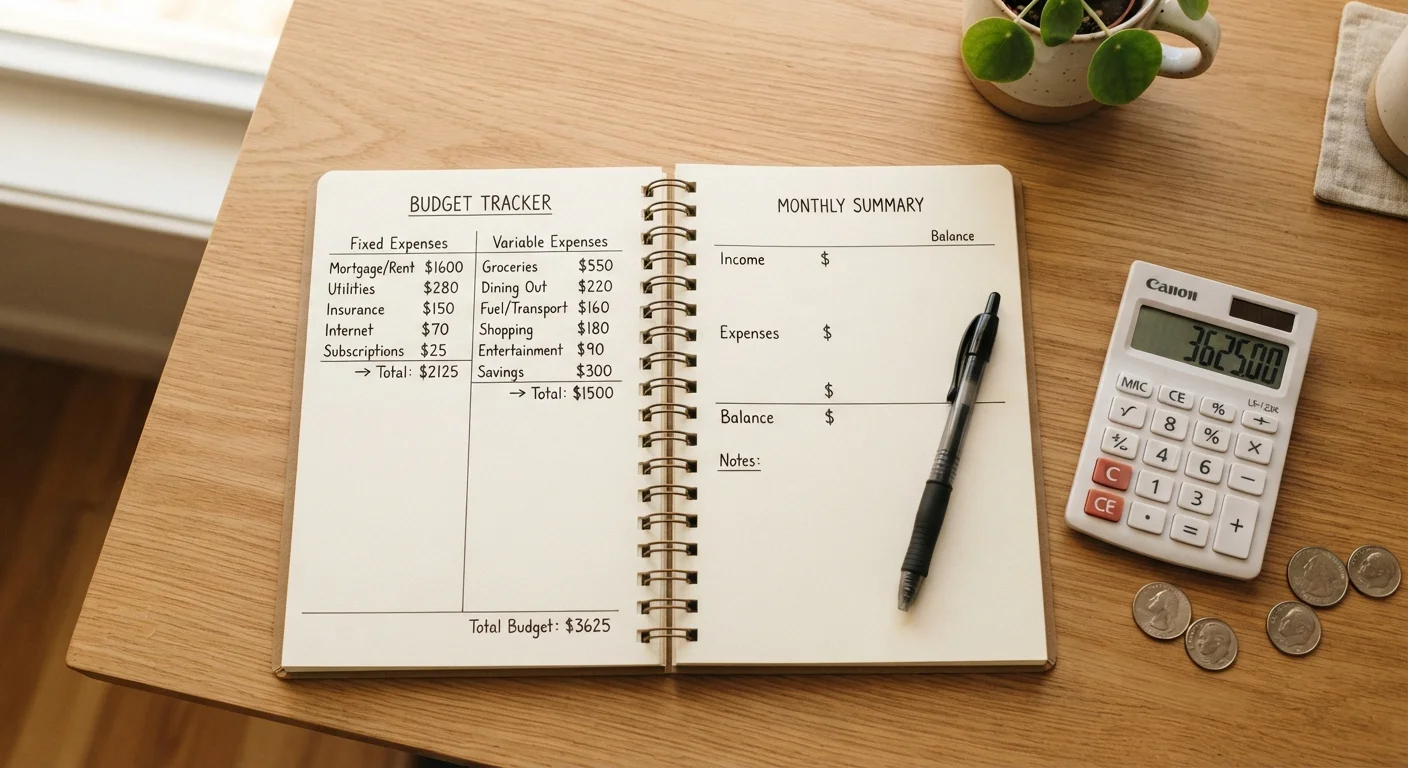
Start With a Simple Two-Column List
Before opening a budgeting app or spreadsheet, try writing out your expenses by hand in two columns: Fixed and Variable. This low-tech first step forces you to think about each expense individually and often reveals costs you'd forgotten about. Even an imperfect list gives you a clearer starting point than none at all.
Fixed Expenses: Your Non-Negotiable Baseline
Fixed expenses are predictable by design. Each month, the same amount leaves your account on roughly the same date. This predictability makes them simple to plan for - you don't need to estimate or track them closely, just make sure the money is there.
Examples include:
- Rent or mortgage payment
- Car loan or lease payment
- Health, auto, or renters insurance premiums
- Fixed-rate student loan payments
- Monthly subscription services at a flat rate
The tradeoff: fixed expenses are harder to reduce quickly. Lowering your rent usually means moving. Reducing your car payment often means selling the vehicle. These aren't impossible changes, but they require time, planning, and sometimes significant life adjustments. That's why financial planners often suggest being cautious about taking on new fixed commitments - each one raises your inescapable monthly floor.
Variable Expenses: Where Flexibility Lives
Variable expenses are where most of your daily financial decisions happen. Grocery runs, coffee stops, gas fill-ups, weekend plans - these costs shift based on your habits, needs, and choices. That variability is actually useful: it means you have levers to pull when money gets tight.
Common variable expenses include:
- Groceries and household supplies
- Gasoline and transportation costs
- Dining out and entertainment
- Clothing and personal care
- Medical co-pays and pharmacy purchases
Tracking variable expenses over two or three months gives you a realistic average to budget against. Without tracking, it's easy to underestimate how much these smaller, frequent purchases add up. Many people are surprised to find that their variable spending exceeds their fixed spending when they look closely.
For households managing shared finances, aligning on variable spending categories and limits is often the most productive budgeting conversation to have. See budgeting approaches for couples and shared finances for a closer look at how to handle this together.
Semi-Variable Costs and Irregular Expenses
Not every expense fits neatly into one box. Utility bills, for example, have a fixed base charge plus a portion that changes with your usage - making them semi-variable. Cell phone plans with overage charges work similarly.
Then there are irregular expenses: costs that are predictable but don't arrive monthly. Annual car registration fees, back-to-school shopping, holiday gifts, or a once-a-year insurance premium all fall here. They're easy to forget when building a monthly budget, but they hit hard when they arrive.
One of the most effective tools for handling irregular expenses is a sinking fund - a dedicated savings pool you build throughout the year so that big, infrequent costs don't blindside your budget. Sinking funds can smooth out lumpy costs without putting you in debt or wrecking a month's plan.
The 'Fixed' Label Can Change Over Time
An expense that's fixed today may not stay that way. Refinancing a loan, renegotiating a lease, or canceling a subscription can convert a fixed cost into a lower one - or eliminate it entirely. It's worth reviewing your fixed expenses once a year to confirm they still reflect your best available options and current needs.
Putting It Together: Applying the Framework to Any Budget Method
Once you've sorted your expenses into categories, you're better equipped to use any budgeting approach effectively. Whether you're allocating percentages of income or assigning every dollar a job, understanding which costs are fixed and which are flexible makes the process cleaner and more realistic.
Start by listing all your fixed expenses and totaling them. That number is your baseline - the minimum your income must cover before anything else. Then estimate your variable expenses based on recent spending history, not wishful thinking. The gap between your income and your combined fixed and estimated variable costs is where you have real room to save, invest, or pay down debt.
If you're deciding between budgeting frameworks, knowing your expense types will help you pick the right fit. Zero-based and percentage-based budgeting each work differently - and your ratio of fixed to variable expenses can influence which feels more manageable for your situation.
For those with unpredictable income, this framework matters even more. When you know exactly which costs are locked in and which you can scale back, navigating a lower-income month becomes less stressful. Budgeting on an irregular income takes this foundation further with practical strategies for variable earners.
This article is for general informational and educational purposes only. It is not personalized financial advice. Consider consulting a qualified financial professional for guidance specific to your situation.