

Key Takeaways
- Keep training sessions short — 5 to 10 minutes is enough for most dogs.
- Always end on a successful repetition to build confidence and positive associations.
- Reward timing matters: treats or praise should come within 1 to 2 seconds of the desired behavior.
- Your dog's energy level and environment affect how much they can actually absorb.
- Consistency across sessions matters more than any single perfect session.
What you will need
Why Most Training Sessions Fall Short
Most pet owners understand the basics of positive reinforcement, but the structure of a session — how long it runs, how it begins, how rewards are spaced, and how it ends — often gets skipped in popular advice. That gap is where a lot of progress stalls.
Sessions that run too long lead to mental fatigue. Sessions without a clear warm-up skip past important engagement cues. And sessions that end on a failure leave dogs — and owners — slightly discouraged. None of these are dramatic mistakes, but they compound over time. Understanding patterns that quietly undermine your training can help you avoid them before they become habits.
The steps below break down what a productive session actually looks like from start to finish — not just what to teach, but how to run the time itself.
Training Tired or Frustrated Dogs Backfires
A dog that is overtired, overstimulated, or stressed cannot learn effectively. If your dog is panting heavily, disengaging, or making repeated errors on behaviors they normally know, stop the session early. Pushing through rarely produces results and can create negative associations with training. Rest and try again later.
What You'll Need Before You Start
Effective sessions depend on having the right materials ready before you call your dog over. Scrambling for treats mid-session or switching cues on the fly introduces confusion and slows learning.
What you will need
High-value training treats
Provides a clear, motivating reward that reinforces the behavior you're marking.
Clicker or marker word
Marks the exact moment of correct behavior so your dog knows precisely what earned the reward.
Training pouch or bait bag
Keeps treats accessible so you can reward within one to two seconds of the behavior.
Timer or phone
Helps you keep sessions within the recommended 5 to 10 minute window.
If you're weighing whether to train independently or work with a professional, the comparison of group classes, private trainers, and self-teaching offers a clear breakdown of each approach.
Follow These Steps for Every Session
Choose the right moment to start
Timing the session matters as much as what happens during it. Train when your dog is calm and alert — not right after vigorous exercise, not when they're drowsy, and not when they're already highly aroused from play or visitors. A dog in a moderate arousal state absorbs new information most efficiently.
Pick a consistent time of day when possible. Many owners find sessions just before a meal work well — a slightly hungry dog is often more motivated by food rewards.
Set up your environment intentionally
For any behavior your dog is still learning, start in the lowest-distraction setting available — typically indoors. Remove competing stimuli like other pets, loud televisions, or open windows facing busy streets. As the behavior becomes reliable, you can gradually introduce distractions.
Have your treats prepped and your marker ready before you begin. Fumbling for rewards mid-session breaks the rhythm and slows learning.
Warm up with something your dog already knows
Start every session with one or two repetitions of a behavior your dog performs confidently — a sit, a hand touch, or a simple down. This gets their attention on you, puts them in a successful mindset, and gives you a quick read on how focused and motivated they are today before you introduce anything harder.
Work the target behavior in short bursts
Aim for 5 to 10 focused repetitions on the main behavior you're practicing, then give your dog a brief break — a few seconds of calm sniffing or a release word before returning to work. This prevents mental fatigue and keeps engagement high throughout the session.
Limit each full training session to 5 to 10 minutes for most dogs. Puppies, elderly dogs, and dogs new to training often do better with sessions on the shorter end of that range.
Deliver rewards with precise timing
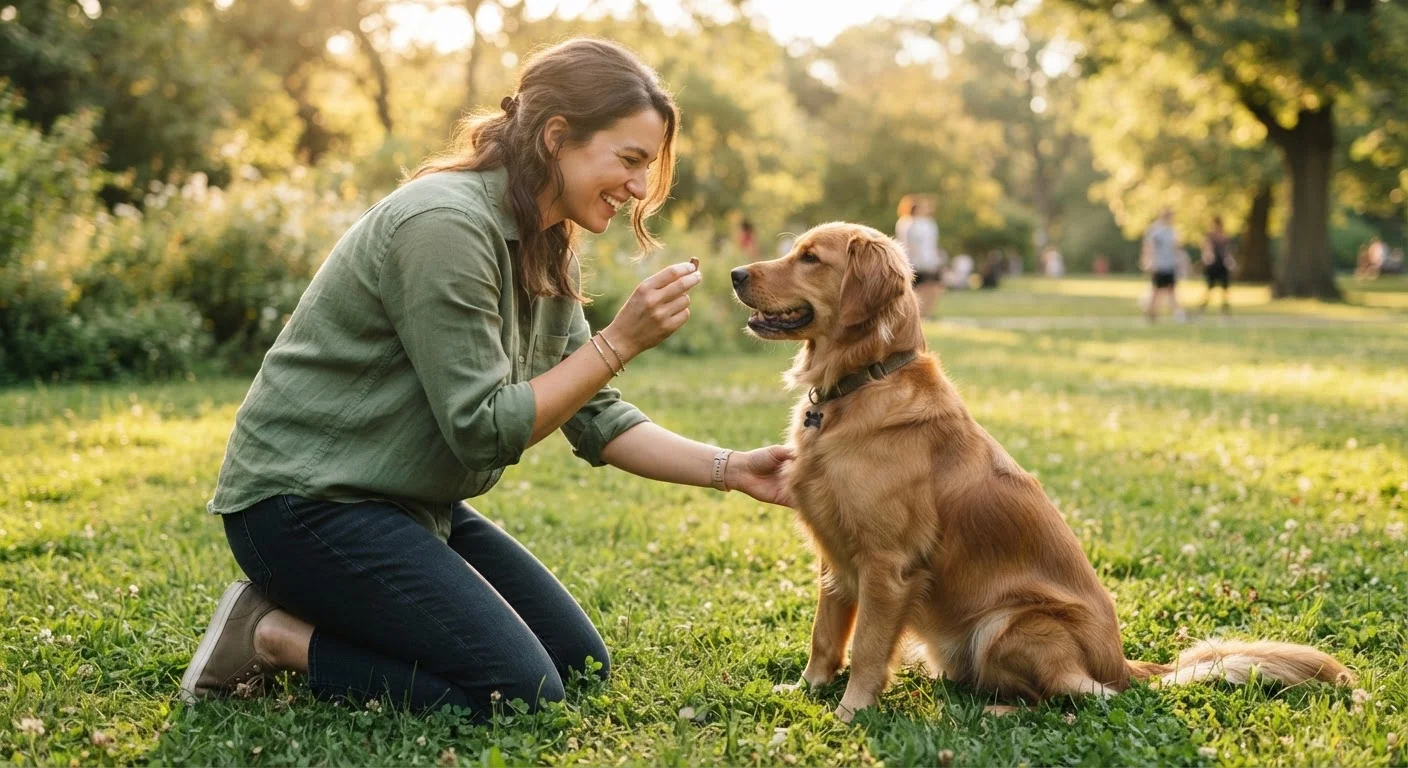
Mark the correct behavior — with a click or a short verbal marker like "yes" — the instant it happens, then follow immediately with the treat. The mark bridges the gap between the behavior and the reward, so your dog knows exactly what they did right.
Vary the reward itself occasionally. Rotate between treats, brief play, or enthusiastic verbal praise so your dog doesn't become dependent on one specific reinforcer.
[warning_callout]End on a successful repetition
Before wrapping up, ask for something you know your dog will get right — the warm-up behavior, or a simple version of what you just practiced. End with that success, mark it clearly, and deliver a slightly bigger reward than usual to close on a high note.
Then use your release word and let your dog fully disengage. This last step matters: dogs remember the end of experiences more vividly, so finishing with success shapes how your dog feels about training overall.
[tip_callout]Training works best when it fits naturally into the rest of your dog's day. See how a structured daily routine supports your dog's overall wellbeing alongside regular training practice.
Common Questions About Session Structure
How many sessions per day is reasonable?
One to three short sessions per day is a realistic target for most dogs. Spacing them out — morning, midday, and evening — works better than stacking them back to back. Mental effort accumulates, and dogs need time to consolidate what they've learned between sessions.
What if my dog stops engaging mid-session?
Disengagement is feedback. It usually signals that the session has gone on too long, the environment is too distracting, the behavior is too difficult at the current stage, or the rewards aren't motivating enough today. Adjust one variable, or end the session early. If you're consistently seeing disengagement, it may be worth reviewing common training misconceptions that could be affecting your approach.
Does this structure apply to cats and other pets?
The core principles — short sessions, high-value rewards, precise timing, ending on success — transfer well to cats, rabbits, and other trainable pets. Session length may need to be even shorter depending on the animal's attention span and baseline motivation.