
Group Classes, Private Trainers, and Self-Teaching: How They Compare for Dog Owners

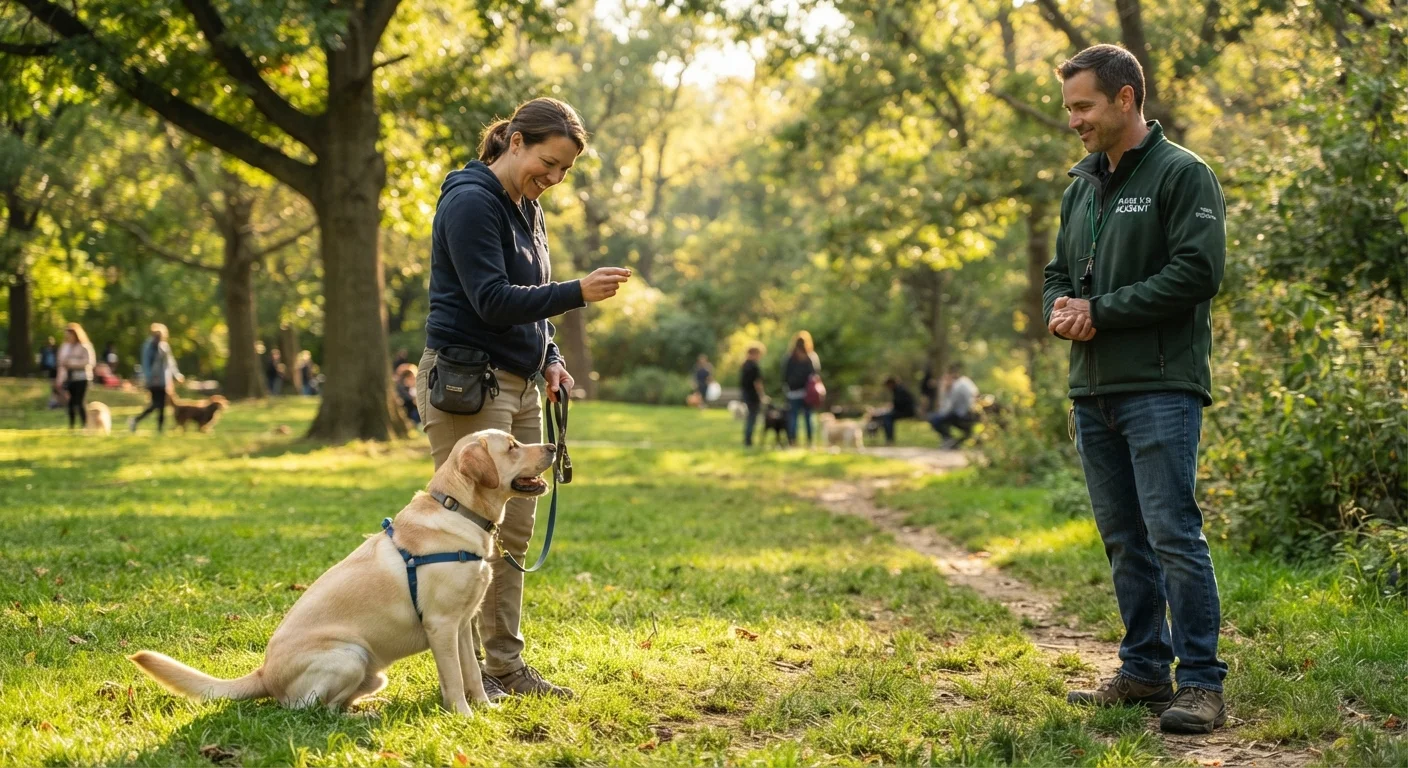
Key Takeaways
- Group classes build social skills and cost less, but offer limited individual attention per dog.
- Private trainers address specific behavior problems with a customized approach, at a higher cost.
- Self-teaching works well for motivated owners with low-stakes goals and consistent routines.
- Most dogs benefit from a combination of formats rather than a single approach.
- The method you'll actually stick with consistently tends to outperform the 'ideal' method you won't.
Our Verdict
No single training format is universally superior — each serves a different need. Group classes shine for socialization and foundational skills. Private training is worth the investment for reactive dogs, specific behavioral issues, or owners who need hands-on guidance. Self-teaching is genuinely effective when paired with quality resources and real consistency. For many dogs, a combination approach delivers the best long-term results.
| Best for | Recommended |
|---|---|
| Puppies and dogs needing socialization with other animals | Group Classes |
| Dogs with reactivity, fear, or complex behavior issues | Private Trainer |
| Motivated owners reinforcing known basics at home | Self-Teaching |
| Owners wanting structure, feedback, and tailored progression | Private Trainer |
Why the Format Matters as Much as the Method
Most dog training conversations focus on what techniques to use. But for everyday owners, the more practical question is often how training gets delivered — and whether that format actually fits their dog's temperament, their schedule, and their own learning style.
Group classes, private trainers, and self-teaching aren't interchangeable. Each one creates a different environment, places different demands on the owner, and produces different outcomes depending on the dog involved. Understanding these distinctions upfront saves a lot of frustration later.
It's also worth noting that common training myths can make any format feel ineffective if you're working from flawed assumptions. Getting the format right and the fundamentals right go hand in hand.
| Group Classes | Private Trainer | Self-Teaching | |
|---|---|---|---|
| Cost | Lower per session | Higher per session | Lowest overall |
| Individual attention | Limited — shared with group | Full focus on your dog | Owner-dependent only |
| Socialization opportunity | High — built into format | Low — one-on-one setting | None unless arranged |
| Best for reactive dogs | Generally not recommended | Well-suited | Not recommended |
| Scheduling flexibility | Fixed class times | Appointmentbased | Fully flexible |
| Owner feedback & coaching | Occasional, shared | Direct and consistent | None externally |
| Skill level required (owner) | Low to moderate | Low — trainer guides you | Moderate to high |
Group Classes: Structured Learning in a Social Setting
Group classes typically run in 4–8 week sessions with several dog-owner pairs attending at once, guided by a certified trainer. They're widely available through pet supply stores, humane societies, and independent training schools.
Key strengths: The social environment is a genuine feature, not just a bonus. Puppies especially benefit from learning to focus on their owner around distractions — other dogs, smells, and movement. Group classes tend to cost significantly less per session than private work, making consistent attendance more financially sustainable.
Real limitations: Trainer attention is divided. If your dog is struggling with a specific cue, or if you're confused about timing, there's limited opportunity for the instructor to stop and correct only your technique. Dogs that are fearful, reactive, or easily overwhelmed may find the group environment counterproductive rather than helpful. A dog that spends the class stressed or barking isn't learning much.
Ask About Trainer Credentials Before Enrolling
Whether you're booking group classes or private sessions, ask about the trainer's certifications and their approach to reinforcement before committing. Reputable certifications include those from the CCPDT and IAABC. A good trainer will welcome the question and explain their methods clearly. Avoid any trainer who relies primarily on punishment or uses language around 'dominance' as a core training concept — these approaches are not well-supported by current behavioral science.
Private Trainers: Individualized Attention and Faster Problem-Solving
Private training sessions take place one-on-one — trainer, owner, and dog — either in your home, a training facility, or another location relevant to the problem being addressed. This format is particularly well-suited to dogs with behavioral challenges that go beyond basic obedience.
Key strengths: A qualified private trainer can observe your specific dog, identify what's driving a behavior, and adjust the plan in real time. For reactive dogs, separation anxiety, or aggression concerns, this individualized approach isn't a luxury — it's often a practical necessity. The trainer can also coach you directly, correcting timing and handling errors that a group format rarely has space to address.
Real limitations: Cost is the most significant barrier. Private sessions are typically more expensive per hour than group classes. The outcome also depends heavily on the trainer's qualifications — credentials vary widely in the industry. Look for trainers certified through recognized bodies such as the Certification Council for Professional Dog Trainers (CCPDT) or the International Association of Animal Behavior Consultants (IAABC).
If your dog has a complex behavioral history, such as a rescue with an unknown background, working with a professional early can prevent reinforcing fear-based patterns before they become ingrained.
Self-Teaching: High Flexibility, High Ownership
Self-teaching means the owner takes full responsibility for designing and delivering training — using books, reputable online courses, video resources, or structured apps to guide the process. It's the most flexible format and carries no session fees.
Key strengths: Training happens on your schedule, in your environment, at your dog's pace. For dogs working on foundational skills like sit, stay, and recall, consistent owner-led practice can be genuinely effective. Basic commands can absolutely be taught at home when the owner applies consistent timing, clear markers, and positive reinforcement.
Real limitations: Without feedback, owners can unknowingly reinforce the wrong behavior or develop poor technique that slows progress. Self-teaching also demands that the owner accurately read their dog's responses — something that takes experience to do well. If you're unsure whether a behavior is fear, excitement, or stubbornness, misreading it can set training back significantly.
Understanding what the evidence says about training methods helps self-teaching owners build on approaches that are actually supported by behavioral science, rather than popular but ineffective shortcuts.
Choosing What Works for Your Dog and Your Life
The most effective training format is the one you'll follow through on consistently. A private trainer who costs more than your budget allows, or group classes at a time that never fits your schedule, will deliver worse outcomes than a self-teaching routine you actually maintain.
A few practical questions can help narrow the decision:
- Does your dog struggle around other animals or strangers? Group classes may be appropriate for mild cases, but reactive or anxious dogs often need private work first.
- Are you dealing with a specific behavioral problem — aggression, resource guarding, or fear responses? A certified behaviorist or private trainer is the appropriate starting point.
- Is your goal foundational obedience for a settled dog? Self-teaching with quality resources or group classes can both work well.
- How confident are you in reading your dog's body language? Lower confidence generally benefits from professional feedback in some form.
Many owners find that starting with a group class or a few private sessions — to establish technique and correct early mistakes — then transitioning to home reinforcement produces strong, lasting results. Understanding what a productive training session looks like helps you make the most of whichever format you choose.
~74%
U.S. households owning a pet
According to the American Pet Products Association, tens of millions of American households include at least one dog, making training access a widespread practical concern.
4–8 weeks
Typical group class duration
Most structured group obedience programs run between four and eight weekly sessions, providing a defined window for foundational skill-building.
This article provides general educational information about dog training formats and is not a substitute for assessment by a qualified veterinary or animal behavior professional. If your dog displays aggression or severe anxiety, consult a licensed veterinary behaviorist.