

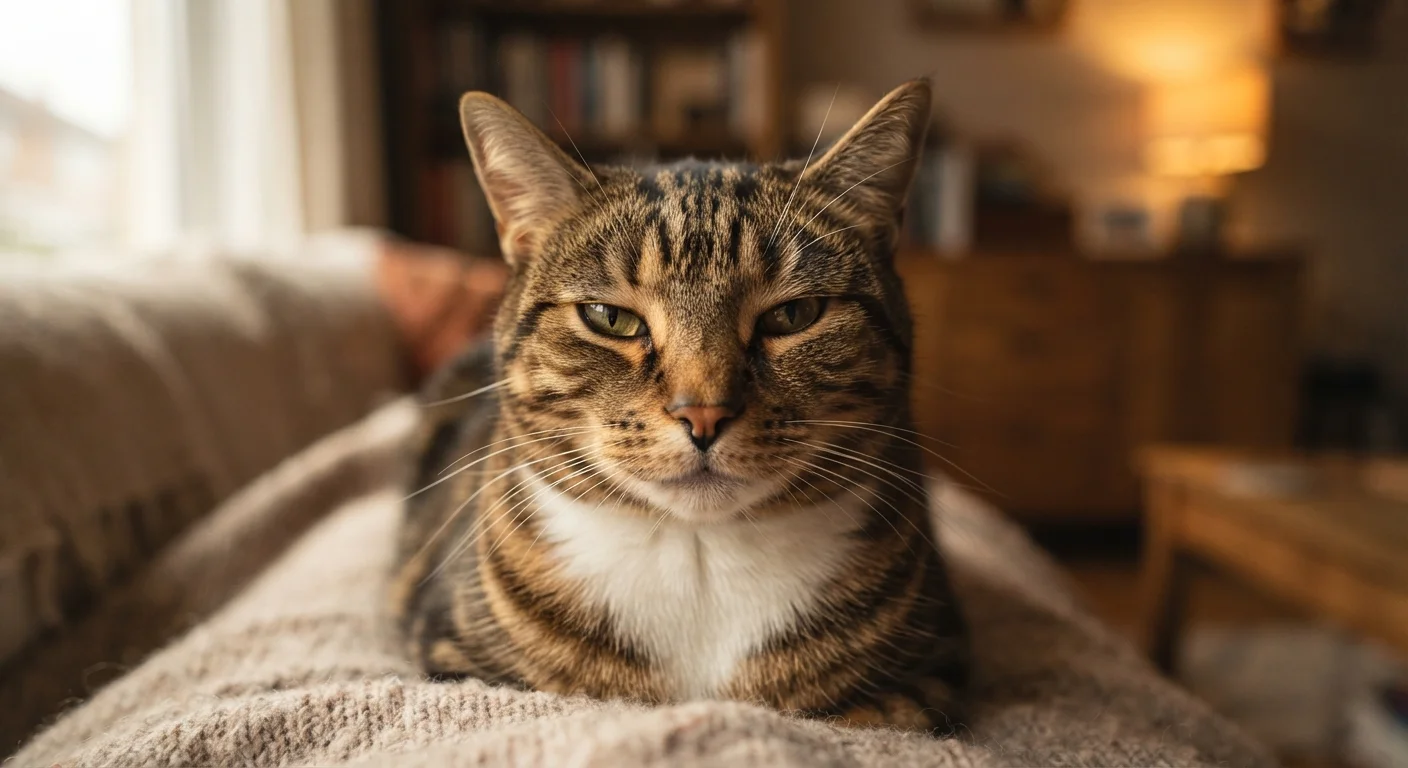
| Primary communication channels | Eyes, ears, tail, body posture, whiskers |
| Slow blink meaning | Trust, contentment, or social bonding |
| Tail upright with curl | Friendly greeting, relaxed and approachable |
| Flat ears signal | Fear or aggression — avoid handling |
| Rapid tail lashing indicates | Overstimulation or frustration |
| Exposed belly means | Trust, not necessarily an invitation to pet |
Why Reading Feline Body Language Matters
Cats rarely announce how they feel with words, but they're broadcasting emotional information all the time. Their ears, tails, eyes, posture, and even whisker position shift in response to their environment, mood, and the people around them. Misreading these signals is one of the most common reasons cats are labeled as unpredictable or aloof — when in reality, they've been communicating all along.
Learning to read your cat's body language doesn't require any special training. It requires paying attention to clusters of signals rather than single cues. A tail position means something different when paired with relaxed ears versus pinned-back ears. Context matters. This reference gives you a working framework to interpret what you're seeing accurately.
For a broader overview of how pets use physical signals, see our practical body language reference covering multiple species.
| Primary communication channels | Eyes, ears, tail, body posture, whiskers |
| Slow blink meaning | Trust, contentment, or social bonding |
| Tail upright with curl | Friendly greeting, relaxed and approachable |
| Flat ears signal | Fear or aggression — avoid handling |
| Rapid tail lashing indicates | Overstimulation or frustration |
| Exposed belly means | Trust, not necessarily an invitation to pet |
Key Signals and What They Mean
Understanding feline body language starts with the major signal zones: eyes, ears, tail, and overall posture. Each zone carries information, and they work together.
Slow blink
A deliberate, unhurried closing and reopening of the eyes that cats use to signal relaxation and trust. Often described as a "cat kiss," it is commonly exchanged between cats that are comfortable with each other or with a trusted human.
Piloerection
The involuntary bristling of fur along the back and tail, caused by the same reflex as human goosebumps. In cats, it signals a threat response — the cat is trying to appear physically larger.
Overstimulation
A state of sensory overload that occurs when petting or play continues past the point of a cat's comfort threshold. Signs include tail lashing, skin rippling, and sudden biting or scratching.
Displacement behavior
A seemingly out-of-place action — like grooming mid-play or yawning during tension — that indicates a cat is experiencing conflicting motivations or stress. It is a subtle signal that is easy to overlook.
Airplane ears
An informal term for when a cat's ears rotate sideways and flatten outward, resembling airplane wings. This posture signals mild anxiety, irritation, or the early stages of a fear response.
Eyes
- Slow blink: A deliberate, slow closing and opening of the eyes signals trust and contentment. Returning a slow blink to your cat is widely recognized as a way to affirm your bond.
- Dilated pupils: Wide pupils can indicate excitement, fear, or overstimulation — context determines which. A fully dilated pupil in dim light is normal; in bright light, it warrants attention.
- Hard stare: Direct, unblinking eye contact is a dominance or threat signal among cats. If your cat fixes this look on another cat or an unfamiliar person, it signals tension.
Ears
- Forward and upright: Alert and engaged. Your cat is curious or tracking something.
- Rotated sideways ("airplane ears"): Mild anxiety or irritation. Something in the environment is unsettling them.
- Flat against the head: Fear or aggression. This is a clear warning signal — do not attempt to handle the cat.
Tail
- Upright with a slight curl at the tip: Happy greeting posture. Your cat is relaxed and approaching you with good intent.
- Puffed or bristled: Threat response. The cat is trying to appear larger to a perceived danger.
- Low tuck or wrapped tight: Anxiety, submission, or pain. Combined with other tension cues, this may signal the cat needs space — or veterinary attention.
- Rapid lashing: Overstimulation or frustration. Stop petting and give the cat space.
Overall Posture
- Loaf position (paws tucked under body): Content and at ease.
- Exposed belly: Not always an invitation to pet — it shows trust, but touching the belly often triggers a defensive reaction in many cats.
- Crouched low with wide eyes: Fear response. Give the cat an exit route and avoid cornering.
If your cat's posture suddenly changes — especially with appetite shifts or litter box changes — behavioral signals can sometimes point to an underlying health issue. Our guide on how pets show pain without making a sound covers what to watch for.
Putting It Together: Reading the Whole Cat
Individual signals are useful starting points, but feline communication is always a combination of cues. A cat with an upright tail, forward ears, and slow-blinking eyes is almost certainly relaxed and friendly. That same upright tail paired with a stiff body, hard stare, and twitching tip tells a very different story.
Two principles help here. First, watch for changes from baseline — your cat's normal resting state is your reference point. Second, always factor in environment. A cat that tucks its tail in a vet's waiting room is responding to stress in that context, not communicating something about your relationship at home.
If you want to deepen your ability to interpret signals throughout your home environment, the room-by-room field guide to cat body language offers a practical visual reference. And if you're interested in how understanding your cat's communication can support training, teaching cats what's possible and practical is a helpful next step.
Sudden or dramatic changes in body language — particularly fearfulness, aggression, or withdrawal that appear without an obvious trigger — are worth discussing with your veterinarian. Behavioral shifts can sometimes be early indicators of pain or illness.
This article is for general informational purposes only and is not a substitute for professional veterinary advice. If your cat displays sudden behavioral changes, consult a licensed veterinarian.