

Key Takeaways
- Brushing, basic bathing, and ear wiping are generally safe for most owners to handle at home.
- Nail trimming is manageable but requires care — cutting the quick causes pain and bleeding.
- Tasks like anal gland expression, teeth scaling, and full coat clipping carry real risk without training.
- Regular home grooming helps you spot health issues like lumps, skin changes, or ear infections early.
- When in doubt about a grooming task, a professional groomer or veterinarian is the right call.
Saves money on routine professional grooming visits
Basic maintenance tasks — brushing, bathing, ear wiping — handled at home reduce how often professional appointments are needed, which adds up over a pet's lifetime.
Strengthens the bond between owner and pet
Regular handling during grooming builds trust and gets pets comfortable with being touched, which pays off during veterinary exams and other stressful situations.
Enables early detection of health changes
Owners who groom regularly are more likely to notice lumps, skin irritation, ear odor, or coat changes before they become serious problems.
Allows flexible scheduling on the pet's terms
Home grooming can be done in short sessions, at a calm time of day, without the stress of transport or unfamiliar environments — particularly valuable for anxious animals.
Keeps pets comfortable between professional appointments
Mats, overgrown nails, and dirty ears don't wait for a booked appointment. Routine home maintenance prevents discomfort from building up between professional sessions.
Nail trimming can cause pain if done incorrectly
Cutting the quick — the blood vessel inside the nail — causes immediate pain and bleeding. Dark-nailed pets are especially difficult because the quick isn't visible, raising the risk of accidental injury.
Anal gland expression requires professional technique
Expressing anal glands incorrectly can cause injury, infection, or rupture. This task should be performed by a veterinarian or trained groomer, not attempted at home without specific instruction.
Coat clipping can damage skin or leave lasting coat problems
Incorrect clipping with electric clippers — wrong blade length, wrong direction, or too close — can cut skin or, in double-coated breeds, cause post-clipping alopecia, a condition where the coat may not regrow normally.
Ear canal cleaning can worsen existing infections
Introducing solution or instruments into an already-infected or inflamed ear canal can push debris deeper or cause pain. Ear canal issues need veterinary assessment before any cleaning is attempted.
Dental scaling at home is not the same as professional cleaning
Brushing teeth at home is beneficial, but attempting to scrape tartar without proper tools and training can damage enamel and gum tissue. Professional dental cleanings under anesthesia address issues that brushing cannot.
Our Verdict
At-home grooming works well for routine maintenance — brushing, gentle bathing, ear wiping, and careful nail trimming are all reasonable for most owners to learn. The line gets drawn at tasks that involve sensitive anatomy, sharp instruments near delicate tissue, or techniques that can cause real harm when done incorrectly. A hybrid approach — handling the basics yourself and scheduling professional sessions for the rest — tends to serve pets well.
Owners who want to build a consistent care routine and are willing to learn proper technique before attempting any task for the first time.
Why At-Home Grooming Is Worth Building Into Your Routine
Regular grooming isn't just about appearances. Brushing removes dead hair and debris, bathing keeps skin healthy, and routine handling gets pets comfortable with touch — all of which matters during veterinary visits. Owners who groom at home also tend to notice changes early: a new lump under the coat, a developing skin rash, or ears that smell off before an infection takes hold.
That said, "at-home grooming" covers a wide range of tasks, some straightforward and some genuinely risky. Understanding where the line falls keeps your pet safe and builds your confidence as a caretaker. See our grooming frequency guide by pet type for a practical starting point on how often each task typically needs to happen.
Saves money on routine professional grooming visits
Basic maintenance tasks — brushing, bathing, ear wiping — handled at home reduce how often professional appointments are needed, which adds up over a pet's lifetime.
Strengthens the bond between owner and pet
Regular handling during grooming builds trust and gets pets comfortable with being touched, which pays off during veterinary exams and other stressful situations.
Enables early detection of health changes
Owners who groom regularly are more likely to notice lumps, skin irritation, ear odor, or coat changes before they become serious problems.
Allows flexible scheduling on the pet's terms
Home grooming can be done in short sessions, at a calm time of day, without the stress of transport or unfamiliar environments — particularly valuable for anxious animals.
Keeps pets comfortable between professional appointments
Mats, overgrown nails, and dirty ears don't wait for a booked appointment. Routine home maintenance prevents discomfort from building up between professional sessions.
Tasks That Are Genuinely Safe to Handle at Home
Several grooming tasks carry low risk when owners use appropriate tools and take their time learning proper technique.
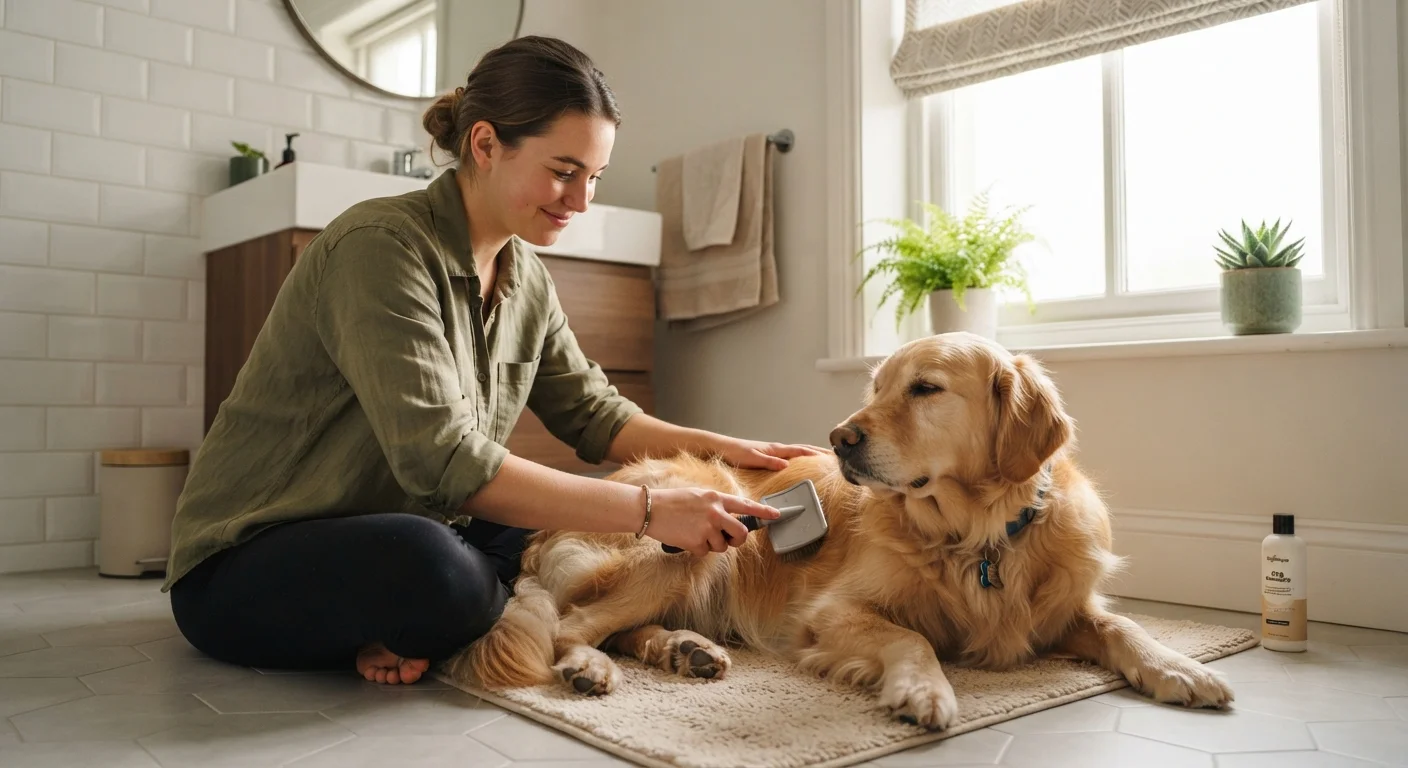
- Brushing and detangling: For most dogs and cats, regular brushing is the single most impactful thing an owner can do at home. It prevents matting, reduces shedding, and keeps the coat healthy. Breed and coat type determine how often this needs to happen.
- Basic bathing: Bathing a pet in a tub or sink with a pet-appropriate shampoo is safe for most owners. The main risks are water in the ears (use a cotton ball at the opening) and chilling a small pet in cold weather — both easily managed.
- Ear wiping: Gently wiping the outer ear flap with a damp cloth or a vet-recommended ear cleaning solution removes visible dirt and wax. This is different from cleaning deep inside the ear canal, which should be left to professionals.
- Nail trimming: Trimming nails is doable at home, but it requires learning to identify the quick — the blood vessel inside the nail. Cutting it causes pain and bleeding. Light-colored nails make this easier; dark nails require more caution. Many owners start with just the tips until they're comfortable.
Tasks That Carry Real Risk Without Professional Training
Some grooming tasks look simple on the surface but involve enough complexity or risk that attempting them without proper guidance can genuinely hurt your pet.
Nail trimming can cause pain if done incorrectly
Cutting the quick — the blood vessel inside the nail — causes immediate pain and bleeding. Dark-nailed pets are especially difficult because the quick isn't visible, raising the risk of accidental injury.
Anal gland expression requires professional technique
Expressing anal glands incorrectly can cause injury, infection, or rupture. This task should be performed by a veterinarian or trained groomer, not attempted at home without specific instruction.
Coat clipping can damage skin or leave lasting coat problems
Incorrect clipping with electric clippers — wrong blade length, wrong direction, or too close — can cut skin or, in double-coated breeds, cause post-clipping alopecia, a condition where the coat may not regrow normally.
Ear canal cleaning can worsen existing infections
Introducing solution or instruments into an already-infected or inflamed ear canal can push debris deeper or cause pain. Ear canal issues need veterinary assessment before any cleaning is attempted.
Dental scaling at home is not the same as professional cleaning
Brushing teeth at home is beneficial, but attempting to scrape tartar without proper tools and training can damage enamel and gum tissue. Professional dental cleanings under anesthesia address issues that brushing cannot.
If you're ever uncertain whether a task falls into the "safe to try" or "leave it to a pro" category, a quick call to your veterinarian or a licensed groomer is worth the few minutes it takes. That guidance matters more than any general article — including this one.
Building a Sustainable At-Home Grooming Routine
The most effective approach isn't all-or-nothing. Many owners handle brushing, ear wiping, and light bathing themselves between professional appointments — typically every six to twelve weeks depending on the breed. This keeps costs manageable without skipping care that pets genuinely need.
When a Pet Resists Grooming Consistently
Persistent resistance — pulling away, snapping, or freezing — can signal pain, not just preference. A pet who suddenly dislikes being touched in a specific area may have an underlying issue worth flagging to a veterinarian. Don't assume it's a training problem until physical causes have been ruled out.
Start with one task at a time and let your pet adjust. Short sessions with calm handling and a treat reward go further than longer, stressful ones. If a specific task consistently upsets your pet — or you — it's a signal to hand that task off to a groomer rather than push through it.
For a closer look at what tools you'll want on hand before you begin, our pet grooming reference guide covers the essentials without overcomplicating it.
This article is for general informational purposes only and is not a substitute for veterinary advice. Always consult a licensed veterinarian or professional groomer before attempting unfamiliar grooming tasks, particularly those involving your pet's ears, teeth, eyes, or anal glands.