

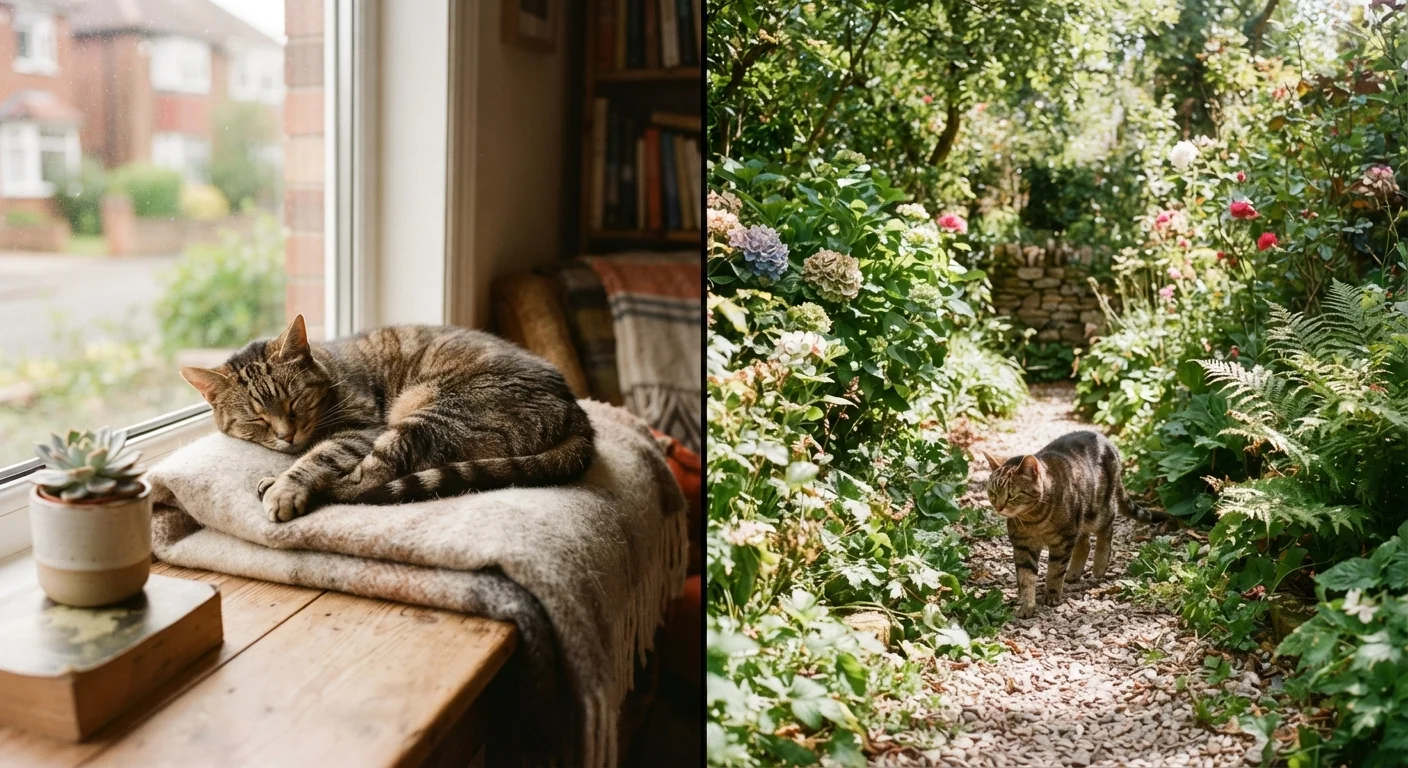
Key Takeaways
- Indoor cats typically live longer due to reduced exposure to traffic, predators, and disease.
- Outdoor cats get more natural physical and mental stimulation but face significantly more hazards.
- Enrichment strategies can help indoor cats thrive without the risks of outdoor access.
- Many veterinarians support supervised outdoor time as a middle-ground approach.
- Your local environment, cat's temperament, and lifestyle all factor into the right decision.
Option A
Indoor Cat
The protected, enrichment-focused lifestyle.
Best for: Owners who prioritize safety, predictable health management, and a controlled home environment.
Option B
Outdoor Cat
The freedom-driven, stimulation-rich lifestyle.
Best for: Cats with strong hunting instincts and owners who can manage environmental risks and health monitoring.
If your cat is a kitten or newly adopted
Indoor Cat
Early life indoors helps establish safe habits, simplifies vaccination schedules, and reduces exposure to pathogens before immunity is fully established.
If your cat shows high prey drive and restlessness indoors
Outdoor Cat
Some cats display clear signs of frustration when confined. Supervised outdoor access or a secured enclosure can meaningfully improve their well-being.
If you live in an urban area with heavy traffic
Indoor Cat
Traffic is one of the leading causes of injury and death in free-roaming cats. An urban setting makes unsupervised outdoor access especially risky.
If you live in a rural or suburban area with low traffic
Outdoor Cat
Lower vehicle density and more green space reduce some risks, though predators, disease exposure, and weather still require consideration.
If you want a compromise that suits most cats
Indoor Cat
A well-enriched indoor environment paired with supervised outdoor time — such as leash walks or a catio — balances safety and stimulation effectively.
Health and Lifespan: What the Numbers Suggest
Veterinary data consistently shows that indoor cats tend to live longer than their outdoor counterparts. The American Veterinary Medical Association notes that free-roaming cats face a wider range of hazards — including infectious disease, parasites, toxic plants, and vehicle collisions — that meaningfully shorten average lifespan. Indoor cats are generally shielded from these exposures.
That said, indoor living carries its own health risks. Physical inactivity, boredom-related overeating, and stress from under-stimulation can contribute to obesity, urinary tract issues, and behavioral problems. These are preventable with proper environmental enrichment, but they require deliberate effort from owners.
Outdoor cats are more physically active on average and tend to engage in natural behaviors like climbing, running, and hunting. This activity supports lean muscle mass and mental health — but it also brings regular exposure to fleas, ticks, ringworm, feline leukemia virus (FeLV), and feline immunodeficiency virus (FIV), all of which require vigilant veterinary oversight.
| Criterion | Indoor Cat | Outdoor Cat |
|---|---|---|
| Average lifespan | Typically longer (12–18+ years) | Often shorter (varies widely) |
| Disease exposure | Low (controlled environment) | Higher (FeLV, FIV, parasites) |
| Physical activity | Lower; needs intentional play | Higher; natural movement patterns |
| Mental stimulation | Dependent on owner enrichment | Naturally high through exploration |
| Injury risk | Low (houseplants, falls) | High (traffic, predators, toxins) |
| Veterinary visits | Routine wellness care | More frequent; parasite management |
| Owner monitoring | Easier to observe daily | Harder; may hide illness longer |
Safety Risks Every Owner Should Weigh
Outdoor cats face hazards that are difficult to fully control. Traffic remains one of the most serious threats, particularly in suburban neighborhoods. Predators — coyotes, birds of prey, and even other cats — pose real danger in many regions. Exposure to pesticides, antifreeze, and other household chemicals is also common when cats roam freely.
Indoor cats are largely protected from these threats, but that doesn't mean zero risk. Falls from open windows (known as high-rise syndrome), ingestion of houseplants toxic to cats, and conflict with other household pets are common indoor hazards owners should address proactively.
The 'Catio' Middle Ground
Many cat owners find that a secured outdoor enclosure — commonly called a catio — offers meaningful compromise. These structures allow cats to experience fresh air, sunlight, and outdoor sights and sounds while remaining protected from traffic, predators, and disease exposure. Leash training is another option that works well for certain temperaments. Both approaches are increasingly supported by veterinarians as practical alternatives to unrestricted outdoor access.
For owners weighing the financial side of these risks, understanding how each lifestyle affects veterinary costs is worth exploring. Our guide to pet insurance versus a dedicated savings account can help you think through how to prepare for care expenses under either scenario.
Behavioral Needs and Environmental Enrichment
Cats are natural hunters with complex sensory and cognitive needs. Outdoor cats meet many of these needs automatically through exploration and predation. Indoor cats depend on their owners to provide substitutes — puzzle feeders, climbing structures, window perches, interactive play, and rotating toys all help replicate the mental engagement of outdoor life.
A well-enriched indoor environment can support a genuinely content cat. However, enrichment requires consistency. Cats left in bare, under-stimulating environments often develop repetitive behaviors, aggression, or anxiety. If an indoor cat displays signs of restlessness or frustration, that's a signal to evaluate their environment rather than dismiss the behavior.
12–18 yrs
Typical indoor cat lifespan
Veterinary sources generally cite indoor cats living significantly longer than free-roaming cats, though individual health varies.
2–5 yrs
Estimated median for free-roaming cats
Studies on feral and free-roaming cat populations suggest substantially shorter lifespans due to environmental hazards and disease.
~50%
Outdoor cats at risk for parasites
Veterinary parasitology literature indicates a markedly higher parasite burden in cats with regular outdoor access compared to indoor-only cats.
Diet also plays a role in overall wellness regardless of lifestyle. Our overview of dry food vs. wet food for cats covers how feeding choices interact with activity level and hydration needs — an important consideration for less-active indoor cats in particular.
For a deeper look at what research shows about each lifestyle's long-term outcomes, see our companion piece on what the evidence says about indoor and outdoor cats.
This article provides general pet care information and is not a substitute for personalized veterinary advice. Consult your veterinarian for guidance specific to your cat's health, history, and needs.