

Key Takeaways
- Dry food is lower in cost, easier to store, and simpler to portion than wet food.
- Wet food provides significantly more moisture, which supports urinary and kidney health in cats especially.
- Neither format is universally superior — both can provide complete, balanced nutrition when properly formulated.
- Mixing dry and wet food is a valid approach that many veterinarians consider practical and balanced.
- Your pet's life stage, health conditions, and preferences should guide your feeding format choice.
Option A
Dry Food (Kibble)
The convenient, long-lasting everyday staple.
Best for: Pet owners who want ease of storage, precise portioning, and a cost-effective daily feeding routine.
Option B
Wet Food (Canned)
The moisture-rich, highly palatable alternative.
Best for: Pets who need extra hydration, picky eaters, and animals with certain dental or health considerations.
If your cat is prone to urinary tract issues or kidney disease
Wet Food (Canned)
Wet food's high moisture content helps increase daily fluid intake, which supports urinary tract and kidney function in cats — an area where many cats fall short on hydration.
If you need a convenient, budget-friendly daily feeding option
Dry Food (Kibble)
Kibble is typically less expensive per serving, stores well without refrigeration, and is simple to measure for consistent portioning across meals.
If your dog or cat is a picky eater or has a reduced appetite
Wet Food (Canned)
Wet food's stronger aroma and softer texture tend to be more appealing to finicky pets and animals whose appetite has decreased due to age or illness.
If you want to balance palatability with practicality
Dry Food (Kibble)
Kibble works well as a base, and adding a small amount of wet food on top can boost appeal without significantly increasing cost or prep complexity.
If your pet has difficulty chewing or swallowing
Wet Food (Canned)
The soft texture of wet food is far easier for senior pets, those with dental pain, or animals recovering from oral procedures to manage comfortably.
What Really Sets Dry and Wet Food Apart
The most fundamental difference between dry and wet pet food is moisture content. Kibble typically contains around 10% water, while canned wet food ranges from 70% to 80% moisture. This single variable shapes everything from caloric density to how satisfying each meal feels for your pet.
Dry food achieves its shelf stability through a manufacturing process called extrusion — ingredients are cooked at high heat and pressure, then formed into uniform pieces. Wet food is generally cooked in the can, preserving texture and requiring no artificial preservatives to stay shelf-stable before opening.
Both formats can meet the nutritional standards set by the Association of American Feed Control Officials (AAFCO), which outlines minimum requirements for proteins, fats, vitamins, and minerals in commercially sold pet food. When evaluating either type, look for an AAFCO nutritional adequacy statement on the label. For a deeper look at what those labels actually mean, see our guide to decoding pet nutrition labels.
| Criterion | Dry Food (Kibble) | Wet Food (Canned) |
|---|---|---|
| Moisture content | ~10% | 70–80% |
| Cost per serving | Generally lower | Generally higher |
| Shelf life (opened) | Weeks in airtight container | 1–2 days refrigerated |
| Caloric density | Higher per gram | Lower per gram |
| Palatability | Moderate | Typically higher |
| Dental benefit | Minimal for most pets | Minimal |
| Ease of portioning | Simple to measure | Requires tracking across cans |
| Best suited for | Convenience-focused owners | Pets needing extra hydration |
Hydration, Dental Health, and Other Key Considerations
Hydration is one of the most compelling reasons veterinarians often recommend wet food — particularly for cats. Cats have a naturally low thirst drive, an evolutionary trait from desert-dwelling ancestors, and tend not to compensate with water intake when fed dry food alone. This can contribute to concentrated urine and increased risk of urinary tract issues or chronic kidney disease over time. Wet food helps close that gap passively, with every meal.
For dogs, who generally drink more readily, hydration concerns are less acute — but wet food can still benefit dogs managing certain conditions or living in hot climates.
Dental health claims around kibble are frequently misunderstood. While some dry foods are designed with texture or additives to help reduce plaque buildup, simply crunching kibble does not provide meaningful dental cleaning for most pets. Regular tooth brushing and veterinarian-recommended dental chews or cleanings remain the most reliable approaches regardless of food type.
70–80%
Moisture content in wet pet food
Compared to roughly 10% in dry kibble, wet food delivers substantially more water per meal — a meaningful factor for cats with low thirst drives.
~50%
Estimated cats affected by kidney disease by age 15
Chronic kidney disease is one of the most common conditions in aging cats; adequate hydration through diet is frequently cited by veterinarians as a supportive factor.
2–4×
Typical cost difference per calorie
Wet food often costs two to four times more per calorie delivered than comparable dry food, making budget a key practical variable for long-term feeding decisions.
Feeding format also intersects with life stage. Puppies and kittens, adults, and seniors all have different caloric and nutritional demands. Understanding how life stage shapes nutritional needs can help you decide not just what format to choose, but when to adjust it as your pet ages.
Practical Factors: Cost, Storage, and Routine
Dry food is generally less expensive per calorie than wet food, and the gap can be significant over months of feeding. A bag of kibble can remain shelf-stable for weeks or months once opened when stored properly in an airtight container. Wet food, once opened, must be refrigerated and used within one to two days, which adds a layer of planning and potential waste.
For multi-pet households or owners managing tight budgets, kibble offers clear logistical advantages. Wet food typically requires more precise management — especially for cats, who often prefer fresh food and may reject refrigerated leftovers that smell less appealing.
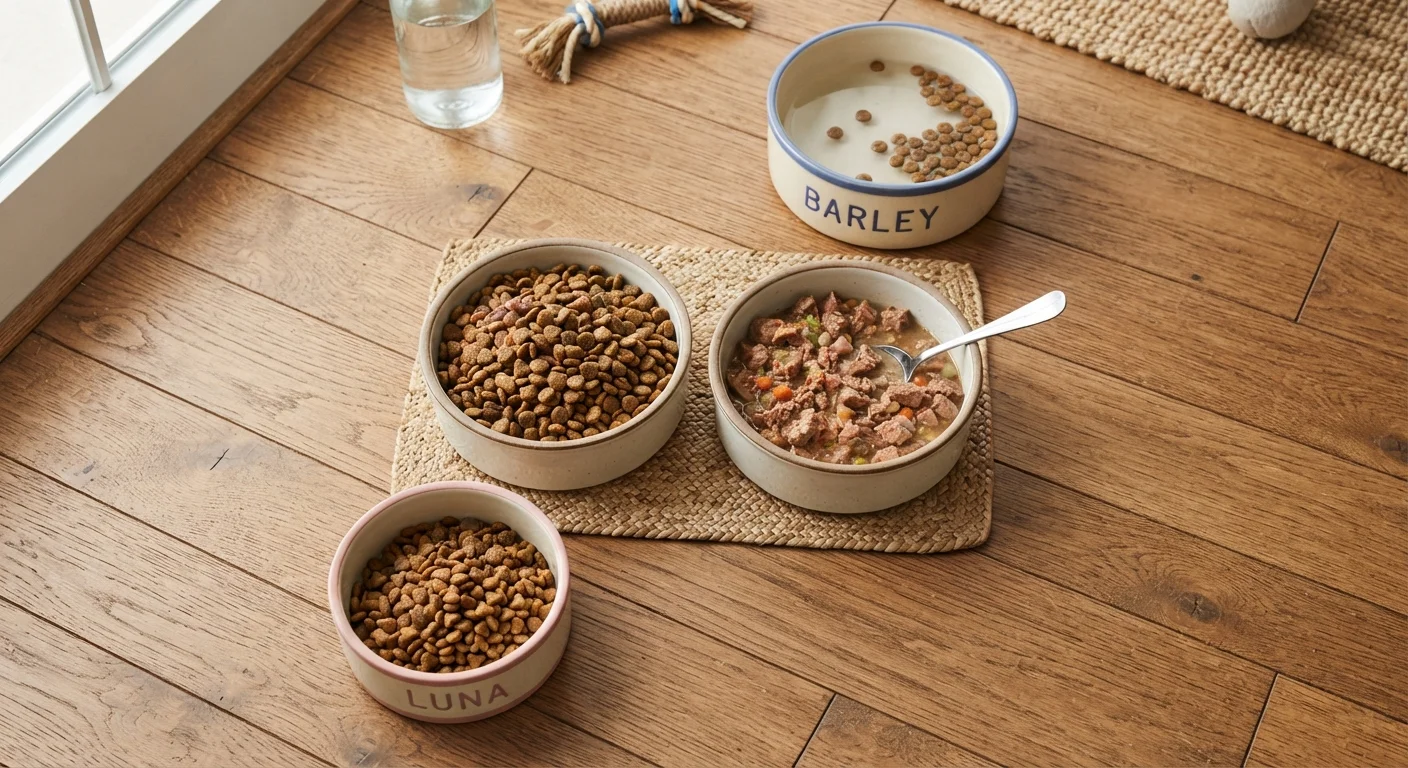
Many pet owners settle on a mixed feeding approach: dry food as the daily base, with wet food offered occasionally or as a topper to boost palatability and moisture. This approach is broadly supported by veterinary practice as long as total caloric intake stays appropriately controlled. For a broader comparison of how feeding format may affect long-term health, see how feeding format affects your pet's health over time.
Mixing Dry and Wet Food
Combining dry and wet food in the same feeding plan is a common and generally practical approach. The key is accounting for total daily caloric intake across both formats to avoid overfeeding. Your veterinarian can help you work out appropriate ratios based on your pet's weight, age, and activity level.
This article provides general educational information about pet nutrition and is not a substitute for personalized veterinary advice. Always consult your veterinarian before making significant changes to your pet's diet, especially if your animal has an existing health condition.