
Small Pet, Big Commitment: What Life With Rabbits, Guinea Pigs, and Hamsters Really Involves

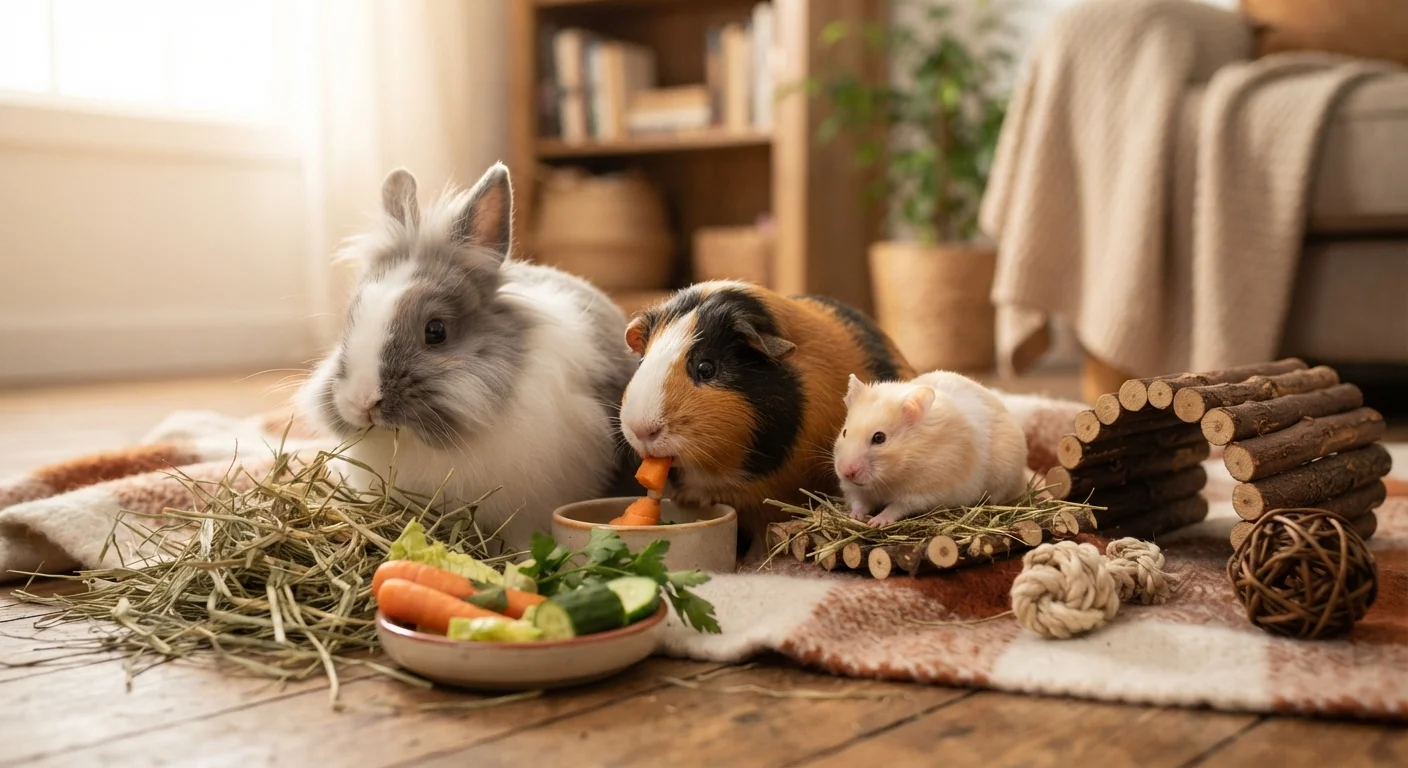
Key Takeaways
- Rabbits, guinea pigs, and hamsters each have distinct social, dietary, and space needs that require consistent daily attention.
- All three species need access to exotic or small-animal veterinarians, which can be harder to find and more costly than standard vet care.
- Rabbits and guinea pigs are social animals that often thrive with a companion of the same species.
- Hamsters are largely nocturnal, which affects how and when owners can interact with them.
- Improper diet — especially too little hay for rabbits and guinea pigs — is one of the most common and preventable health problems.
Compact size suits apartments and smaller homes
Unlike dogs, small pets don't require a yard or large square footage. A well-designed enclosure and daily enrichment time can meet their physical needs in most living situations.
Quieter than dogs or cats for noise-sensitive households
Rabbits are nearly silent. Guinea pigs communicate with distinctive but low-volume vocalizations. Even in apartment buildings, noise is rarely a concern for neighbors.
Deeply interactive once trust is established
Rabbits and guinea pigs that are regularly and gently handled from a young age often become affectionate and curious companions. Recognizing individual personalities becomes part of the reward.
Can fit into structured daily routines
Feeding, spot-cleaning, and interaction time can be built into consistent morning and evening routines, which also benefits the animal by providing predictability.
Lower food and supply costs than larger animals
Daily hay, fresh vegetables, and pellets for a pair of guinea pigs or a rabbit typically cost significantly less per week than feeding a medium or large dog.
Exotic vet care is harder to access and more costly
Rabbits, guinea pigs, and hamsters require veterinarians with exotic or small-animal training — not every general practice is equipped for them. Emergency care in particular can be expensive and geographically limited.
Enclosure size requirements are frequently underestimated
Pet store cages marketed for these animals are often far too small to meet welfare standards. A rabbit, for example, should have an enclosure where it can take at least three full hops in one direction, plus daily free-roam time.
Diet errors are a leading cause of preventable illness
Feeding pellets or treats as the primary diet — rather than unlimited grass hay for rabbits and guinea pigs — contributes to dental disease, GI stasis, and obesity. Getting the diet right takes deliberate learning upfront.
Social needs require real planning, especially for guinea pigs
Guinea pigs kept alone without regular human interaction can develop signs of stress. Introducing a same-species companion requires a careful process; a poorly managed introduction can result in injury.
Fragile physiology makes stress and illness harder to detect
Prey animals instinctively hide signs of illness. By the time a rabbit or guinea pig shows obvious symptoms, a condition may already be serious — making regular observational care essential.
Hamsters' nocturnal schedule limits daytime interaction
Waking a hamster during the day to handle it causes real stress and can lead to biting. Owners who want an interactive pet but keep daytime-only schedules may find this a genuine mismatch.
Our Verdict
Rabbits, guinea pigs, and hamsters are rewarding companions for the right household, but they are not low-maintenance animals. Each species demands specific housing, diet, socialization, and veterinary attention that adds up to a genuine daily commitment. Going in with accurate expectations is the single greatest factor in a successful, long-term relationship with any small pet.
Best suited to patient, research-oriented owners — including families with older children — who can provide structured daily care, appropriate enclosures, and consistent veterinary attention.
The 'Easy Pet' Assumption — and Why It Misses the Mark
Small animals are routinely marketed as beginner-friendly or child-ready pets, but that framing glosses over what daily ownership actually looks like. Rabbits can live 8–12 years. Guinea pigs typically live 5–7 years. Even hamsters, often thought of as short-commitment pets, live 2–3 years and require daily handling and enrichment to stay healthy and calm.
The appeal is real: these animals are quiet, apartment-compatible, and deeply engaging once you understand them. But the gap between what new owners expect and what these pets actually need is one of the most consistent problems in small animal welfare. Our companion guide on underestimated small pet needs goes deeper on the specifics — this article gives you the full balanced picture before you commit.
Pros: Genuine Strengths of Owning a Small Pet
There are real, compelling reasons people choose these animals — and they hold up under honest scrutiny.
Compact size suits apartments and smaller homes
Unlike dogs, small pets don't require a yard or large square footage. A well-designed enclosure and daily enrichment time can meet their physical needs in most living situations.
Quieter than dogs or cats for noise-sensitive households
Rabbits are nearly silent. Guinea pigs communicate with distinctive but low-volume vocalizations. Even in apartment buildings, noise is rarely a concern for neighbors.
Deeply interactive once trust is established
Rabbits and guinea pigs that are regularly and gently handled from a young age often become affectionate and curious companions. Recognizing individual personalities becomes part of the reward.
Can fit into structured daily routines
Feeding, spot-cleaning, and interaction time can be built into consistent morning and evening routines, which also benefits the animal by providing predictability.
Lower food and supply costs than larger animals
Daily hay, fresh vegetables, and pellets for a pair of guinea pigs or a rabbit typically cost significantly less per week than feeding a medium or large dog.
For households navigating multiple animals, small pets can fit into a broader routine. See what actually works when keeping multiple pets for practical guidance on managing cohabitation.
Cons: The Commitments That Catch Owners Off Guard
These aren't dealbreakers — but they're the details that determine whether ownership goes smoothly or becomes stressful for both owner and animal.
Exotic vet care is harder to access and more costly
Rabbits, guinea pigs, and hamsters require veterinarians with exotic or small-animal training — not every general practice is equipped for them. Emergency care in particular can be expensive and geographically limited.
Enclosure size requirements are frequently underestimated
Pet store cages marketed for these animals are often far too small to meet welfare standards. A rabbit, for example, should have an enclosure where it can take at least three full hops in one direction, plus daily free-roam time.
Diet errors are a leading cause of preventable illness
Feeding pellets or treats as the primary diet — rather than unlimited grass hay for rabbits and guinea pigs — contributes to dental disease, GI stasis, and obesity. Getting the diet right takes deliberate learning upfront.
Social needs require real planning, especially for guinea pigs
Guinea pigs kept alone without regular human interaction can develop signs of stress. Introducing a same-species companion requires a careful process; a poorly managed introduction can result in injury.
Fragile physiology makes stress and illness harder to detect
Prey animals instinctively hide signs of illness. By the time a rabbit or guinea pig shows obvious symptoms, a condition may already be serious — making regular observational care essential.
Hamsters' nocturnal schedule limits daytime interaction
Waking a hamster during the day to handle it causes real stress and can lead to biting. Owners who want an interactive pet but keep daytime-only schedules may find this a genuine mismatch.
When Introducing a Small Pet to Other Animals
Households with cats or dogs need a structured introduction plan before bringing home a rabbit, guinea pig, or hamster. Even calm, well-trained dogs and cats retain predatory instincts that can stress a small animal significantly. A secure, separate space for the small pet is essential from day one. See our guide to introducing a new pet for a step-by-step approach.
For grooming-specific needs by species — including nail trimming and coat care for rabbits — see our grooming frequency reference.
Species Differences That Matter Day-to-Day
Treating rabbits, guinea pigs, and hamsters as interchangeable leads to preventable problems. Here's how their needs genuinely differ:
- Rabbits need a minimum of several hours of free-roaming time outside their enclosure daily. They are highly social and can develop behavioral problems or depression when isolated. Their diet is approximately 80% grass hay, which is non-negotiable for healthy gut motility.
- Guinea pigs cannot synthesize vitamin C and must get it through fresh vegetables or supplementation daily — a deficiency causes scurvy. They are highly vocal and social; most guinea pig welfare organizations recommend keeping at least two together.
- Hamsters are solitary and territorial — housing two together (except carefully introduced dwarf species pairs) typically leads to injury. They are most active at night, which means meaningful interaction often has to be scheduled around their natural rhythms.
80%
Hay as share of a rabbit's daily diet
Veterinary small-animal nutritionists consistently cite grass hay as the cornerstone of rabbit diet, essential for dental wear and digestive health.
8–12 years
Typical rabbit lifespan with proper care
Many prospective owners underestimate rabbit longevity; this is a commitment comparable to adopting a cat or small dog.
Understanding your pet's behavioral signals makes a significant difference in how well you can meet their needs. First-time owners also benefit from reviewing common early ownership mistakes before problems develop.
This article is for general informational purposes only and does not constitute veterinary advice. Consult a licensed exotic animal or small-animal veterinarian for guidance specific to your pet's health and care needs.