

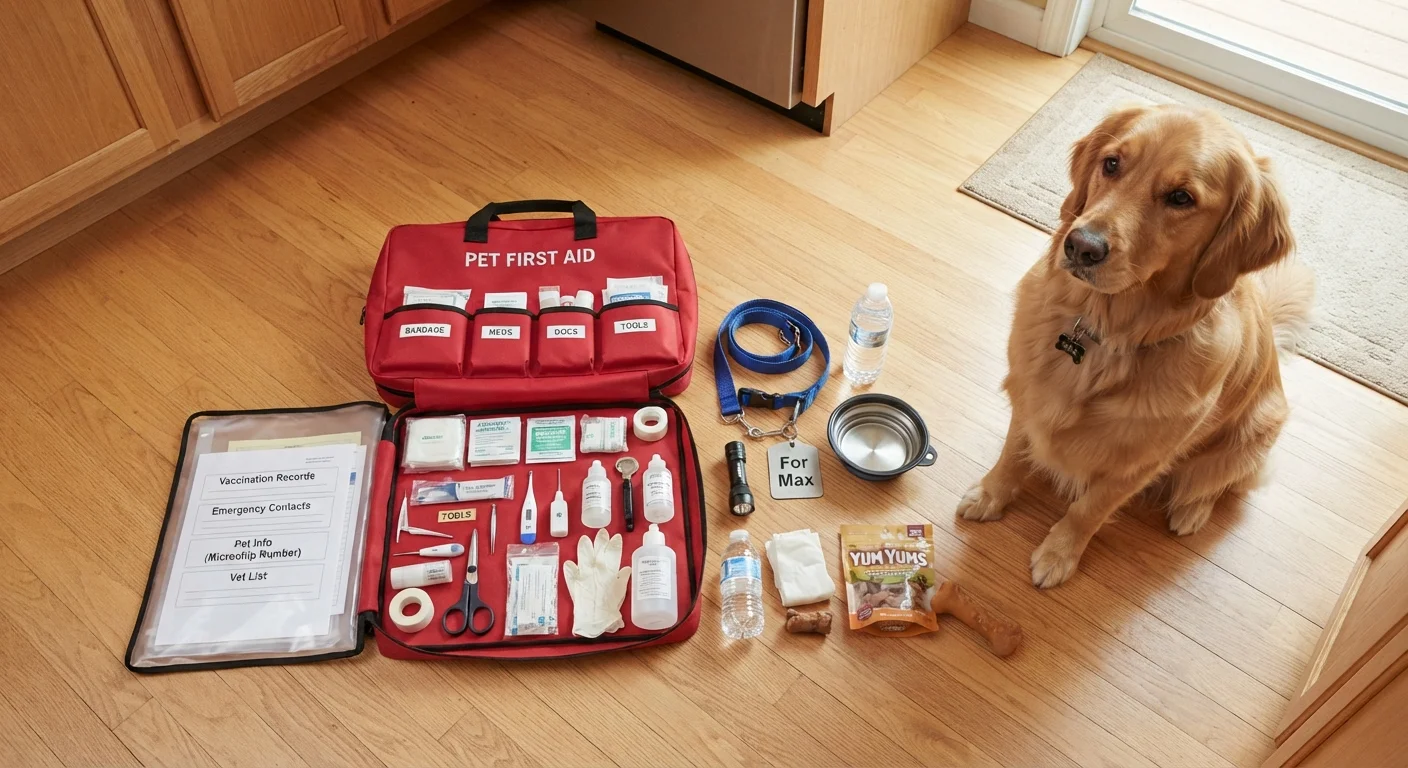
Key Takeaways
- A dedicated pet emergency kit should be assembled before an emergency occurs, not during one.
- Your kit needs both physical supplies and critical documents like vaccination records and vet contacts.
- Kits should be reviewed and restocked every six months to keep medications and food current.
- Species-specific needs — cats, dogs, birds, small animals — require tailored additions to a basic kit.
- Knowing your nearest 24-hour emergency vet before a crisis is as important as any supply in the bag.
Summary
22 items · 30–60 minutes to assemble
Why a Pet Emergency Kit Is Worth Building Now
Emergencies rarely announce themselves. A dog who swallows something toxic, a cat who goes into sudden respiratory distress, a natural disaster that forces your family to evacuate — in each scenario, the difference between a calm, effective response and a panicked scramble often comes down to preparation made days or weeks earlier.
A pet emergency kit is a single, dedicated collection of supplies, documents, and information your household can reach for instantly. It removes guesswork at the worst possible moment. Think of it the way you would a human first-aid kit: the goal isn't to replace veterinary care — it's to stabilize, comfort, and document until professional help is available.
Building one is straightforward. This checklist walks you through every category, from physical supplies to paperwork, so you can assemble a complete kit in a single afternoon. For a broader look at keeping your animal healthy day to day, explore the Pet Health & Wellness hub.
Never Treat Without Veterinary Guidance
A pet emergency kit is a support tool — not a replacement for professional veterinary care. Do not administer any medication, attempt to induce vomiting, or treat wounds beyond basic stabilization without first consulting your veterinarian or an emergency animal clinic. Acting without guidance can worsen an injury or cause additional harm.
What to Include: The Full Checklist
Work through each group below. Check off what you already own and note what still needs to be sourced. Keep everything together in a clearly labeled, waterproof bag or container stored in an easily accessible spot — not buried in a closet.
First-Aid Supplies
Critical Documents
Comfort and Containment
Food, Water, and Medications
Species-Specific Additions
Waterproof, clearly labeled storage bag or container
Keeps all supplies organized, protected from moisture, and easy to grab quickly in an emergency.
Digital rectal thermometer
Allows you to take your pet's temperature accurately when instructed by a veterinarian.
Self-adhesive bandage wrap (such as cohesive bandage)
Used for securing wound dressings without sticking to fur or requiring clips.
Waterproof document sleeve or folder
Protects printed vaccination records, medication lists, and emergency contacts from water damage.
Collapsible water bowl
Provides a portable, packable option for hydrating your pet during transport or evacuation.
Oral syringe or eyedropper
Enables controlled delivery of liquids or oral medications when directed by a veterinarian.
Small penlight or flashlight
Helps you examine your pet's mouth, ears, or eyes in low-light environments.
Maintaining and Updating Your Kit
A kit assembled once and never revisited can give you a false sense of security. Set a recurring reminder — every six months is a reasonable interval — to review each item.
- Check expiration dates on any medications, antiseptics, and emergency food or water supplies.
- Update documents whenever your pet's medications, weight, or medical history changes. This pairs naturally with keeping a pet health record at home, which walks through what health data is most useful to have on hand.
- Restock used items after any emergency or practice drill so the kit is always complete.
- Verify contact numbers for your vet, the nearest 24-hour emergency clinic, and the ASPCA Animal Poison Control Center (888-426-4435), which may charge a consultation fee.
Knowing when your situation calls for an emergency clinic versus an urgent care visit versus a regular appointment is just as important as any physical supply. The article Emergency vs. Urgent Care vs. Regular Vet can help you think through those decisions in advance.
Expired Supplies Can Be Ineffective or Harmful
Using expired antiseptics, medications, or saline solutions in an emergency can reduce their effectiveness or, in some cases, cause additional irritation. During every six-month review, discard and replace anything past its expiration date. Do not assume a product is still safe simply because it looks or smells unchanged.
Finally, prevention remains the most powerful tool available. Preventive pet care practices — vaccinations, parasite control, and routine checkups — reduce the likelihood that you'll need your emergency kit at all. Pair kit readiness with the everyday habits that support a longer, healthier life for your pet and you'll have covered both ends of the spectrum: routine wellness and crisis preparedness.
This article is for general informational purposes only and is not a substitute for professional veterinary advice. Always consult a licensed veterinarian for guidance specific to your pet's health needs.