

Key Takeaways
- Mental enrichment addresses boredom, stress, and behavior problems in indoor pets.
- Enrichment works best when it mimics species-specific instincts like foraging, hunting, or exploring.
- Short, consistent daily sessions are more effective than occasional elaborate setups.
- Most enrichment activities require minimal cost and can be built into existing routines.
- Signs of under-stimulation include destructive behavior, excessive vocalization, and lethargy.
What you will need
What Mental Enrichment Actually Means
Mental enrichment refers to activities and environmental conditions that engage a pet's cognitive and sensory systems in ways that align with its natural behaviors. The term is common in zoo animal management and increasingly applied to companion animals, where indoor living can substantially restrict the range of experiences an animal encounters.
Under-stimulation is not a minor inconvenience. Veterinary behaviorists associate chronic boredom with a recognizable cluster of problems: destructive behavior, excessive barking or vocalization, repetitive movements, aggression, and withdrawal. These are not personality flaws — they are signals that a pet's behavioral needs are not being met. For indoor cats in particular, the gap between natural behavioral range and typical home environments can be significant, a point explored in depth in our look at indoor vs. outdoor cat research.
Enrichment is broadly grouped into five categories: sensory (novel smells, sounds, textures), feeding or foraging (earning food through effort), cognitive (puzzles, training), social (interaction with humans or other animals), and physical (movement and exploration). A well-rounded enrichment plan addresses more than one category. It does not need to be elaborate or expensive — it needs to be consistent and species-appropriate.
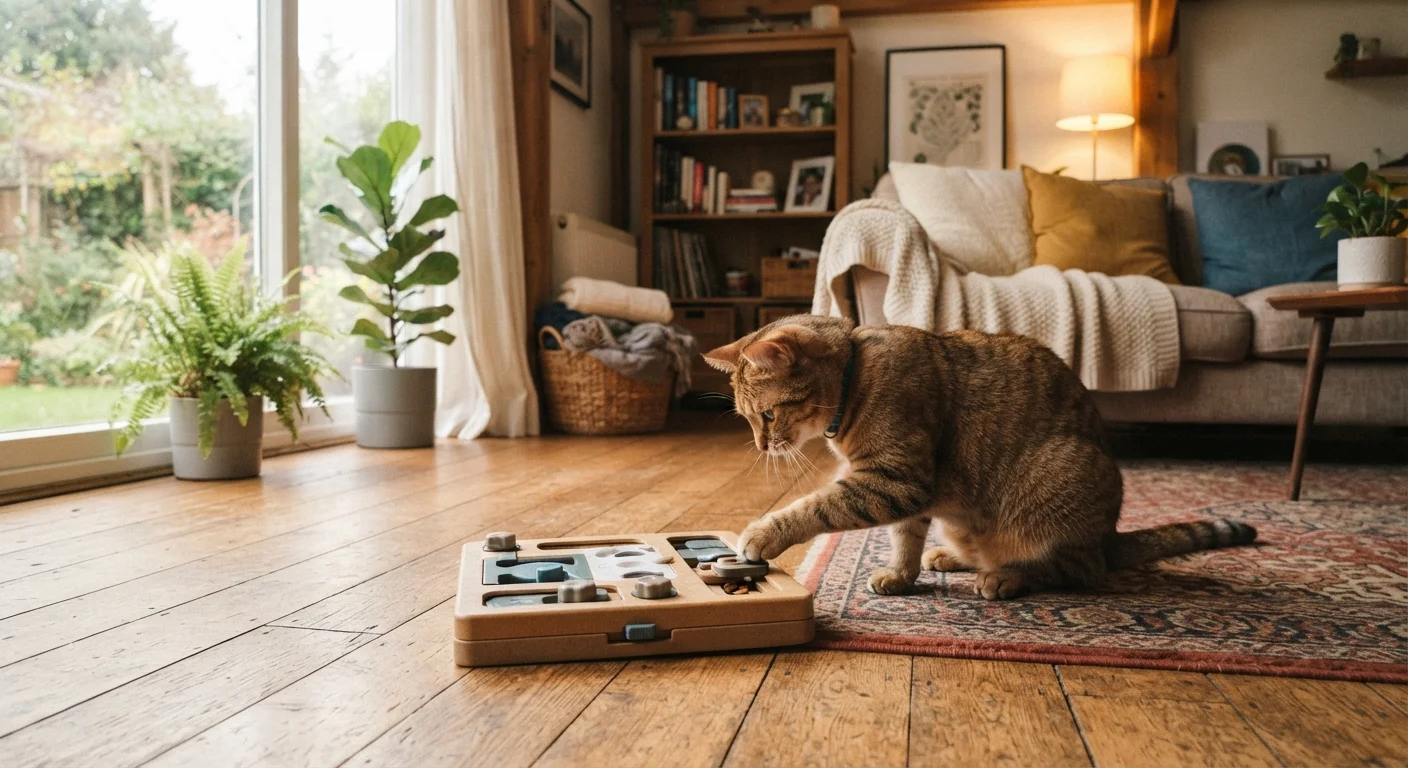
Puzzle feeder or snuffle mat
Slows eating and engages foraging instincts in dogs, cats, and small mammals.
Cardboard boxes and paper bags
Creates low-cost exploration zones and hiding spots for curious pets.
Rotating toy collection
Prevents habituation by cycling toys in and out to preserve novelty.
Window perch or bird feeder placed outside a window
Provides visual stimulation and prey-watching opportunity for indoor cats.
Treat-dispensing toy
Rewards problem-solving behavior and prolongs engagement for dogs and cats.
How to Build Mental Enrichment Into Daily Life
The steps below apply to most common household pets — dogs, cats, birds, and small mammals — with species-specific notes where relevant. Begin with the prerequisites and tools listed above, then work through each step at a pace that suits your pet.
What you will need
Identify your pet's natural behavioral needs
Start by considering what your pet would do in its natural environment. Dogs sniff, forage, and patrol. Cats stalk, pounce, and perch. Birds vocalize, forage, and manipulate objects. Small mammals burrow and chew. Enrichment works best when it mirrors these instincts rather than imposing human ideas of entertainment. Make a short list of three to five core behaviors your pet displays daily — these are your clues about where under-stimulation is most likely to show up.
Audit your current environment for gaps
Walk through your home from your pet's perspective. Does a cat have vertical space to climb and observe? Does a dog have surfaces with varied scents to explore? Is a bird's cage positioned where it can observe household activity safely? Identify one or two clear gaps — such as lack of hiding spots, no foraging opportunity at mealtime, or minimal sensory variety — and focus there first rather than trying to change everything at once.
Introduce foraging-based feeding
Replace at least one meal per day with a foraging activity. For dogs and cats, scatter dry food across a snuffle mat or place it inside a puzzle feeder. For birds, wrap seeds in paper for them to shred. For small mammals, hide food in bedding or cardboard tubes. This single change converts passive eating into an active, cognitively engaging task and is one of the highest-return enrichment moves you can make.
Schedule brief daily interactive play sessions
Set aside two 10-minute play sessions each day. For cats, use a wand or feather toy to trigger predatory sequences — stalking, pouncing, and catching. For dogs, combine movement with nose work by hiding treats around a room for them to find. Short, regular sessions build more benefit over time than infrequent long ones. Consistency signals predictability, which itself reduces ambient stress for most pets.
Rotate novelty into the environment
Pets habituate quickly to static environments. Rotate three to four toys on a weekly cycle so each feels new when reintroduced. Periodically rearrange furniture, add a cardboard box, or place a new safe scent (such as a dried herb like catnip for cats) in the space. Environmental novelty keeps exploratory behavior active without requiring constant new purchases.
Build enrichment into your existing daily routine
Enrichment is most sustainable when it slots into what you already do. Feed through a puzzle at the same time you make your morning coffee. Do a short training session — even three new cues per week maintains cognitive engagement — while you watch television. Ask your pet to sit, find, or interact with an object before earning a reward. Embedding enrichment into daily life makes it a habit rather than a chore. See our guide to building a pet care routine for a framework that makes this easier.
Small Changes Add Up Quickly
You don't need to overhaul your home to make a meaningful difference. Even one foraging meal per day and a 10-minute interactive play session represents a significant improvement for a pet that currently has neither. Start small, stay consistent, and build from there as enrichment becomes part of your natural routine.
Once you've established a consistent enrichment routine, it becomes part of the broader picture of everyday pet wellness. The everyday habits that support long-term pet health — like consistent feeding schedules and attentive observation — work in tandem with enrichment to support a pet's overall wellbeing. For more strategies organized by species and setup, the enrichment overview for indoor pets offers additional approaches worth exploring.
Enrichment Doesn't Replace Veterinary Care
Behavioral changes in pets can sometimes signal underlying medical issues rather than simple boredom. If your pet has recently become lethargic, aggressive, or unusually repetitive in behavior, a veterinary checkup should come before or alongside any enrichment changes. Never use enrichment as a substitute for professional evaluation of concerning symptoms.
This article is for general informational purposes only and is not a substitute for professional veterinary advice. If your pet shows sudden behavioral changes, consult a licensed veterinarian or credentialed veterinary behaviorist.