

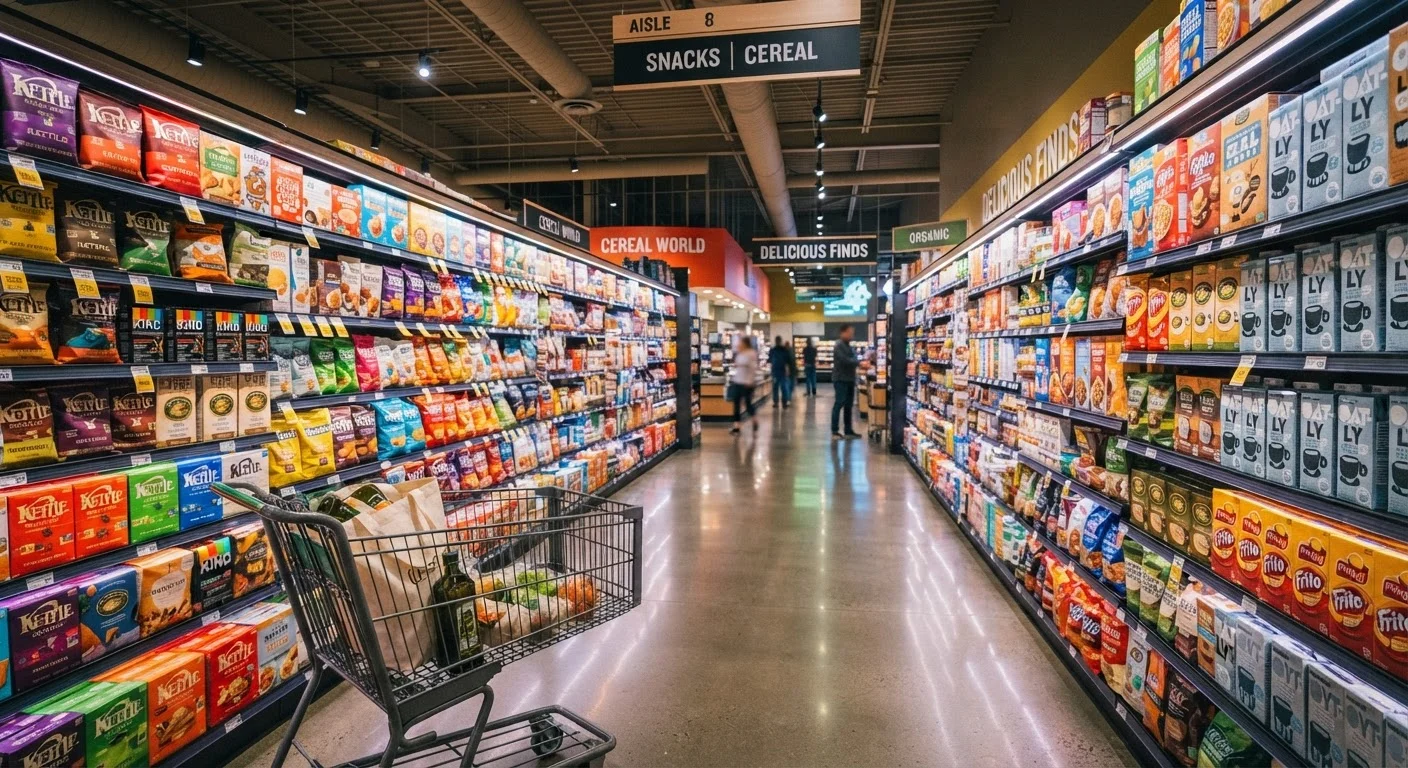
Key Takeaways
- Grocery stores use proven layout and sensory tactics to increase how much shoppers spend per visit.
- Eye-level shelves, store perimeters, and slow-moving aisle designs are deliberate, not accidental.
- Shopping with a list and a full stomach are two of the simplest evidence-backed countermeasures.
- Unit price labels — not package price — are your most reliable comparison tool in any store.
- Understanding retailer psychology doesn't require cynicism; it just requires a little preparation.
Why the Store Is Not a Neutral Space
Walking into a grocery store feels routine, but the environment you're navigating was designed by retail consultants, consumer psychologists, and category managers — all working to increase the size of your basket. That's not a conspiracy theory; it's standard retail practice, and it has a substantial body of research behind it.
From the placement of flowers and fresh produce near the entrance (to signal freshness and trigger a positive mood) to the deliberate absence of windows and clocks (to reduce time awareness), stores are engineered environments. Recognizing that fact is the starting point for shopping with more intention. For a broader look at how these psychological techniques operate across retail settings, see how retailers use anchoring, scarcity, and social proof.
Myth
The best deals are at eye level — that's where stores put their value options.
Fact
Eye-level shelves are premium real estate sold to higher-margin brands. Better value is typically found on lower or higher shelves.
Manufacturers pay slotting fees to secure prime shelf positions. Eye-level placement is not a signal of quality or value — it's a signal of marketing spend. Store-brand and lower-cost alternatives are routinely stocked on bottom shelves or above the sight line. Making a habit of scanning the full shelf height before grabbing the first item you see can pay off quickly.
Myth
The perimeter of the store is where you find processed and packaged food.
Fact
The perimeter typically holds whole foods — produce, meat, dairy, and bakery — while the interior aisles contain most packaged goods.
This is a durable piece of retail geography. Stores are generally organized so that fresh, refrigerated, and perishable departments ring the outer walls (requiring refrigeration infrastructure), while shelf-stable packaged products fill the center. Shopping the perimeter first for staples before entering interior aisles for targeted items is a practical structural strategy, not just nutritional advice.
Myth
Larger package sizes always cost less per unit than smaller ones.
Fact
Unit pricing varies widely; smaller or mid-size packages are sometimes cheaper per ounce than bulk sizes, especially on sale.
The assumption that bigger equals cheaper is common but unreliable. Retailers price different package sizes independently, and promotional discounts can make a smaller size the better deal on any given week. The only reliable method is comparing the price-per-unit or price-per-ounce figure on the shelf label — not the total package price.
Myth
End-of-aisle displays (endcaps) are where stores put clearance or overstocked items.
Fact
Endcaps are high-traffic, high-visibility positions that brands pay for — they're not automatically discounted or surplus stock.
Shoppers tend to assume that prominent placement signals a bargain. In practice, endcap space is sold to suppliers as a promotional vehicle and may feature items at full or near-full price. Some endcap products are on sale, but many are not. Checking the shelf price of the same item in its regular aisle location is a quick way to verify whether you're actually getting a better deal.
Myth
Loyalty card discounts always make the store the cheapest option for that item.
Fact
Loyalty pricing is one data point, not a guarantee of the lowest available price — and it often requires accepting personalized tracking in exchange.
Loyalty programs offer genuine savings on specific items, but the "member price" is set by the retailer and may still be higher than the non-member price at a competing store. These programs also involve data collection — your purchase history is typically used for targeted marketing. Weighing that trade-off is a personal decision, but treating loyalty discounts as automatically optimal pricing is a mistake.
Practical Countermeasures That Actually Work
Awareness alone doesn't fully protect your wallet — but pairing it with a few simple habits creates a meaningful difference over time.
~60%
Grocery purchases that are unplanned
Studies on in-store purchasing behavior have consistently found that a significant share of grocery decisions are made inside the store rather than planned in advance.
2–3x
Higher sales lift from eye-level vs. bottom-shelf placement
Retail industry research has documented that products placed at eye level can outsell the same item shelved lower by a factor of two or more, depending on the category.
- Shop with a list and stick to it. Research consistently links list-based shopping to fewer unplanned purchases. Write categories, not just items — "canned tomatoes" rather than a specific brand.
- Check the unit price label. Shelf tags in most U.S. stores include a price-per-ounce or price-per-unit figure. This number, not the package price, is your true comparison tool. Larger sizes are not always cheaper per unit.
- Start at the perimeter, then go in. Staple foods — produce, proteins, dairy — typically live around the store's edges. Navigating the interior aisles with purpose after that reduces exposure to impulse categories.
- Eat before you shop. This is well-worn advice for a reason. Shopping while hungry measurably increases the appeal of high-calorie, high-margin convenience items.
- Use a basket for small trips. A cart creates psychological pressure to fill it. If you need fewer than a dozen items, a handheld basket creates natural limits.
Sales and Promotions Can Still Nudge Overspending
A genuine discount on something you'd buy anyway is a win. A discount on something you wouldn't have purchased otherwise is an expense, not a saving. Before adding a sale item to your cart, ask whether it was already on your list or in your budget. Multi-buy promotions ("3 for $X") are only worthwhile if you'll actually use all units before they expire.
If you're weighing whether to shift some grocery spending online, comparing in-store and online grocery experiences can help you decide what works for your household. And for tips on cutting your bill without changing what you eat, these underused grocery spending strategies are worth a look.