

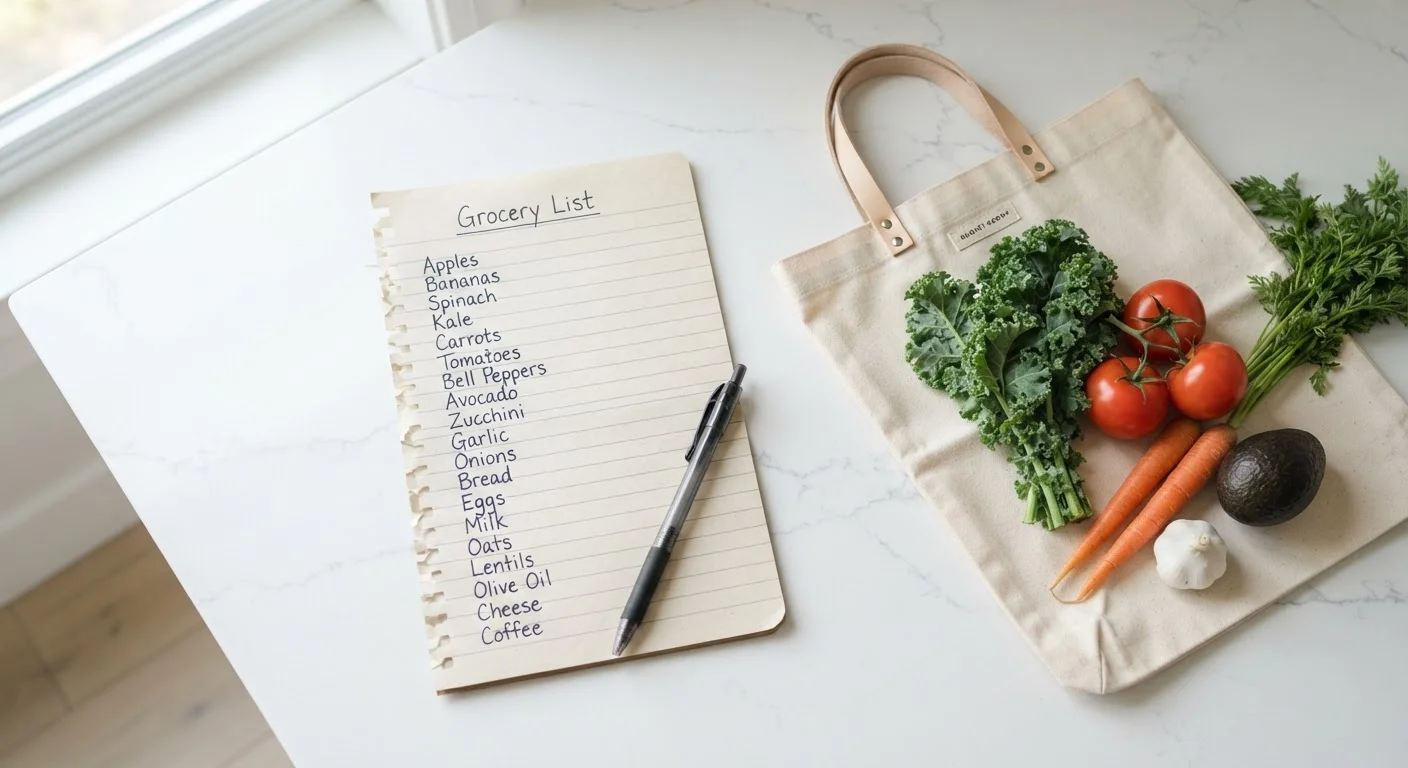
Key Takeaways
- Shopping with a written list consistently reduces unplanned purchases and total spending.
- Lists work because they shift decision-making away from the store environment and into a calmer setting.
- The format matters: organized, category-based lists outperform random jottings.
- Building a list habit takes repetition — small consistent steps beat occasional effort.
- Reviewing your list before checkout is as important as writing it beforehand.
Why a List Is More Than a Reminder
Most people think of a shopping list as a memory aid. That's only part of what it does. A list also functions as a pre-commitment device — a boundary you set for yourself before walking into a store environment specifically designed to encourage additional spending.
Research in consumer behavior consistently shows that shoppers without lists spend more and bring home more unplanned items than those who shop with one. The gap isn't trivial. Estimates from grocery industry studies suggest that a significant share of in-store purchases are unplanned — some research places that figure above 50% for unanchored shoppers.
The reason comes down to decision fatigue and environmental cues. Stores use layout, lighting, placement, and pricing signals to nudge purchasing. When you have a list, you've already made most of your decisions in a neutral environment. You're executing a plan rather than making choices on the fly.
~50%
Share of grocery purchases that are unplanned
Multiple consumer behavior studies estimate that roughly half of in-store grocery purchases were not on a shopper's original plan, with rates higher among list-free shoppers.
23%
Reduction in grocery spend linked to list use
A frequently cited consumer research finding suggests shoppers using structured lists spend meaningfully less per trip than those shopping without one, though individual results vary.
For a deeper look at how intentional purchasing connects to budgeting from the ground up, see our guide to budget shopping without buying things you don't need.
Best Practices for Building a List That Holds
Not all lists are equally effective. A random scatter of items scribbled five minutes before leaving is better than nothing — but a structured list does significantly more work. Here are the practices that make the difference.
Write your list at least 24 hours before shopping, not right before you leave.
Lists made in advance reflect actual needs rather than whatever comes to mind under time pressure. Distance from the store also reduces the influence of current hunger, mood, or sale awareness on what you write down.
Organize items by store section, not by the order you thought of them.
A category-organized list (produce, proteins, dairy, pantry staples) keeps you moving efficiently through the store and reduces backtracking — which exposes you to more impulse opportunities. It also makes it harder to skip a section and miss essentials.
Set a rough per-trip budget and note it at the top of your list.
A visible spending ceiling creates a mental anchor that influences what you select. Shoppers aware of their budget are more likely to choose store-brand alternatives or skip optional items when the cart is running full.
Include quantities, not just item names.
Vague entries like "chicken" or "fruit" leave room for over-buying. Specific quantities — "2 lbs chicken thighs," "1 bag apples" — define the purchase and reduce the chance of grabbing more than needed.
Review and finalize your list before leaving — not at the store.
A final home review catches duplicates, missing items, and entries you no longer need. Doing this at home keeps edits calm and deliberate, whereas editing in-store often means adding rather than removing.
Making List-Shopping a Durable Habit
Knowing the method is one thing. Sticking with it across busy weeks, travel, and routine disruptions is another. Habit formation research suggests that attaching a new behavior to an existing one — known as habit stacking — dramatically improves follow-through.
If you're building a household routine around this, our step-by-step guide to building a weekly shopping list walks through a practical framework for real households. And if you want your list to also support better nutrition choices, see grocery shopping with nutrition in mind.
Pair Your List With a Pantry Check
Before writing your list, spend two minutes scanning what you already have. This prevents duplicate purchases — one of the most common sources of quiet overspending. Checking the pantry, fridge, and freezer first turns your list into a true gap-filler rather than a broad wish list.
One underused step: a quick audit before checkout. Scanning your cart against your list — even for 60 seconds — catches impulse additions before they become regrets. Our pre-checkout spending audit gives you a repeatable process for exactly that.