

Key Takeaways
- Planning before you shop is one of the most effective ways to improve nutritional choices.
- Reading Nutrition Facts labels helps you compare products beyond marketing claims on the front of packaging.
- Produce, proteins, and whole grains should anchor your cart before processed items fill the gaps.
- Small, consistent swaps tend to stick better than overhauling your entire shopping routine at once.
- Nutritional needs vary by individual - consult a healthcare provider or registered dietitian for personal guidance.
Summary
18 items · 20-40 minutes per grocery trip
Why the Grocery Store Is Where Nutrition Decisions Really Happen
Most nutrition advice focuses on what to eat at the table. But the more consequential decisions happen earlier - in the aisles, in front of a shelf, often while distracted or hungry. The food that enters your home is the food you'll eat. That makes the grocery run a leverage point worth taking seriously.
Conflicting advice online - low-carb versus whole grain, plant-based versus high-protein - can make a simple shopping trip feel loaded with uncertainty. This checklist cuts through that noise. It doesn't prescribe a specific diet or food philosophy. Instead, it offers a repeatable framework for making choices that are generally consistent with established nutrition guidance from organizations like the U.S. Dietary Guidelines Advisory Committee.
If you want to go deeper on what's already in your kitchen before your next trip, the pantry audit checklist is a useful companion to this one. And if you're balancing nutrition goals with budget constraints, strategies for eating varied on a tight grocery budget can help you do both without choosing one over the other.
Weekly meal planner (paper or app)
Maps out planned meals for the week so your shopping list aligns with what you'll actually cook and eat.
Grocery list (written or digital)
Keeps your shopping anchored to pre-planned needs and reduces impulsive, unplanned additions.
Nutrition Facts label reference guide
Helps you interpret Daily Value percentages and key nutrient lines when comparing packaged products.
Smartphone with a notes or list app
Allows you to check your pantry remotely and update your list in real time while shopping.
Before You Leave the House
Preparation is the step most shoppers skip - and the one that pays off most consistently. A few minutes of planning before you walk in shapes nearly every decision you make once you're there. Research consistently shows that shopping with a list reduces both impulse purchases and the likelihood of missing key staples. For a deeper look at why that works, see why shopping with a list works.
Before You Shop
In the Produce and Fresh Sections
Reading Labels on Packaged Goods
Cart Review Before Checkout
Front-of-Package Claims Are Not Nutrition Labels
Words like "natural," "multigrain," "light," or "made with real fruit" are marketing terms and are not regulated in the same way as the Nutrition Facts panel. Always flip to the back and read the actual label before assuming a product fits your nutritional goals. Front-of-package claims are designed to attract attention, not to provide complete nutritional context.
Navigating the Store Itself
Once inside, the store's layout will work against you if you're not deliberate. High-margin, heavily processed items tend to occupy the most prominent shelf positions and end-cap displays. A loose structure helps: start with the perimeter, where fresh produce, proteins, and dairy are typically stocked, then move inward for staples like legumes, whole grains, and canned goods.
Reading labels is a skill worth developing gradually rather than trying to master overnight. Focus on a handful of reliable signals rather than analyzing every number on the panel. If you're also tracking spending as you shop, the pre-checkout spending audit checklist offers a quick review process that pairs well with this nutritional framework.
Nutrition Needs Are Not One-Size-Fits-All
General dietary guidance provides a useful baseline, but individual needs vary based on age, activity level, health conditions, medications, and other factors. If you have a chronic condition, follow a medically supervised diet, or are pregnant, breastfeeding, or managing a condition for a child or older adult, please consult a registered dietitian or your healthcare provider before making significant changes to your food choices. This checklist is educational, not personalized medical or nutritional advice.
Building a Cart That Reflects Nutritional Balance
No single food makes or breaks a diet - but the overall pattern of what fills your cart over time does matter. General dietary guidance emphasizes variety, adequate fiber, a range of micronutrients, and limiting excess sodium, added sugars, and saturated fat. Those principles can be applied at the cart level without counting anything.
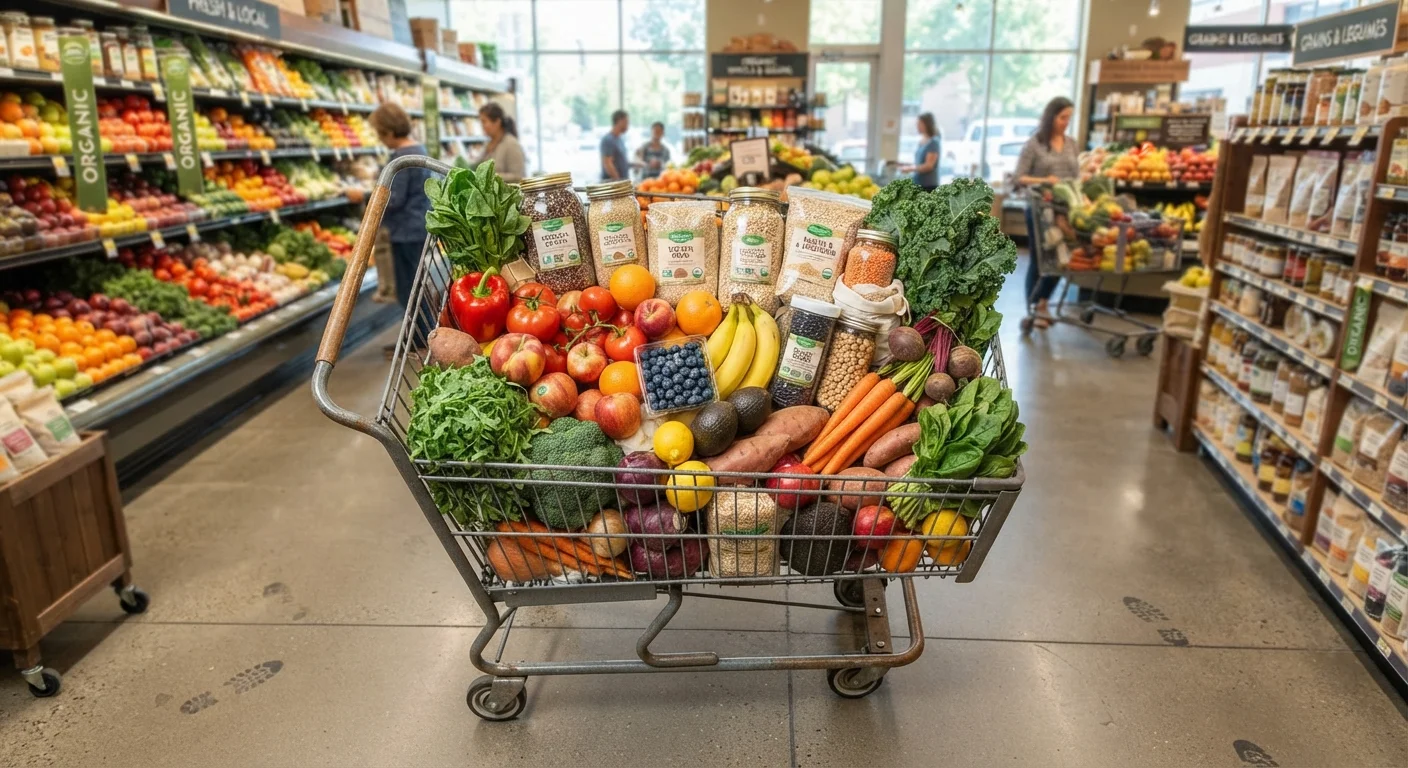
A practical mental model: aim for most of your cart to be foods that don't require a label - fresh or frozen vegetables and fruit, unprocessed proteins, whole grains in their recognizable form. The remaining portion can include packaged convenience items chosen with a bit more scrutiny. For those managing a busy schedule, realistic nutrition principles for busy schedules offers compatible strategies that extend beyond the store.
This article provides general nutrition information for educational purposes and is not a substitute for personalized advice from a qualified healthcare professional or registered dietitian. Individual nutritional needs vary based on age, health status, and other factors.