

Key Takeaways
- A crossed-out 'original' price only means something if the item was actually sold at that price for a meaningful period.
- Retailers are legally required in most states to base reference prices on actual former selling prices, but enforcement is inconsistent.
- The psychological impact of seeing a higher number makes people feel they're saving — even when the math doesn't support it.
- Comparing a product's current price to external sources is more reliable than trusting in-store or on-page price history.
- Sales aren't inherently misleading, but understanding the mechanics helps you separate genuine value from inflated-tag theater.
Reference Pricing (Anchor Pricing)
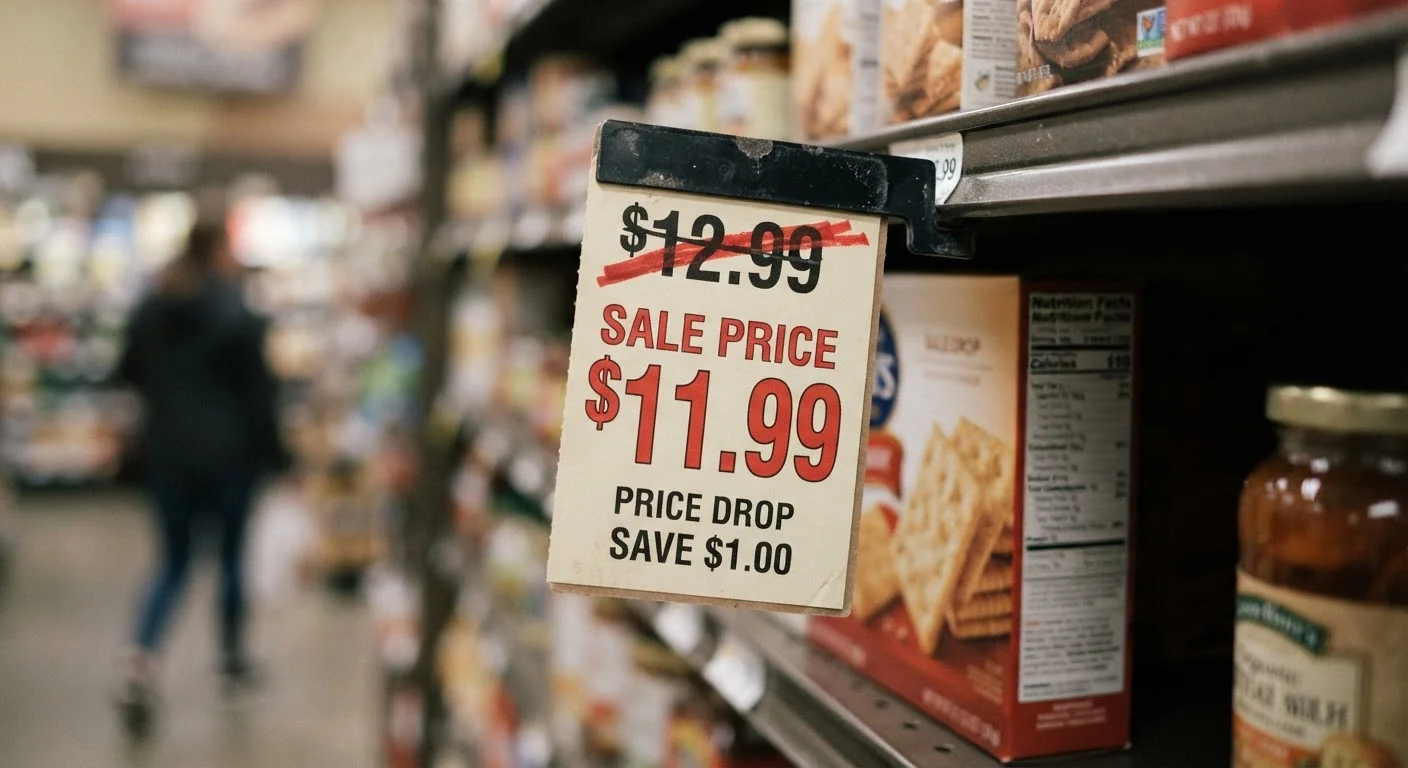
Reference pricing is the practice of displaying a higher 'original' or 'compare at' price next to a lower 'sale' price, creating the impression of savings. The problem is that the reference price may never have been the item's actual everyday selling price. This makes the discount appear larger — or more legitimate — than it really is.
The FTC and various state consumer protection laws require that advertised 'former prices' reflect prices at which the item was genuinely offered for a reasonably substantial period. Enforcement, however, varies significantly by jurisdiction and retailer type.
The Gap Between 'Sale' and 'Savings'
A sale tag signals opportunity. The word itself carries a psychological charge — something is cheaper than it was, and you'd be missing out if you passed it up. But the word 'sale' has no standardized legal definition in U.S. retail. It can mean a genuine markdown, a seasonal promotion, or simply a formatted price presentation designed to feel like a deal.
Understanding the difference isn't about cynicism — it's about accuracy. When you see a price crossed out and a new number below it, what you're really looking at is a comparison the retailer has framed for you. The question worth asking is: compared to what, and for how long was that higher price real?
For a broader grounding in the language retailers use, key shopping terms every consumer should recognize is a useful starting point before diving deeper here.
The Word 'Sale' Has No Legal Definition
In U.S. retail, the term 'sale' is not defined or regulated at the federal level. Any price reduction — or even a price presentation that implies a reduction — can be labeled a sale. State consumer protection laws vary in how they handle misleading pricing, but shoppers generally cannot assume that 'sale' implies any particular level of discount or minimum reduction from a verified former price.
How Anchor Pricing Shapes What You Think You're Saving
The mechanics behind most sale presentations rely on a well-documented cognitive pattern: when people see a high number first, it becomes the mental benchmark for everything that follows. Retailers use this by displaying a larger 'original' price prominently alongside a lower 'sale' price. The larger number anchors your perception, making the sale figure feel like relief — even if the gap between the two numbers was never based on real market conditions.
This is why identical products can feel like very different value propositions depending on how their pricing is displayed. A $40 item with no reference price feels neutral. The same $40 item labeled 'was $80' feels like a win — regardless of whether $80 was ever a genuine price anyone paid.
“The price marked 'original' is only meaningful if it reflects what people actually paid. When it doesn't, the entire discount calculation is built on a fiction.”
— Consumer Pricing Research Community, Behavioral economics and retail pricing analysts
Retailers aren't always acting in bad faith when they do this. Sale structures are a normal part of retail planning. But the effect on consumer decision-making is real, and recognizing it shifts the dynamic back in your favor.
When 'Original' Prices Are More Label Than History
Federal guidelines from the FTC state that a former price used in a sale comparison should reflect a price at which the item was genuinely offered to the public for a reasonable, recent period. In practice, some retailers set artificially high 'original' prices before a planned sale — often just long enough to satisfy a technical threshold — then reduce them and advertise the markdown as substantial.
The result: a product that was never realistically sold at its listed 'original' price carries a sale tag suggesting you're getting 40% or 50% off. The label is technically compliant with the letter of the rule but not the spirit.
Use Price History Before You Buy
Before accepting a reference price at face value, look up the item's price history using a third-party tracking tool. If the 'original' price appeared only briefly or doesn't show up in the historical record at all, the discount percentage is likely overstated. A few minutes of research can shift the entire decision.
This dynamic is especially common during high-traffic retail events, where the volume of transactions makes item-by-item scrutiny difficult. What budget shoppers commonly misunderstand about sale events covers this pattern in more detail.
Practical Ways to Evaluate a Price on Its Own Terms
The most reliable defense against inflated reference pricing is treating the current price as the only real data point and verifying it independently. A few approaches that hold up in practice:
- Check price history tools. Several free browser extensions and websites track historical pricing for online retailers, letting you see whether the 'original' price was ever consistently charged or appeared only briefly before a sale.
- Compare across sellers. If you can find the same item at multiple retailers, the spread of prices gives you a market-based sense of what the item is actually worth — more meaningful than a single retailer's reference tag.
- Separate the item's value from the discount framing. Ask whether you'd buy this item at the sale price if there were no crossed-out number above it. If the answer is yes, the discount label is irrelevant. If the answer is no, the discount label is doing the persuasive work for you.
For a fuller look at the patterns that turn seemingly smart purchases into regrettable ones, traps that turn a good deal into a bad decision is worth reading alongside this piece.
~40%
Share of online 'sale' prices that match or exceed pre-sale levels
Research by consumer advocacy and price-tracking organizations has repeatedly found that a substantial share of promoted 'sale' prices are not meaningfully lower than prices charged in the weeks before the sale event.
4–7 days
Typical window some retailers use to 'establish' a reference price
Industry observers and investigative retail reporting have documented cases where inflated reference prices are set for very brief windows before promotional markdowns begin, technically satisfying policy thresholds.
3 in 4
Shoppers who report feeling more positive about a price when shown a higher reference
Behavioral economics research consistently demonstrates that anchor pricing significantly increases purchase intent and perceived value, even when the anchor is arbitrary.
What Genuine Discounts Actually Look Like
Real markdowns do exist, and they're worth recognizing. End-of-season clearance, inventory liquidations, and competitive price-matching can all produce authentic price reductions. The difference tends to show up in consistency: a genuinely discounted item will often be priced lower across multiple sellers simultaneously, not just at one retailer during a promotional window.
Honest sales also don't require urgency pressure. When a retailer's primary message is 'limited time only' rather than the product's actual attributes and value, that framing is doing the work the price alone can't do. Myths about smart shopping that can actually cost you more explores why urgency-driven buying often undercuts the savings it promises.
A sale is only as valuable as the purchase it leads to. Evaluate the item first, the price second, and the discount label last — and the math becomes a lot clearer.
This article is for general informational and educational purposes only. It does not constitute legal, financial, or consumer protection advice. Regulations and enforcement practices vary by state and jurisdiction; consult relevant consumer protection resources or a qualified professional for guidance specific to your situation.