

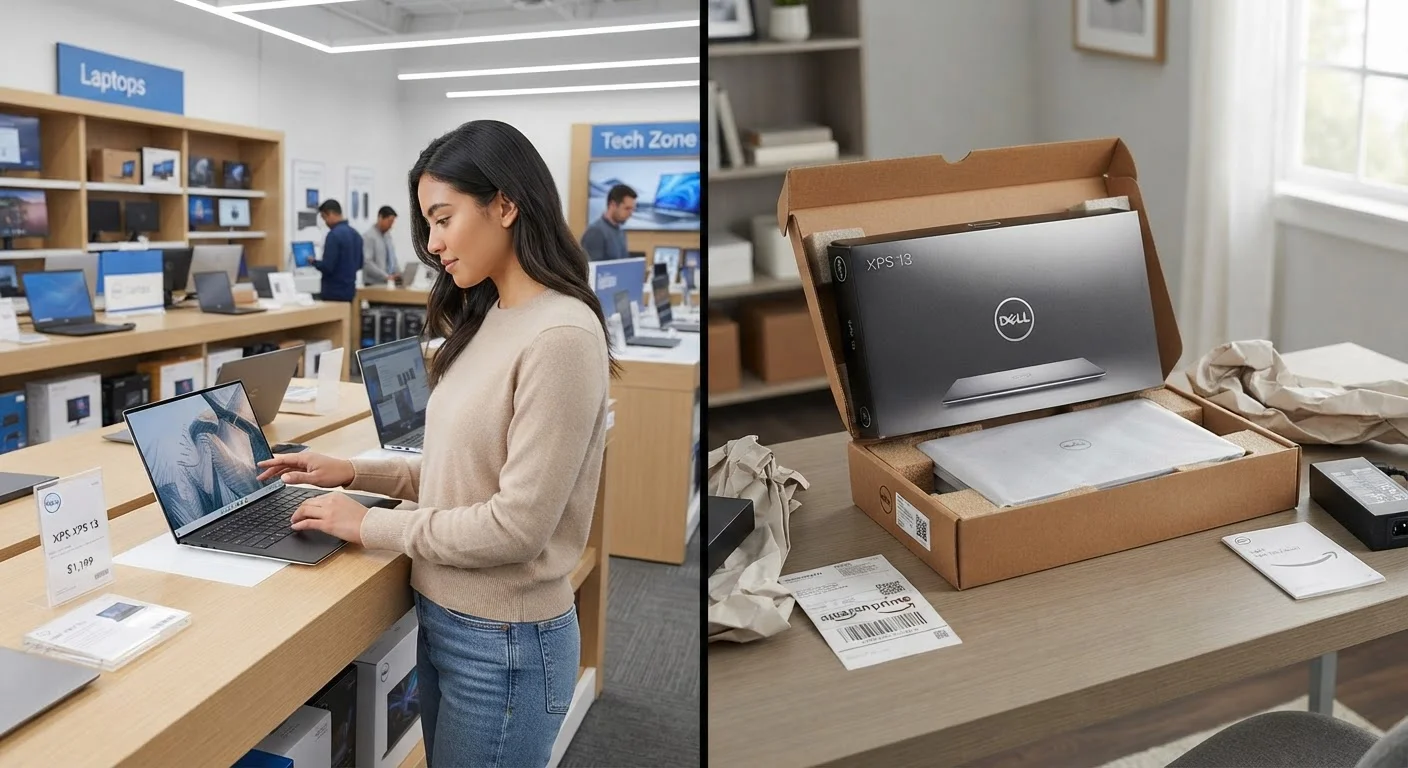
Key Takeaways
- Warranty coverage and claim processes can vary significantly depending on whether you buy in-store or online.
- In-store purchases often offer hands-on demos and setup assistance that online channels cannot replicate.
- Online retailers may carry wider inventory but can't match the tactile, try-before-you-buy experience.
- Return policies and restocking fees differ by channel and can have real financial consequences.
- Matching your purchase channel to the product type reduces buyer's remorse for big-ticket electronics.
Hands-on demos before committing to a purchase
You can evaluate screen quality, sound output, keyboard feel, and build quality directly — factors that online listings frequently misrepresent through curated photos and cherry-picked specs.
Easier access to warranty and repair services
Many retail stores have dedicated service counters or direct relationships with manufacturers, making warranty claims faster and less frustrating than navigating online return portals.
Setup assistance available at point of sale
Store associates can help configure devices, explain compatibility requirements, and flag potential setup issues before you leave — saving hours of troubleshooting at home.
Immediate product availability with no shipping risk
You leave the store with a working product the same day, eliminating the risk of shipping damage, delayed delivery, or receiving a wrong item.
Online third-party sellers complicate warranty claims
Purchasing through marketplace sellers rather than authorized retailers can void manufacturer warranties or require additional proof of purchase steps that add friction to any claim.
Return logistics for online orders can be costly
Electronics returned online often incur restocking fees, require original packaging, or must be shipped at the buyer's expense — costs that erode any savings from a lower sticker price.
No tactile evaluation before purchase
Online listings can't convey how a device feels in hand, how readable a display is in ambient light, or whether a speaker's audio quality meets your expectations.
Post-purchase support is often limited or impersonal
Online customer service for electronics frequently relies on chat bots or lengthy email chains, with no in-person option for complex troubleshooting or setup questions.
Our Verdict
Neither online nor in-store is universally the right channel for electronics. The decision hinges on the complexity of the product, how much post-purchase support matters to you, and whether you need to evaluate it physically before committing. For complex, expensive, or setup-intensive devices, in-store often delivers more ongoing value than the convenience of a click.
Shoppers who prioritize hands-on evaluation, reliable warranty service, and setup support will typically get more long-term satisfaction from in-store electronics purchases, while confident, research-ready buyers can do well online.
The Channel Decision Is About More Than Convenience
Most people default to whichever electronics shopping channel is easiest — a quick online order or a familiar big-box store nearby. But for electronics specifically, the channel you choose shapes your experience well beyond the moment of purchase. Warranty handling, post-sale support, and even whether a product works as expected in your home can all be influenced by where you bought it.
This isn't about finding the lowest number on a price tag. It's about understanding what comes attached to that purchase — and what doesn't. See our guide to pricing differences between channels for a deeper look at what actually drives cost gaps in retail.
Authorized Retailer vs. Marketplace Seller
When buying electronics online, there's an important distinction between purchasing directly from a retailer's own storefront and buying from a third-party seller hosted on a marketplace platform. Authorized retailers typically honor full manufacturer warranties and have clearer return processes. Third-party sellers may offer lower prices but can introduce complications around warranty eligibility, product authenticity, and return handling. Always confirm seller authorization status before completing a high-value purchase.
What In-Store Shopping Does Well for Electronics
Physical retail stores offer something no website can: the ability to hold a product, test its interface, and ask a trained associate specific questions before spending hundreds of dollars.
Hands-on demos before committing to a purchase
You can evaluate screen quality, sound output, keyboard feel, and build quality directly — factors that online listings frequently misrepresent through curated photos and cherry-picked specs.
Easier access to warranty and repair services
Many retail stores have dedicated service counters or direct relationships with manufacturers, making warranty claims faster and less frustrating than navigating online return portals.
Setup assistance available at point of sale
Store associates can help configure devices, explain compatibility requirements, and flag potential setup issues before you leave — saving hours of troubleshooting at home.
Immediate product availability with no shipping risk
You leave the store with a working product the same day, eliminating the risk of shipping damage, delayed delivery, or receiving a wrong item.
For categories like televisions, headphones, and smart home hubs, the sensory gap between a product photo and the real thing is significant. Screen brightness, speaker quality, and build feel are difficult to judge from specs alone. In-store channels also tend to provide direct access to manufacturer-authorized service and warranty claims, often through a dedicated customer service desk.
For a broader look at which product categories tend to favor physical retail, the channel-by-category breakdown is worth reviewing before your next purchase.
Where Online Channels Fall Short
Online electronics retail has real limitations that are easy to overlook when you're scrolling through a product listing at midnight.
Online third-party sellers complicate warranty claims
Purchasing through marketplace sellers rather than authorized retailers can void manufacturer warranties or require additional proof of purchase steps that add friction to any claim.
Return logistics for online orders can be costly
Electronics returned online often incur restocking fees, require original packaging, or must be shipped at the buyer's expense — costs that erode any savings from a lower sticker price.
No tactile evaluation before purchase
Online listings can't convey how a device feels in hand, how readable a display is in ambient light, or whether a speaker's audio quality meets your expectations.
Post-purchase support is often limited or impersonal
Online customer service for electronics frequently relies on chat bots or lengthy email chains, with no in-person option for complex troubleshooting or setup questions.
Return logistics are a particular pain point. Many online electronics orders are subject to restocking fees, narrow return windows, or require you to ship a heavy, fragile item back in its original packaging — not always easy after you've set up a device. Warranty claims can also become murky when a product is purchased through a third-party marketplace seller rather than directly from a retailer or manufacturer.
Understanding the full range of trade-offs across both channels is covered in The Real Tradeoffs Between Shopping Online and In Person.
How to Match Channel to Product
Not every electronics purchase carries the same stakes. A replacement charging cable is a low-risk online order. A $1,200 laptop you'll use for work every day is a different calculation entirely.
~40%
Electronics buyers who research online before buying in-store
Consumer behavior research consistently shows a large share of electronics shoppers use online resources for research but prefer completing the purchase in person for high-value items.
15–25%
Typical restocking fee range for returned electronics
Many online and in-store retailers charge restocking fees on opened electronics, a cost that can significantly reduce the financial advantage of a lower initial online price.
A useful decision framework: the higher the price, the more complex the setup, or the more subjective the quality (sound, display, ergonomics), the more an in-store visit adds value. Conversely, for accessories, replacements, or products you've already owned and are repurchasing, online channels offer efficiency without much downside.
For home electronics specifically — routers, smart speakers, streaming devices — setup support matters more than many shoppers anticipate. The Home Tech Basics hub offers practical guidance on what to evaluate before buying in that category.
Building a reliable decision habit around channel selection is itself a form of smarter shopping. The Smarter Decisions hub offers frameworks for exactly that kind of choice clarity. And if you're weighing the overall cost picture between channels, Online vs. In-Store Shopping: Which Actually Saves You More? runs through the numbers honestly.