
Price Differences Between Online and In-Store: Myths, Realities, and What Drives Them

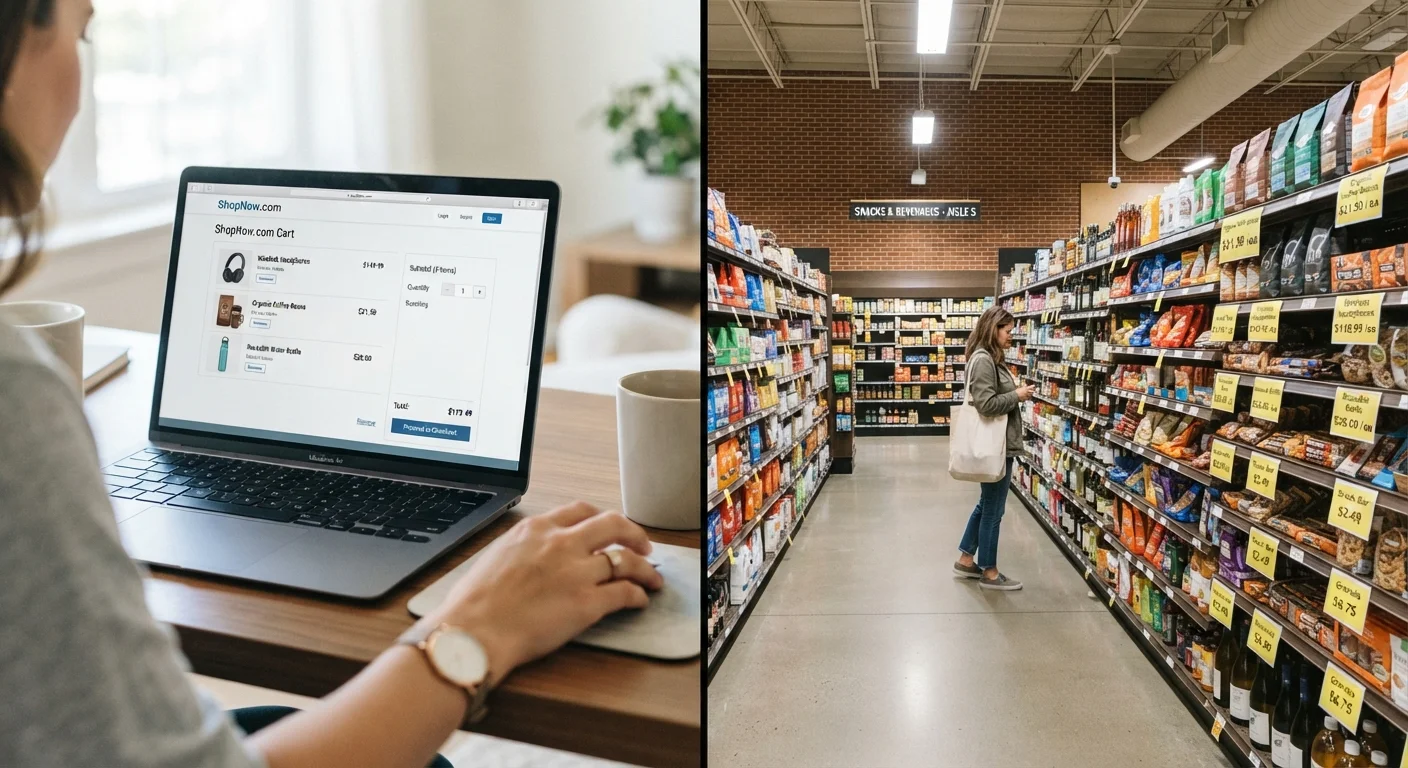
Key Takeaways
- Online prices are not automatically lower — fees, dynamic pricing, and channel strategies complicate the comparison.
- Retailers deliberately vary prices between channels to manage inventory, margins, and customer behavior.
- Shipping costs, return friction, and convenience fees can erase apparent online savings quickly.
- In-store prices sometimes beat online, especially near clearance events or regional promotions.
- The smartest shoppers verify total cost — not just sticker price — before deciding where to buy.
Why the Online-vs.-In-Store Price Question Is More Complicated Than It Looks
Most shoppers operate on a simple assumption: the internet is cheaper. It's easy to see why that belief formed. Early e-commerce competed aggressively on price to win customers away from physical stores. But retail pricing has matured significantly, and the rules have changed.
Today, large retailers use sophisticated pricing engines that adjust based on demand signals, inventory levels, competitor activity, and even the time of day. A product's price can differ between a retailer's own website and its app, let alone between online and in-store. Understanding what actually drives those gaps helps you make decisions based on reality rather than reflex.
For a broader look at how the two channels compare across convenience, returns, and experience, see our complete consumer's guide to online vs. in-store shopping.
Myth
Online prices are always lower than in-store prices for the same item.
Fact
Studies consistently show in-store prices are sometimes equal to or lower than online prices, depending on the retailer, category, and timing.
Dynamic pricing means online prices fluctuate constantly. Retailers also run in-store-only promotions, regional markdowns, and clearance events that never appear on their websites. A 2023 analysis by the National Retail Federation found that price parity between channels has increased significantly as retailers refine omnichannel strategies. The assumption that online is cheaper is a starting hypothesis worth testing — not a rule to rely on.
Myth
If an item is listed at a lower price online, you're always saving money by buying it there.
Fact
Shipping fees, return costs, and convenience charges can make an apparently cheaper online price more expensive in total.
A lower listed price disappears fast when you add shipping, a paid returns label, or the cost of a membership program. Retailers are aware of this dynamic and often price accordingly — the online sticker draws you in, while ancillary charges quietly close the margin gap. Always calculate the full delivered cost before concluding which channel is genuinely cheaper. Our piece on why online isn't always cheaper explores this in depth.
Myth
Retailers charge the same price online and in-store — any difference is a glitch or error.
Fact
Deliberate channel-specific pricing is a standard, intentional retail strategy, not an accident.
Retailers segment pricing by channel for legitimate business reasons: online prices respond to algorithmic competition, while in-store prices reflect local real estate costs, staffing, and regional demand. Many large retailers explicitly maintain different price ladders per channel. Knowing this means you can use it to your advantage — checking both before purchasing is a practical habit, not paranoia.
Myth
Price-matching policies make channel comparison irrelevant — just ask the store to match.
Fact
Price-match policies vary widely in scope and are often excluded for marketplace sellers, bundle deals, or limited-time promotions.
Most retailer price-match policies contain meaningful exclusions: third-party marketplace listings (common on major e-commerce platforms), open-box or refurbished items, flash sales, and prices from membership-only warehouses are frequently ineligible. Before banking on a price match, read the specific policy. In many cases, the match won't apply to the exact listing you found online. See the real tradeoffs between shopping online and in person for a fuller picture of what each channel actually delivers.
Myth
In-store prices are fixed and don't change the way online prices do.
Fact
Many retailers update shelf prices frequently, and electronic shelf labels allow changes as often as online systems do.
The image of stable, hand-written price tags is outdated. Large-format retailers increasingly use electronic shelf labels (ESLs) that can reprice items in near real-time, in alignment with their online systems. Even stores without ESLs run regular markdown cycles, promotional resets, and clearance rotations. In-store prices are dynamic — just less visibly so than online.
The Hidden Costs That Shift the Real Price
Sticker price and total cost are not the same thing. Online purchases can carry shipping fees, expedited delivery charges, or subscription costs for free-shipping programs. Returns — often frictionless in a physical store — can mean paying postage, waiting for refunds, or dealing with restocking fees.
In-store purchases carry their own friction: driving time, fuel, and the well-documented psychological pull of in-store impulse buying. Neither channel is cost-neutral. Our article on which channel actually saves you more walks through how these hidden costs stack up across different product categories.
Free Shipping Thresholds Can Cost You More
Minimum order thresholds for free shipping often prompt shoppers to add items they don't need to avoid a delivery fee. If the fee itself is smaller than the cost of the qualifying add-on item, paying the fee is the cheaper choice. Always compare both options before padding your cart.
The most reliable method is to calculate the total landed cost — product price plus any fees, delivery charges, or anticipated return costs — before deciding where to buy. That number often tells a different story than the listed price alone.
Putting the Myths to Rest: A Smarter Shopping Framework
Pricing strategy is one variable in the broader channel decision. Product categories behave differently: commodity electronics, for instance, often see tighter price competition online, while fashion and home goods show wider in-store variability driven by regional demand. For a look at how channel choice affects more than just price in electronics, see why the channel you buy from matters for electronics.
~70%
Shoppers who check prices online before buying in-store
Consumer research from Deloitte's retail studies indicates a majority of in-store shoppers verify prices digitally before or during the shopping trip.
15–20%
Typical shipping and return cost as share of order value
Industry estimates suggest fulfillment and return logistics represent a meaningful share of online order costs for retailers and, when passed to consumers, can erode headline savings.
The bottom line: neither channel wins universally. The right approach is to check both, account for all costs, and weigh intangibles like return ease and product-fit confidence. For more practical frameworks that cut through choice overload, explore our Smarter Decisions hub.