

Key Takeaways
- Physical stores use layout, scent, light, and sound as deliberate tools to influence shopping behavior.
- Touch — the ability to handle a product — significantly increases the likelihood of purchase.
- Ambient music tempo and store scent are proven to affect how long shoppers stay and how much they spend.
- Awareness of these techniques helps you stay in control of your own decisions.
- Some product categories genuinely benefit from in-person evaluation; others don't require it.
Retail Environment Psychology
Retail environment psychology is the study of how a store's physical design — its layout, lighting, scent, sound, and temperature — shapes the way shoppers feel, think, and ultimately decide to buy. Stores aren't neutral spaces; every sensory detail is a variable that influences your behavior, often without your awareness. Understanding these cues helps you shop more deliberately.
Researchers often call this field 'atmospherics,' a term introduced by marketing scholar Philip Kotler in 1973, describing how designed sensory inputs create emotional states that affect purchase behavior.
What Actually Happens When You Walk Into a Store
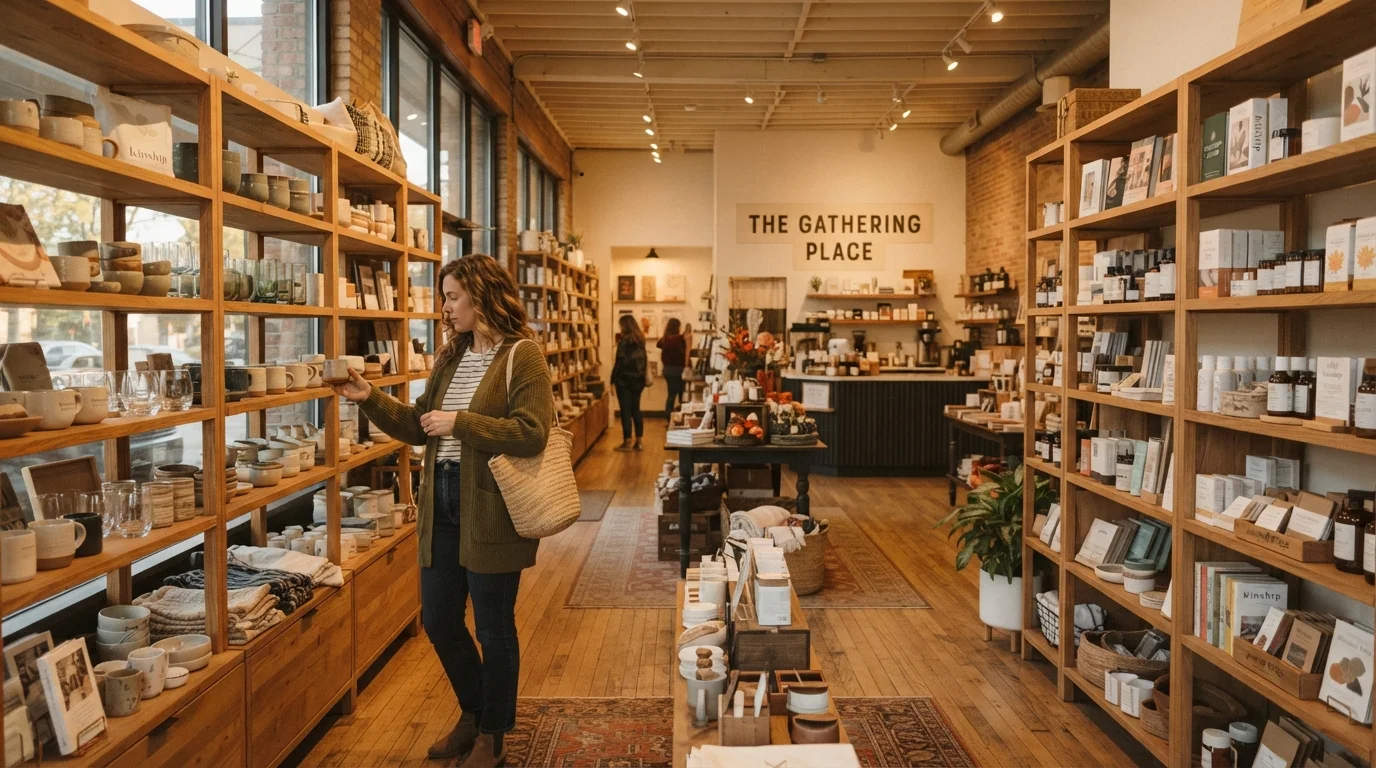
The moment you step through a retailer's doors, your brain begins processing far more than product labels and price tags. Temperature, light quality, background music, ambient scent, floor texture underfoot — these inputs are absorbed simultaneously and begin shaping your emotional state within seconds. This isn't accidental. Retail environments are deliberately engineered to influence mood, dwell time, and spending.
The field of retail atmospherics examines exactly how these sensory layers interact. Studies have repeatedly found that shoppers in well-designed environments report higher satisfaction, spend more time inside, and make more unplanned purchases than those in neutral or poorly designed spaces. The store experience is, in a real sense, a designed product in its own right — separate from anything on the shelves.
Understanding this matters for anyone trying to shop with intention. Retailers use a range of psychological techniques to steer decisions; the physical environment is one of the most powerful and least visible of them.
This Is General Consumer Education
This article explains how retail environments are designed to influence behavior. It is not financial advice and does not recommend specific stores or shopping strategies tailored to your situation. For decisions involving significant spending, consider your own budget and priorities first.
The Senses Retailers Target Most
Touch is the most commercially significant sense in physical retail. Research in consumer psychology shows that physically handling a product — feeling its weight, texture, or warmth — creates a sense of psychological ownership before any transaction takes place. This 'endowment effect' makes it harder to put the item back. It's a meaningful advantage that online browsing simply cannot replicate. For more on what in-person evaluation reveals that screens can't, see our piece on what you can't learn from a product page.
Scent works through the olfactory system, which connects more directly to memory and emotion than any other sense. Retailers — particularly in food, cosmetics, and home goods — use ambient fragrance to create associations of comfort, freshness, or luxury. Experimental studies have found that congruent scents (a scent that matches the product category) increase purchase intentions compared to mismatched or no scent.
Sound is another lever. Slower music tempos have been associated with longer in-store dwell times. Volume and genre also affect perceived store personality — a curated playlist signals brand identity as clearly as signage does.
Lighting shapes how products look and how shoppers feel. Warm, lower-intensity light tends to encourage lingering and perceived comfort; bright, cool light signals efficiency and transparency — think grocery versus jewelry.
Shop With a List — and a Time Limit
One of the simplest ways to counteract environmental influence is to arrive with a written list and a rough time budget. When you know what you came for and roughly how long you plan to spend, sensory cues have less opportunity to redirect your attention. Treat unplanned items as candidates for a second visit rather than immediate additions to your cart.
Layout: The Path You Think You're Choosing
Store layout is among the most studied elements in retail design. Most large stores guide traffic in deliberate patterns — often counterclockwise, based on the natural tendency of right-handed shoppers — to maximize exposure to merchandise. High-margin or impulse-purchase items are placed at eye level or near checkout areas. Staple goods are frequently positioned deep inside the store, requiring you to walk past dozens of other products to reach them.
The endcap (the display at the end of a store aisle) is prime real estate precisely because it catches attention during transitions. Shoppers slow down at corners and turns, making those locations ideal for displays designed to interrupt habitual movement and prompt a second look.
This differs fundamentally from the online experience, where the path is non-linear and self-directed through search. The tradeoffs between online and in-person shopping are real in both directions — each environment shapes decisions in ways the other cannot.
~68%
Of in-store purchases are unplanned
Research published in the Journal of Consumer Research has consistently found that a large share of what shoppers buy in physical stores was not on their original list.
Up to 38%
Longer dwell time with congruent background music
Studies in retail atmospherics have found that slower, genre-matched music can meaningfully extend the time shoppers spend inside a store, increasing exposure to more merchandise.
~30%
Higher likelihood of purchase after physical touch
Consumer psychology research suggests that physically handling a product substantially increases purchase likelihood compared to viewing it without touching it.
When the In-Person Experience Is Worth It
Not every purchase benefits equally from a physical store visit. Furniture, apparel, footwear, fragrances, mattresses, and fresh food are categories where sensory evaluation is genuinely informative — where you learn something in the store that a product page cannot tell you. Some categories are still reliably better bought in person, and understanding which ones saves both money and return-shipping headaches.
For commodity products — electronics with fixed specs, branded consumables, books — the in-store atmosphere may create emotional engagement without adding genuine informational value. In those cases, being aware of your environment is especially useful: the pleasant experience of browsing is real, but it shouldn't substitute for price comparison or specification review.
The same product can feel entirely different depending on where you encounter it — knowing that helps you separate the product from the experience of buying it. Shopping in person can be genuinely valuable and even enjoyable; the goal isn't to avoid it, but to enter it with your own intentions intact.