

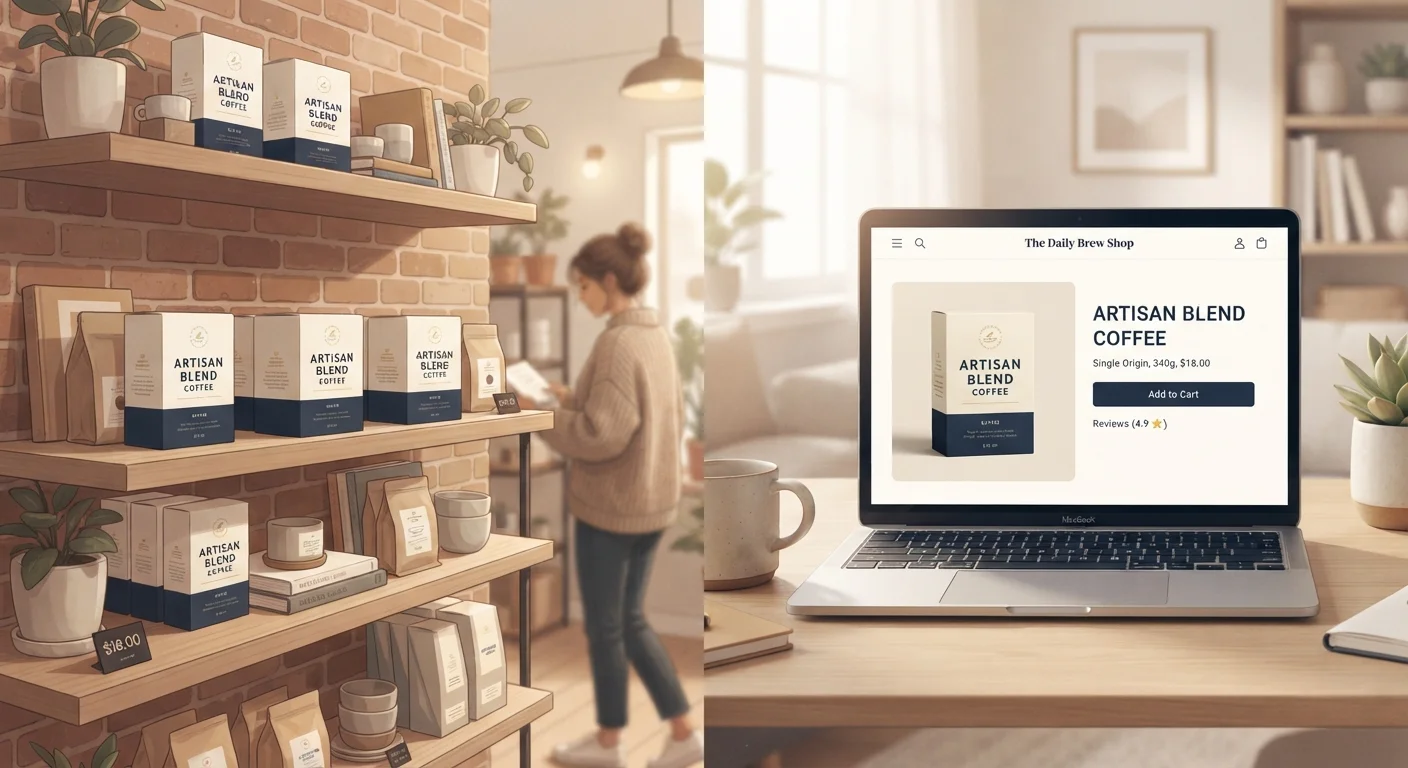
Key Takeaways
- The same item can come with different warranties, return policies, or support depending on where you buy it.
- Physical stores offer tactile evaluation and immediate access; online channels offer broader selection and comparison ease.
- Retail channel choice affects post-purchase experience, not just purchase price.
- Some product categories benefit strongly from one channel over another based on fit, complexity, or risk.
- Understanding channel differences helps prevent buyer's remorse before you spend.
Retail Channel Experience
A retail channel is any avenue through which a consumer purchases a product — such as a physical store, brand website, online marketplace, or wholesale club. Even when the physical item is identical, the channel shapes the overall experience: how you discover, evaluate, receive, and return the product. These surrounding layers — service, policy, context — are what consumers often overlook when comparing prices alone.
Retailers and manufacturers sometimes differentiate channel-specific SKUs (stock-keeping units), meaning a product sold in-store may have slightly different configurations or packaging than the same model sold online — even under the same name.
The Illusion of the Identical Purchase
Two people can buy the exact same blender model on the same day and have entirely different experiences. One walks out of a store with the box in hand, receipt in pocket, and a staff member who just answered three questions. The other receives it three days later in a dented box, missing a piece, with a return process that requires a printer and a prepaid label.
The product was identical. The purchase was not.
This is the core concept behind retail channel experience: the channel you buy through wraps every product in a distinct layer of service, policy, and context. That wrapper is often invisible when you're comparing prices — but it becomes very visible the moment something goes wrong, or when you realize you chose the wrong size, or when you need help setting something up.
For a deeper look at how online and physical retail compare across multiple dimensions, see our complete consumer's guide to online vs. in-store shopping.
What Actually Changes Between Channels
When you shift from one retail channel to another, several concrete elements change alongside the transaction:
- Return policy: A brand's own website may accept returns for 30 days; a third-party marketplace seller on the same platform might allow only 14. The product is identical — the safety net isn't.
- Warranty support: Some manufacturers restrict warranty service to authorized retail partners. Buying from an unauthorized reseller can complicate a claim, even with a valid receipt.
- Condition risk: Online purchases — particularly from marketplace sellers — carry a higher risk of receiving open-box, refurbished, or mislabeled items. In-store, you can inspect the packaging before you pay.
- Access to expertise: Specialty retailers often employ staff trained on specific product categories. That guidance can prevent a poor fit or wrong configuration before purchase.
- Fulfillment experience: Shipping introduces variables: transit damage, delays, substitutions. In-store, you leave with the item you chose.
30%
Online return rate for apparel purchases
Industry estimates from the National Retail Federation suggest online clothing returns can reach 30% or higher, compared to lower rates for in-store purchases where fit can be assessed before buying.
1 in 4
Online shoppers report receiving wrong or damaged items
Consumer surveys consistently find a significant minority of online shoppers experience at least one order that arrives damaged, incorrect, or incomplete in a given year.
These differences don't make one channel universally better. They make each channel better for specific situations — which is the more useful frame for decision-making.
How to Match Channel to Purchase
A practical approach starts by asking what could go wrong with this purchase — and which channel makes that outcome least costly.
A Simple Pre-Purchase Channel Check
Before finalizing any purchase, look up the specific seller's return policy — not just the platform's general policy. Then check whether the manufacturer's warranty applies to purchases through that channel. This two-minute check can save significant frustration if something doesn't work out.
For high-fit purchases (clothing, footwear, furniture), the in-store channel reduces the most common failure mode: buying something that doesn't fit, match, or feel right in person. The ability to touch, try, and compare in real time is a real risk-reduction tool, not just a preference.
For commodity purchases (cleaning supplies, pantry staples, basic accessories), the channel matters far less. The item is predictable, the stakes are low, and convenience rightly drives the decision.
For complex or high-value purchases (electronics, appliances, tools), the channel shapes the post-purchase experience significantly. Warranty access, setup support, and the ease of returns all vary enough to be worth investigating before you commit. Our article on how channel choice affects electronics purchases explores this in more detail.
For category-by-category guidance, see which product categories tend to suit each shopping channel.
The Layers Most Shoppers Ignore
Price comparison is easy. Channel comparison takes a little more effort — but it's often where the real value difference lives.
Two questions worth asking before any significant purchase:
- What does the return process look like through this channel? Not whether returns are accepted, but how inconvenient or costly they'd actually be if needed.
- Where does accountability sit? If there's a problem — damaged goods, a missing part, a defective unit — who is responsible for resolving it, and how responsive are they likely to be?
Answering these questions shifts you from comparing sticker prices to comparing the full transaction. That's usually a more accurate measure of value.
If you've ever been surprised by what arrived versus what you ordered, understanding why online orders don't always match expectations can help you shop more accurately next time.
For a structured side-by-side of digital storefronts and physical retail, see Shopping Channels Side by Side.