

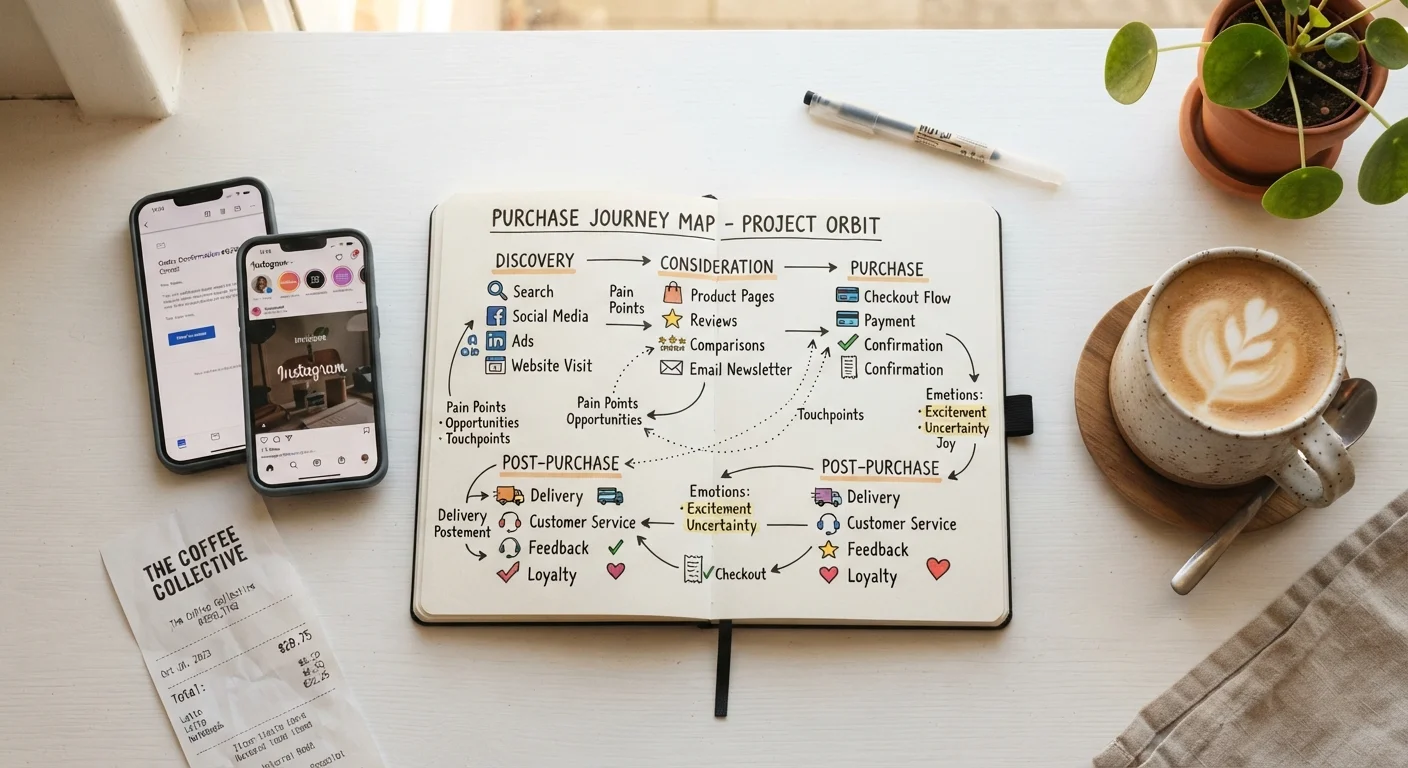
Key Takeaways
- Most purchasing decisions pass through five distinct stages, each with its own traps and opportunities.
- The research phase is where most regret originates — rushing it costs you more than time.
- Where you buy (online vs. in-store) should be a deliberate choice, not a default habit.
- Post-purchase steps like registering warranties and tracking returns protect your investment.
- Understanding retail terminology helps you avoid costly misunderstandings at checkout.
Why the Buying Journey Is More Complex Than Ever
A generation ago, the path to a purchase was short: you identified a need, visited a store, and handed over cash. Today, the average consumer touches dozens of touchpoints — review sites, social feeds, retailer apps, comparison tools — before a transaction completes. That complexity isn't a flaw; it's an opportunity, if you know how to navigate it.
Understanding the structure of the modern buying journey gives you a decision-making framework you can apply to any category, whether you're buying a $15 household item or committing to a $1,500 appliance. The five stages below cover that full arc. Where you choose to shop adds another layer of complexity worth examining on its own.
~53%
Shoppers who research before buying
Research by the Pew Research Center has consistently found that a majority of Americans conduct online research before making significant purchases.
3–5
Average touchpoints before a purchase decision
Consumer behavior research broadly supports that buyers interact with multiple information sources before committing, particularly for higher-cost items.
Stage 1: Recognizing the Need
Every purchase starts with a trigger — something that shifts a vague awareness into a concrete desire or requirement. Triggers fall into two broad types: functional (your laptop fan is failing) and aspirational (you want a better version of something you already own).
Being honest about which type is driving you matters. Aspirational purchases aren't wrong, but they deserve more scrutiny. Ask: does this solve a real problem, or does it solve a discomfort I haven't fully examined? That single question filters out a meaningful slice of post-purchase regret before you've spent a dollar.
Write Down the Problem Before Browsing
Before opening a browser or walking into a store, write one sentence describing the specific problem you're trying to solve. This anchors your research and prevents scope creep — the tendency for a search for one item to expand into a full cart of loosely related purchases.
Stage 2: Gathering Information
Once you've confirmed the need is genuine, information-gathering begins. This stage is where most shoppers either invest well or cut corners — and where the outcome of the purchase is largely determined.
Effective research draws on at least three distinct source types:
- Objective sources: Consumer reporting organizations, government safety databases, and independent testing labs offer data without a commercial stake in your decision.
- Peer sources: Verified buyer reviews and community forums surface real-world use cases. Look for patterns across many reviews rather than individual extremes.
- Expert sources: Category specialists, whether journalists covering a beat or professionals who use a product daily, offer context that general audiences miss.
If you're new to online shopping, a walkthrough of how the online process works can help you move through this stage with less friction.
When reading reviews, filter specifically for one-star and four-star reviews rather than five-star. One-star reviews reveal failure modes; four-star reviews surface real-world trade-offs from people who generally like the product.
Five-star reviews are disproportionately influenced by purchase satisfaction bias and, in some cases, incentivized review programs. Mid-to-low ratings from satisfied-but-honest buyers tend to be more calibrated.
Set a research time-box before you start — for example, 30 minutes for purchases under $100, two hours for purchases over $500. When the clock runs out, make the call with what you have.
Extended research sessions suffer from diminishing returns and increase the likelihood of decision fatigue, which paradoxically leads to worse choices rather than better ones.
Stage 3: Evaluating Your Options
With information in hand, the goal shifts to narrowing. Many shoppers stall here, caught between analysis paralysis and premature commitment. A structured approach helps.
Start by defining your non-negotiables — the features or constraints no option can violate (budget ceiling, size requirement, compatibility need). Then build a short list of candidates that clear that bar. From there, trade-offs become manageable rather than overwhelming.
Pay attention to how options are described. Retail terminology carries real weight: terms like "final sale," "limited warranty," and "fulfilled by a third party" change what you're actually agreeing to. Our glossary of key consumer terms explains the language that matters most at this stage. You can also reference shopping-specific terminology when comparing channel options.
Short Lists Outperform Long Ones
Behavioral research on choice consistently shows that reducing a consideration set to two or three finalists produces more confident decisions than maintaining a wide-open field. Once you've identified your non-negotiables, actively eliminate options rather than continuing to add them.
Stage 4: Making the Purchase Decision
This is the moment most people think of as "the decision," but by this point the real decision-making is largely done. What remains is confirming logistics and removing last-minute friction.
Before you complete the transaction, run a quick mental checklist: Is the return window clear? Do you understand the warranty terms? Are you buying from a verified seller? For major purchases, a formal pre-purchase checklist is worth the two minutes it takes to run through.
Channel choice also matters here. Online purchases offer convenience and price transparency; in-store purchases offer tactile confirmation and immediate possession. Neither is universally better — the right answer depends on the product category and your own risk tolerance. Explore the full online vs. in-store channel guide for a category-by-category breakdown.
Verify the Seller Before You Pay
Third-party marketplace listings can appear identical to retailer-direct listings but carry different return policies, warranty coverage, and fulfillment accountability. Always confirm who you are actually purchasing from — not just where the listing appears — before entering payment details.
Stage 5: Post-Purchase — The Stage Most Shoppers Skip
The receipt is not the finish line. What happens after purchase determines whether the investment holds its value — and whether you're protected if something goes wrong.
Key post-purchase actions include:
- Register the product if a warranty is attached. Many manufacturers require registration to activate full coverage.
- Document the purchase. Save confirmation emails, physical receipts, and any included warranty cards in one place. Digital folders work well for this.
- Track delivery and inspect immediately. Damage claims and return windows start from the delivery or purchase date, not the day you open the box a week later.
- Evaluate honestly. Did the product solve the original problem? If not, act within the return window rather than letting it expire.
Closing the loop at this stage also feeds your next buying journey — you'll have firsthand experience to draw on when a similar need arises, which makes future decisions faster and more accurate.
This article is for general informational and educational purposes only. It does not constitute financial, legal, or professional advice. Consult a qualified professional for guidance specific to your circumstances.