

Key Takeaways
- Neither channel is universally better — the right choice depends on product type, urgency, and personal preference.
- Online shopping offers broader selection and easier price comparison; in-store offers tactile experience and immediate possession.
- Hidden costs like shipping fees or impulse purchases can erode savings in either channel.
- Many experienced shoppers blend both channels strategically rather than committing to just one.
- A simple personal framework — based on product category and stakes — can reduce decision fatigue.
Why Channel Choice Actually Matters
Most shopping decisions now involve at least a passing consideration of where to buy, not just what to buy. That channel decision affects price, convenience, return ease, product confidence, and sometimes even whether you regret the purchase later.
The modern retail landscape has blurred traditional lines. Physical stores now offer price-match guarantees and app-based inventory checks. Online retailers have introduced augmented reality try-ons and same-day delivery windows. Understanding the genuine strengths and limits of each channel — rather than defaulting to habit — puts you in control of outcomes.
For a structured look at the real differences between shopping channels, it helps to start with what each does best.
63%
Shoppers who research online before buying in-store
According to Google consumer research, a majority of in-store buyers consult digital sources — reviews, specs, or price comparisons — before visiting a physical location.
20–30%
Typical online return rate for apparel
Industry estimates suggest apparel return rates for online purchases are significantly higher than in-store, largely because fit and color cannot be verified remotely.
1 in 3
In-store shoppers who make an unplanned purchase
Retail research consistently finds that physical store environments encourage impulse buying through product placement, displays, and in-person sales interactions.
Where Online Shopping Wins
Online retail has clear advantages in specific situations:
- Selection depth: No physical store can stock every size, color, or configuration. Online marketplaces aggregate inventory across multiple sellers, giving you access to options that simply don't exist locally.
- Price comparison: Switching between tabs to compare prices takes seconds. In-store comparison requires travel.
- Repeat purchases: If you already know a product — same brand, same size, identical spec — buying it again online removes risk. You know exactly what you're getting.
- Accessibility: For consumers with mobility limitations, time constraints, or who live far from retail centers, online is often the only practical option.
- Research depth: Customer reviews, specification sheets, and third-party comparisons are all available before you commit a dollar.
The trade-off is that photos and descriptions can mislead. Fit, texture, color accuracy, and build quality are hard to assess remotely. Return policies vary widely, and shipping costs or delays can disrupt plans.
Before buying anything over $50 online, search for the return policy specifically — not just whether returns are accepted, but who pays for shipping and how long you have.
Return shipping costs and tight windows are the most common source of buyer regret in online purchases, and they're rarely highlighted prominently at checkout.
Use in-store visits as a product testing lab for high-stakes purchases, then take time before committing — even if you ultimately buy in-store.
Salesfloor pressure and immediate availability can compress decision time in ways that lead to regret on expensive or long-commitment items.
Where In-Store Shopping Wins
Physical retail still holds meaningful advantages that online can't fully replicate:
- Sensory evaluation: Clothing fit, furniture scale, paint color under real lighting, produce freshness — these require direct contact. No product description substitutes for touching the fabric or sitting in the chair.
- Immediate possession: You walk out with it today. No waiting, no delivery windows, no risk of a damaged package.
- Expert assistance: A knowledgeable salesperson in a specialty store — a camera shop, a running store, a hardware outlet — can ask the right questions and steer you toward genuinely suitable options.
- Easy returns: Returning in-store is often faster and avoids the hassle of repackaging and shipping labels.
- Reduced overload: A curated floor selection can actually reduce choice paralysis compared to scrolling through thousands of online listings.
The trade-off: store hours, travel time, parking, and the pressure of a sales environment can make the experience less efficient — and occasionally more expensive if impulse purchases sneak in.
A structured side-by-side comparison of both channels can clarify where the margins really differ.
Watch for Hidden Costs on Both Sides
Online shoppers often underestimate shipping fees, return postage, and delivery delays. In-store shoppers face fuel costs, parking, and a store environment designed to encourage unplanned purchases. Always calculate the total cost of a transaction — not just the shelf or listing price — before deciding which channel delivers real value.
Key Factors to Weigh Before You Buy
Rather than defaulting to one channel, run through these practical checkpoints:
- Product category
- High-touch items (clothing, mattresses, eyeglasses, fresh food) favor in-store. Commodity items (cable, cleaning supplies, books, electronics you've researched thoroughly) favor online.
- Purchase stakes
- Higher cost or longer commitment generally justifies more research, and often a physical visit before committing. See the full research-to-receipt buying journey for a step-by-step framework.
- Urgency
- Need it tonight? In-store or same-day delivery. Need it next week? Standard shipping may be fine.
- Return friction
- Check the return policy before you buy, not after. Online returns that require shipping can cost time and money.
- Total price including extras
- Factor in shipping fees, fuel costs, parking, and whether a loyalty program applies. A realistic look at which channel saves more shows that the cheaper sticker price isn't always the lower total cost.
Omnichannel Options Are Expanding
Many retailers now offer 'buy online, pick up in store' (BOPIS), curbside returns, and app-based inventory checks that blend both channels. These hybrid options can give you the price and selection benefits of online shopping while eliminating shipping delays and return hassles. Check whether your preferred retailer offers these before defaulting to one channel entirely.
Building Your Personal Shopping Framework
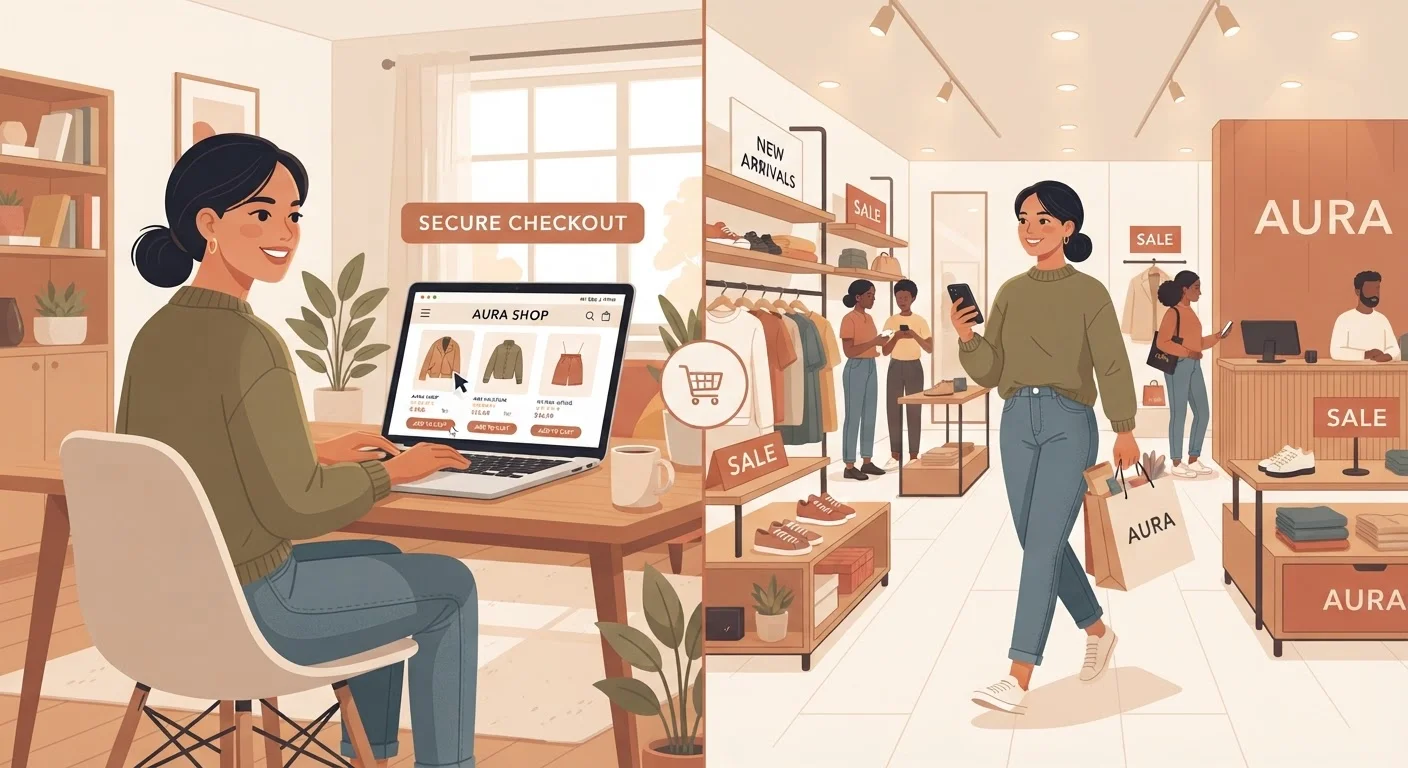
The most effective shoppers don't treat online and in-store as rivals — they treat them as complementary tools. A growing number of consumers research online before visiting a store, or try products in-store before completing the purchase online. This deliberate blending, often called omnichannel shopping, is increasingly the norm.
Getting the most out of a hybrid shopping approach is the logical next step once you understand each channel's strengths. For a decision-by-decision tool, a practical framework for choosing the right channel per purchase can remove the guesswork.
The goal isn't loyalty to a channel — it's better outcomes for your money and your time. Approach each purchase with a clear sense of what matters most for that specific item, and let that guide where you buy it.
“The best channel is the one that gives you the most confidence in your purchase decision — not the one that's simply most convenient in the moment.”
— Smart Shopping Editorial Team, Consumer research and retail analysis writers
This article is for general informational purposes only and does not constitute financial or purchasing advice tailored to your individual circumstances.